HUB 03
EV Charging Adapters & Connectors
The small parts that let your car charge across the NACS/J1772 divide — chosen for the safety listing, not just the price.
We earn a commission when you buy through our Amazon links, at no extra cost to you. It never affects our rankings, and we say so when the cheaper product is the better buy. How this works.
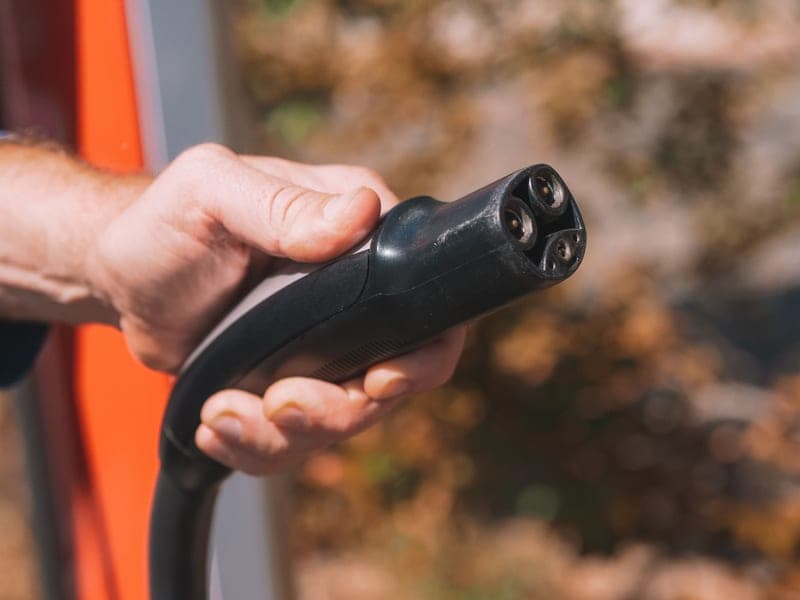
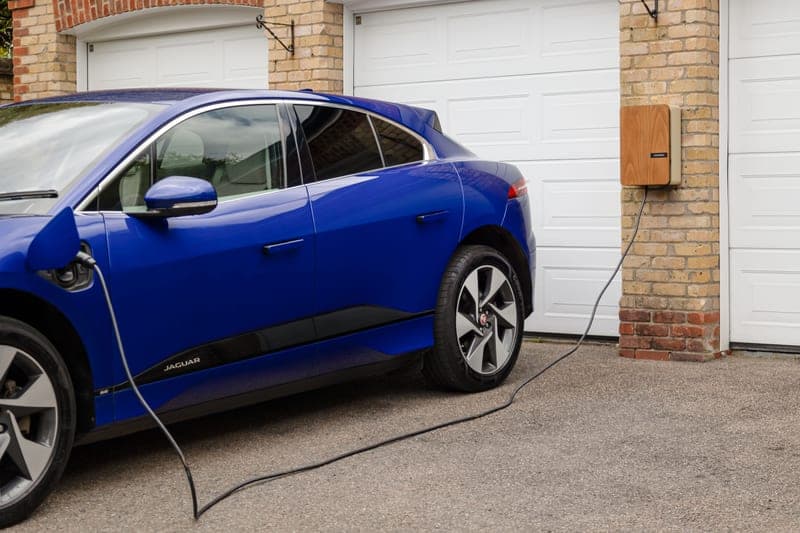
The connector transition is the messiest thing in EV charging right now. NACS — the plug Tesla used, now standardized as J3400 — is becoming the default on new cars, while the installed base of home and public chargers is still overwhelmingly J1772. An adapter bridges the gap. Because it carries the full charging current, the safety listing matters more than the price.
What to buy first — figure out the direction
The single thing to get right is which way the adapter points:
- You have a J1772 car and want to use a Tesla-style (NACS) charger → you need a NACS-to-J1772 adapter.
- You have a NACS-port car (a Tesla, or a 2026+ Hyundai, Kia, Rivian and others) and want to use the huge J1772 network → you need a J1772-to-Tesla adapter.
New to all of this? Start with the plain-English NACS vs J1772 explainer, which covers which cars use which connector and why the standard is shifting. Then let the two-question which adapter do I needguide settle the direction — or, if you are not sure you need one at all, do I even need an adapter.
One thing this hub is not about: the NEMA adapters that change which wall outlet a charger can plug into. Those are a wall-side part with entirely different safety rules, and they live in EV charger outlet adapters.
How the category divides
Beyond direction, adapters split on current rating (most home circuits never exceed 48 amps, so an 80-amp-rated adapter has ample headroom), and on whether they are AC-only. Every passive home adapter is for AC charging — none of them unlocks DC fast charging, which is handled by the car and the network, not a plug adapter.
What decides the price
Two things: the safety listing and the build. Look for an explicit UL 2251 or UL 2252 listing — that is the standard written for connectors carrying EV charging current, and it is the single most important spec on an adapter. A snug, rattle-free fit and a solid housing are the rest. Prices are low across the board here, so there is no reason to buy the uncertified bargain.
The mistake buyers make
Buying the wrong direction, or assuming an adapter enables Supercharging. Read the two bullets above twice before you order — the adapters look similar and point opposite ways. And treat any adapter with no stated UL listing as a pass, no matter how cheap. Our Lectron adapter reviewwalks through exactly what to check. Worried a plug adapter costs you speed? It does not — do charging adapters slow down charging explains why. And do not confuse these AC adapters with DC ones: a NACS-to-CCS adapter (a CCS car at a Supercharger) and a CCS-to-Tesla adapter are a different, DC-rated category entirely.
Newer explainers go deeper on the specifics: using a Tesla at a J1772 station, what adapters come in the box with a new EV, CCS1 vs CCS2, and Magic Dock vs a bring-your-own adapter for Supercharging.
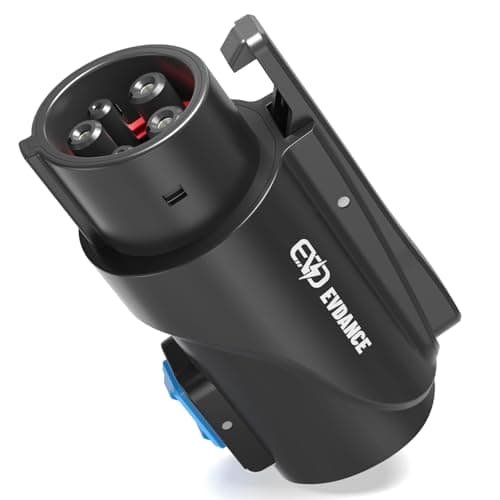
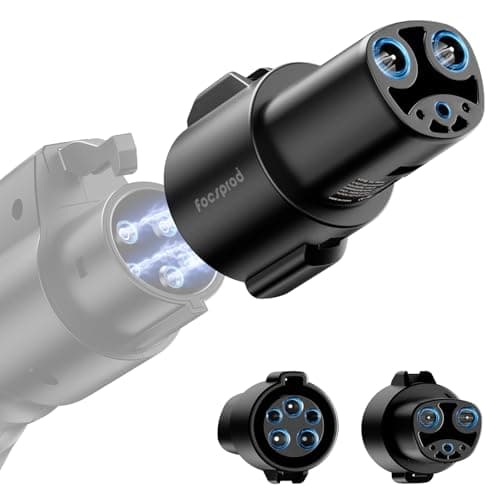
And when two adapters are on the shortlist, the head-to-heads are the fastest way through: Lectron vs EVDANCE for the NACS-to-J1772 direction, and Lenz vs FOCSPROD for J1772-to-Tesla.
Start here
Best NACS-to-J1772 Adapters
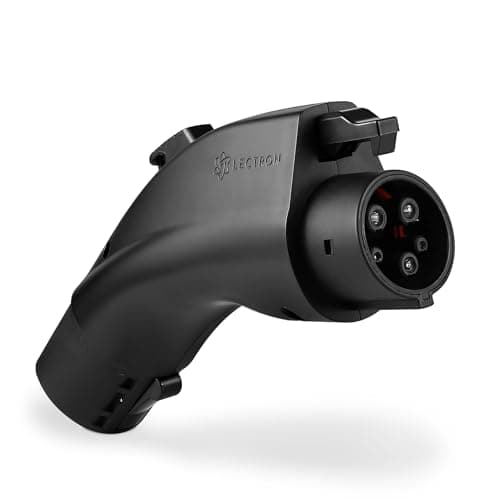
For a non-Tesla (J1772) EV that wants to charge at a Tesla-style NACS Wall Connector or Destination Charger. Two picks, both rated well above any home circuit.
Read the guide →
Everything in this hub
All of Adapters & Connectors
Roundup
Best NACS-to-J1772 Adapters
For a non-Tesla (J1772) EV that wants to charge at a Tesla-style NACS Wall Connector or Destination Charger. Two picks, both rated well above any home circuit.
Top pick: Lectron NACS → J1772 Adapter · 2 ranked, 2 with live prices
$119.99Amazon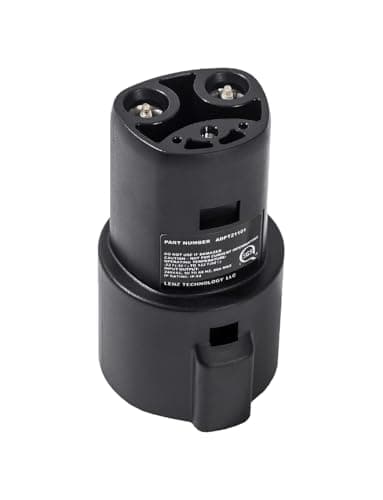
Roundup
Best J1772-to-Tesla Adapters
For a Tesla or a new NACS-port EV that needs to charge at ordinary J1772 stations. Our pick is UL 2251 certified; the runner-up is a UL 2252 budget option.
Top pick: LENZ J1772 → NACS Adapter · 2 ranked, 2 with live prices
$29.99AmazonHead to head
Lectron vs EVDANCE NACS-to-J1772 Adapter
Head to head: the most-reviewed Lectron NACS-to-J1772 adapter against the cheaper, 80-amp-rated EVDANCE — same job, track record vs price.
Top pick: Lectron NACS → J1772 Adapter · 2 ranked, 2 with live prices
$119.99AmazonHead to head
LENZ vs FOCSPROD J1772-to-Tesla Adapter
Head to head: the UL-2251 LENZ against the UL-2252 FOCSPROD J1772-to-Tesla adapter — both cheap, both certified, for a NACS car at J1772 stations.
Top pick: LENZ J1772 → NACS Adapter · 2 ranked, 2 with live prices
$29.99Amazon