HUB 01
Level 2 Home EV Chargers
240-volt home charging that adds real range overnight — ranked on the specs that matter, priced live, and honest about which one you can skip.
We earn a commission when you buy through our Amazon links, at no extra cost to you. It never affects our rankings, and we say so when the cheaper product is the better buy. How this works.
A Level 2 charger runs on a 240-volt circuit and adds roughly 25 miles of range per hour — about five times what a standard wall outlet manages. For anyone who drives daily, it is the upgrade that turns charging from a chore into something that happens while you sleep. The hard part is not whether to get one; it is cutting through a category full of amperage numbers and app features to the unit that actually fits your home.
What to buy first
For most people the answer is the Emporia Level 2: it is 48-amp capable, has genuine energy monitoring and scheduling, and undercuts the established brands on price. If you would rather have no app to manage, start with the app-free roundup — the old no-app favorite, the Grizzl-E Classic, is discontinued on Amazon. Our full ranking, with live prices, is the best home EV chargers roundup, and the premium pair buyers ask about most is settled in ChargePoint Home Flex vs Emporia Pro. If your car came with a Tesla-style port rather than a J1772 one, start instead with the best NACS home chargers— same hardware, native plug, no adapter.
How the category divides
The meaningful splits are only three, and none of them is the brand:
- Amperage. 40-amp units add range fast enough for almost everyone; 48-amp units are quicker but need a bigger circuit; and a niche 80-amp tier hits 19.2 kW for the few cars that can use it. More on that below.
- Plug-in vs hardwired.A plug-in charger uses a NEMA 14-50 outlet (and is capped at 40 amps); a hardwired unit is a permanent fixture that can run at 48. Renters and movers want plug-in; a clean, fast, permanent install wants hardwired — the units worth wiring in are in the best hardwired EV chargers roundup.
- Smart vs simple.Scheduling and energy monitoring earn their keep if you have time-of-use electricity rates. If you just want a full battery each morning, a simple charger is cheaper and has less to go wrong — the app-free field is ranked in our best dumb EV chargers roundup.
What decides the price
You are paying for three things: amperage headroom, smart features, and brand maturity. A well-certified 40-amp smart charger from a newer brand can cost less than half of an established-brand equivalent and do the same job. Where the money is genuinely worth it is a long, flexible cable, a real weatherproof rating (look for UL or ETL and an outdoor NEMA rating — the units that earn it are in our best outdoor EV chargers roundup), and — if you have two EVs — proper load sharing: the best EV chargers for two EVs roundup ranks every route, from the dual-cable Grizzl-E Duo that charges both cars from one circuit to a load-sharing pair on a single breaker. If a low price is the priority, our best budget EV chargers roundup collects the cheapest units that still carry a real safety listing.
The mistake buyers make
Buying more amps than the house can supply. The amperage you can actually use is set by your electrical panel, not the charger's rating. A 48-amp charger needs a 60-amp circuit, and many panels do not have that capacity spare — running a 48-amp unit on a smaller breaker just makes it a slower 40-amp unit you overpaid for. Work out what your panel can give before you choose a charger: our wire size and breaker guide shows the math, and the installation cost guide covers what a panel upgrade actually runs. If your service is an older 100-amp one, start with the best EV chargers for a 100-amp panel— load-managed units, chargers you can turn down, and the dryer-circuit option that needs no new breaker. Then check what a charge will cost you with the cost-to-charge calculator.
Chargers chosen for a car, or for a panel
Two shortcuts past the general roundups. If the constraint is your electrical panel, the best EV chargers with load managementcovers the units that throttle against your whole service rather than forcing a service upgrade — the mechanism is explained in what a CT clamp is. If the constraint is your car, start there instead: the best chargers for a BMW covers the i4, iX, i5 and i7, whose 11 kW onboard chargers genuinely use 48 amps, while the best chargers for a Jeep 4xeis the opposite case — a car that caps at 7.2 kW, where the expensive charger is the wrong one. Solar households should read the best chargers for a solar homebefore paying any premium for "solar integration," and anyone deciding whether they need a wall unit at all should read EV charger vs 240V outlet first. Chevrolet buyers have their own page: the best chargers for a Chevy Equinox EVis one of the few per-car roundups where 48 amps is genuinely worth paying for, because the car's 11.5 kW onboard charger can actually use it.
Chargers chosen for the weather
If the unit mounts outdoors in a cold climate, the specification that decides the purchase is not amperage — it is the published operating temperature range and the enclosure type rating. The best EV chargers for cold weatherranks this field on those two numbers rather than on the word "weatherproof," and sits alongside the best outdoor EV chargers for the enclosure question on its own.
Head-to-head: the brands, compared directly
When two units are on your shortlist, the comparison page is faster than two reviews. ChargePoint against the field: ChargePoint vs Grizzl-E, ChargePoint vs Autel and the NACS pairing in ChargePoint NACS vs EVIQO NACS. EVIQO, the value pick, against each rival: EVIQO vs Autel, EVIQO vs Grizzl-E, Emporia NACS vs EVIQO NACS and EVIQO NACS vs Lectron Nexus. Wallbox, for the compact 48-amp install: Wallbox vs ChargePoint, Wallbox vs Autel and Wallbox vs Grizzl-E. And for the two Emporia tiers that confuse buyers most, Emporia Pro NACS vs Emporia NACS and Autel MaxiCharger vs Emporia.
Start here
The Best Home EV Chargers, Ranked
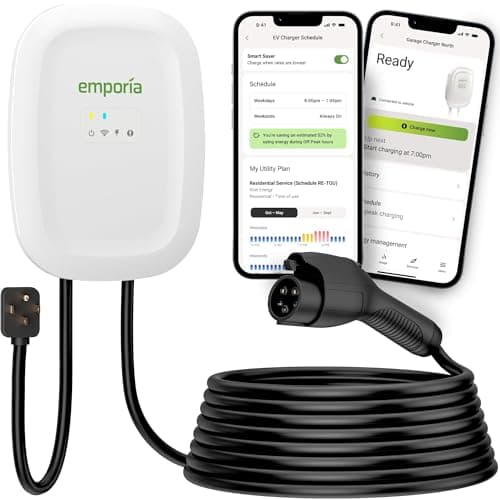
The flagship roundup: five Level 2 home chargers ranked on amperage, smart features, cable and build, with the breaker math that decides your real speed.
Read the guide →
Everything in this hub
All of Level 2 Home Chargers
Roundup
The Best Home EV Chargers, Ranked
The flagship roundup: five Level 2 home chargers ranked on amperage, smart features, cable and build, with the breaker math that decides your real speed.
Top pick: Emporia Level 2 (48A) · 5 ranked, 4 with live prices
Check price on Amazon →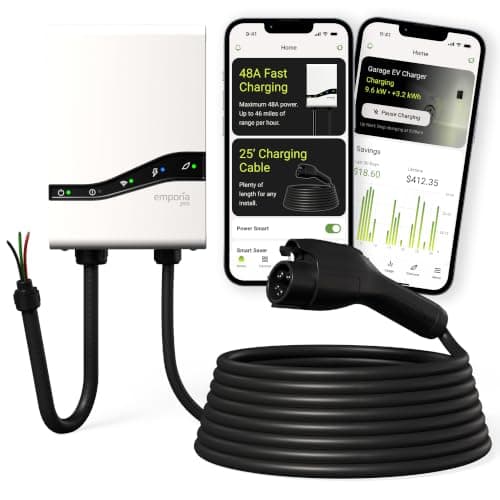
Roundup
The Best EV Chargers for a 100-Amp Panel
Chargers that fit an older 100-amp service: load-managed units that watch the whole panel, chargers whose amperage you can turn down to whatever breaker you can spare, and a certified splitter that shares the dryer circuit you already have.
Top pick: Emporia Pro (48A, PowerSmart) · 6 ranked, 5 with live prices
$599.00Amazon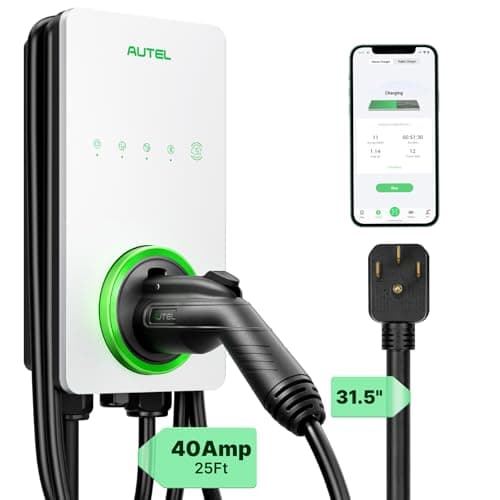
Roundup
The Best 40-Amp EV Chargers
Four genuine 40-amp Level 2 chargers ranked for the buyer on a 50-amp circuit or a plug-in NEMA 14-50 — where 9.6 kW is all the speed most homes need.
Top pick: Autel MaxiCharger (40A) · 4 ranked, 4 with live prices
$375.99Amazon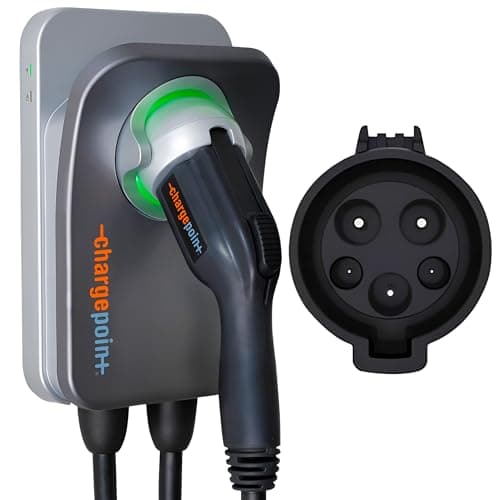
Roundup
The Best 48-Amp EV Chargers
The fastest home chargers, for the buyer who can run a 60-amp hardwired circuit and genuinely needs the speed — ranked on smart features, build and value.
Top pick: ChargePoint Home Flex · 4 ranked, 2 with live prices
$599.00Amazon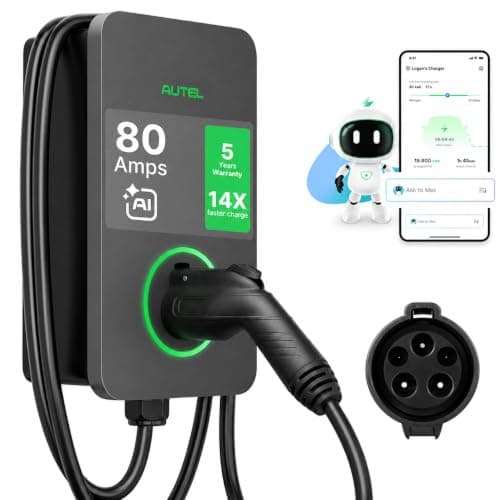
Roundup
The Best 80-Amp EV Chargers
The two genuine 80-amp / 19.2 kW home chargers — the Autel MaxiCharger (J1772) and the Grizzl-E Ultimate (NACS) — plus the honest math on why most EVs get nothing from 80 amps and should buy 48-amp instead.
Top pick: Autel MaxiCharger 80A (AC Pro) · 2 ranked, 2 with live prices
$908.65AmazonRoundup
The Best Hardwired Level 2 EV Chargers
Four Level 2 chargers ranked for a permanent, hardwired install — the fastest, cleanest way to mount a home charger, with the 60-amp circuit math and honest cons on every pick.
Top pick: Emporia Level 2 (48A) · 4 ranked, 3 with live prices
Check price on Amazon →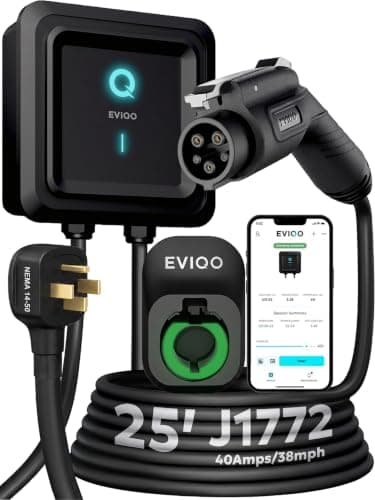
Roundup
The Best Budget EV Chargers
The cheapest EV chargers worth buying — genuinely low-cost units that still carry a real UL or ETL listing, ranked with live prices and honest trade-offs.
Top pick: EVIQO Level 2 (40A) · 4 ranked, 3 with live prices
$449.99Amazon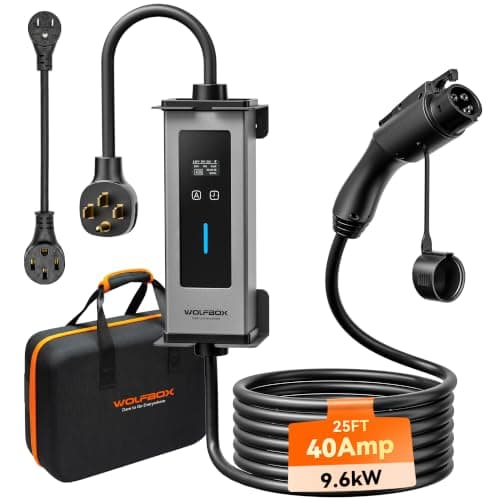
Roundup
The Best Dumb EV Chargers, Ranked
The best non-smart EV chargers: no app, no Wi-Fi, no account — just a UL/ETL-listed box that charges. Ranked with live prices and honest cons, from a rugged 40-amp dual-level portable to a plain Level 1 backup cord.
Top pick: WOLFBOX Portable (Level 1/2) · 5 ranked, 3 with live prices
$299.99AmazonRoundup
The Best Smart EV Chargers
The best Wi-Fi, app-connected Level 2 chargers ranked on the smart features that matter — scheduling, energy monitoring, load management — with live prices and honest cons on every pick.
Top pick: Emporia Level 2 (48A) · 5 ranked, 4 with live prices
Check price on Amazon →Roundup
The Best Outdoor EV Chargers
Weatherproof home chargers for a driveway, carport or exposed wall, ranked by enclosure rating (NEMA 4 vs NEMA 3R vs IP66), published temperature range and safety listing — plus the receptacle that fails long before the charger does.
Top pick: EVIQO Level 2 (40A) · 6 ranked, 5 with live prices
$449.99Amazon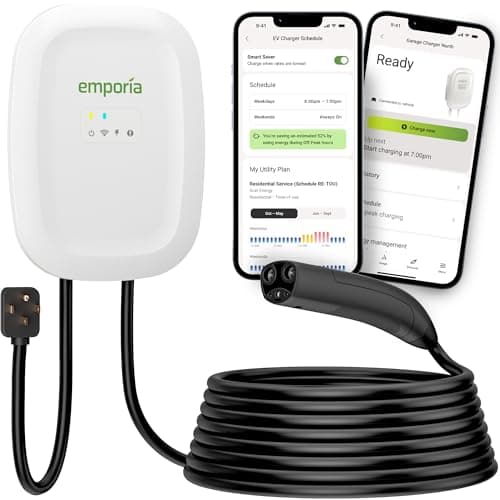
Roundup
The Best NACS Home EV Chargers
Six home chargers with a native NACS plug, ranked for Tesla owners and the 2025-onward EVs that ship with a Tesla-style port - no adapter in the loop.
Top pick: Emporia Level 2 NACS (48A) · 6 ranked, 3 with live prices
Check price on Amazon →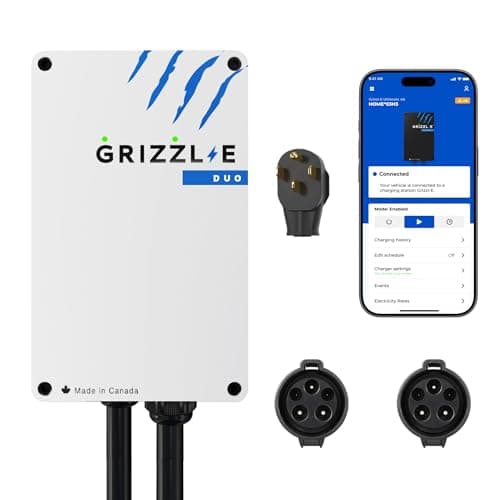
Roundup
The Best EV Chargers for Two EVs
What to buy when two EVs share one driveway: a dual-cable charger that splits a single circuit, a pair of smart chargers that share one breaker under load management, a certified splitter on an outlet you already have, or a portable as the second car's slow lane.
Top pick: Grizzl-E Duo Connect (dual 40A) · 6 ranked, 5 with live prices
$899.99AmazonHead to head
Grizzl-E Classic vs Emporia Level 2
Emporia for smart features and 48-amp speed at a low price, against the Grizzl-E Classic, the sealed no-app box that is now discontinued on Amazon. Kept for reference, with the app-free charger to buy instead.
Top pick: Emporia Level 2 (48A)
Check price on Amazon →Head to head
Standard J1772 Charger vs Tesla Universal Wall Connector
Head to head: a standard J1772 charger for a J1772-only home, or the dual-connector Tesla Universal Wall Connector for a mixed Tesla and non-Tesla household.
Top pick: Emporia Level 2 (48A) · 2 ranked, 0 with live prices
Check price on Amazon →Head to head
Emporia Level 2 vs ChargePoint Home Flex
Two of the best home chargers head to head: Emporia for 48-amp speed and smart features at a lower price, ChargePoint Home Flex for the established brand, adjustable amperage and one app for home and public charging.
Top pick: Emporia Level 2 (48A) · 2 ranked, 1 with live prices
Check price on Amazon →Head to head
ChargePoint Home Flex vs Emporia Pro
Head to head: the ChargePoint Home Flex against the Emporia Pro with PowerSmart. The install ladder, the load-management trick, the cable and enclosure specs, and which one your electrical panel decides for you.
Top pick: Emporia Pro (48A, PowerSmart) · 2 ranked, 2 with live prices
$599.00Amazon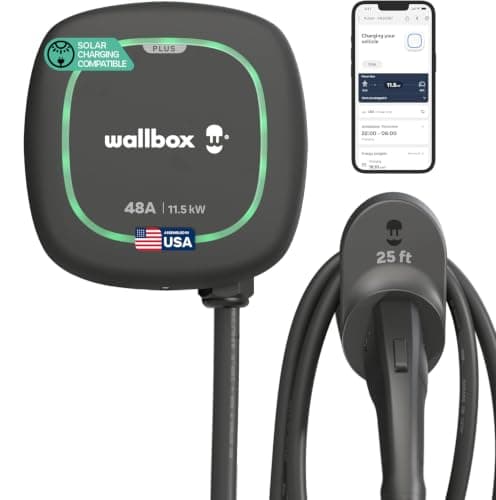
Head to head
Wallbox Pulsar Plus vs Emporia Level 2
Head to head: the compact, premium Wallbox Pulsar Plus against the value-leading Emporia Level 2 — same 48-amp speed, different priorities.
Top pick: Wallbox Pulsar Plus (48A) · 2 ranked, 1 with live prices
$699.00AmazonHead to head
EVIQO Level 2 vs Emporia Level 2
Head to head: the bottom-of-the-price-band EVIQO against the value-leading Emporia — where the cheaper unit wins and where the extra spend pays off.
Top pick: EVIQO Level 2 (40A) · 2 ranked, 1 with live prices
$449.99AmazonHead to head
Autel MaxiCharger vs Emporia Level 2
Head to head: the feature-dense Autel MaxiCharger, holster included, against the value-leading, 48-amp-capable Emporia Level 2.
Top pick: Emporia Level 2 (48A) · 2 ranked, 1 with live prices
Check price on Amazon →Head to head
Emporia NACS vs Lectron Nexus NACS
Head to head: the 48-amp-capable Emporia NACS with energy monitoring against the cheaper, UL-2594-certified Lectron Nexus plug-in.
Top pick: Emporia Level 2 NACS (48A) · 2 ranked, 1 with live prices
Check price on Amazon →Head to head
ChargePoint Home Flex NACS vs Emporia NACS
Head to head: the established, hardwired, 16-50A-adjustable ChargePoint NACS against the value-leading, plug-in-capable Emporia NACS with energy monitoring.
Top pick: Emporia Level 2 NACS (48A) · 2 ranked, 1 with live prices
Check price on Amazon →Head to head
Wallbox Pulsar Plus vs ChargePoint Home Flex
Head to head: the compact Wallbox Pulsar Plus against the adjustable, network-connected ChargePoint Home Flex — two premium smart chargers, different strengths.
Top pick: ChargePoint Home Flex · 2 ranked, 2 with live prices
$599.00AmazonHead to head
EVIQO Level 2 vs ChargePoint Home Flex
Head to head: the value EVIQO Level 2 against the established ChargePoint Home Flex — where the cheaper unit wins and where the network premium pays off.
Top pick: EVIQO Level 2 (40A) · 2 ranked, 2 with live prices
$449.99AmazonHead to head
ChargePoint Home Flex vs Autel MaxiCharger
Head to head: the adjustable, network-connected ChargePoint Home Flex against the feature-dense, dual-radio Autel MaxiCharger with an in-box holster.
Top pick: ChargePoint Home Flex · 2 ranked, 2 with live prices
$599.00AmazonHead to head
EVIQO Level 2 vs Autel MaxiCharger
Head to head: the budget, weatherproof EVIQO Level 2 against the feature-dense, dual-radio Autel MaxiCharger — both 40-amp smart chargers, different priorities.
Top pick: EVIQO Level 2 (40A) · 2 ranked, 2 with live prices
$449.99AmazonHead to head
Wallbox Pulsar Plus vs Autel MaxiCharger
Head to head: the compact, 48-amp Wallbox Pulsar Plus against the feature-dense, dual-radio Autel MaxiCharger with an in-box holster.
Top pick: Wallbox Pulsar Plus (48A) · 2 ranked, 2 with live prices
$699.00Amazon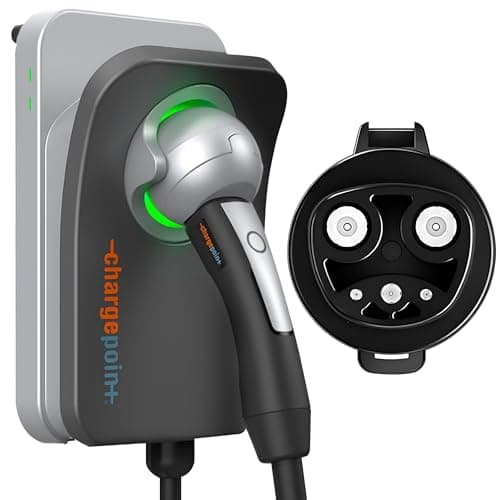
Head to head
ChargePoint Home Flex NACS vs Lectron Nexus NACS
Head to head: the established, hardwired, 16-50A ChargePoint NACS against the cheaper, plug-in, UL-2594-certified Lectron Nexus NACS.
Top pick: ChargePoint Home Flex NACS (hardwired) · 2 ranked, 2 with live prices
$549.00Amazon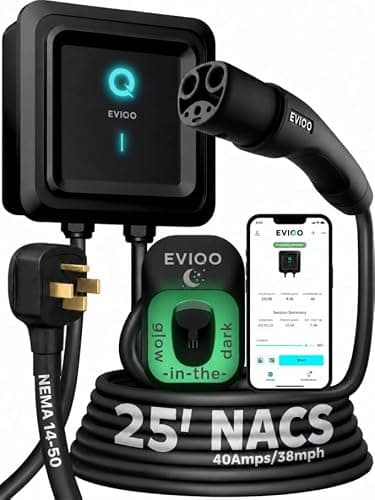
Head to head
EVIQO NACS vs Lectron Nexus NACS
Head to head: two budget plug-in NACS chargers — the IP66-rated EVIQO NACS against the UL-2594-certified Lectron Nexus, both 40-amp and inexpensive.
Top pick: EVIQO NACS (40A) · 2 ranked, 2 with live prices
$479.99AmazonHead to head
Emporia NACS vs EVIQO NACS
Head to head: the 48-amp-capable Emporia NACS with energy monitoring against the cheaper, IP66-rated EVIQO NACS plug-in.
Top pick: Emporia Level 2 NACS (48A) · 2 ranked, 1 with live prices
Check price on Amazon →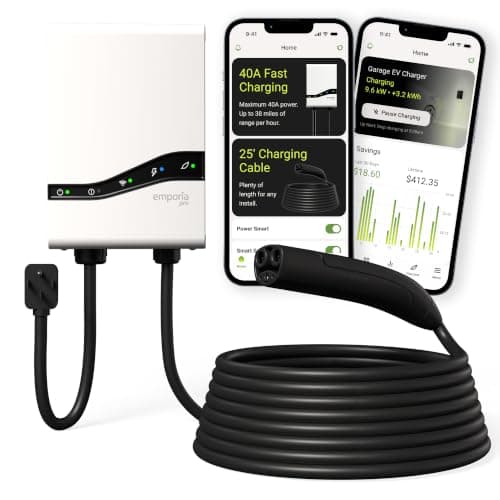
Head to head
Emporia Pro NACS vs Emporia NACS
Head to head: the load-managing Emporia Pro NACS against the standard Emporia NACS — the same charger, with PowerSmart the deciding difference.
Top pick: Emporia Pro NACS (48A, PowerSmart) · 2 ranked, 0 with live prices
Check price on Amazon →Head to head
ChargePoint Home Flex NACS vs EVIQO NACS
Head to head: the hardwired, 16-50A, network-connected ChargePoint NACS against the cheap, plug-in, IP66-rated EVIQO NACS.
Top pick: ChargePoint Home Flex NACS (hardwired) · 2 ranked, 2 with live prices
$549.00AmazonHead to head
ChargePoint Home Flex NACS vs Emporia Pro NACS
Head to head: the adjustable, network-connected ChargePoint NACS against the load-managing Emporia Pro NACS — two premium hardwired units, different strengths.
Top pick: ChargePoint Home Flex NACS (hardwired) · 2 ranked, 1 with live prices
$549.00AmazonRoundup
The Best 32-Amp EV Chargers
Thirty-two amps is the most a 40-amp breaker may carry continuously, which makes it the realistic setting for a huge number of homes. Five adjustable chargers that dial down to 32A without wasting the money you spent on headroom.
Top pick: ChargePoint Home Flex · 5 ranked, 4 with live prices
$599.00AmazonRoundup
The Best EV Chargers With a Long Cable
Twenty-five feet is the practical maximum a home charger ships with, and it is not the same as 25 feet of reach. Five long-cable chargers ranked, plus the geometry that tells you whether yours is long enough.
Top pick: Emporia Level 2 (48A) · 5 ranked, 4 with live prices
Check price on Amazon →Roundup
The Best EV Chargers for an Airbnb
Hosting an EV driver is now a search filter, not a nice-to-have. Five chargers ranked for short-term rentals on guest-proof operation, weather resistance and whether you can see what a stay cost you.
Top pick: Emporia Level 2 (48A) · 5 ranked, 4 with live prices
Check price on Amazon →Roundup
The Best EV Chargers With Load Management
When the panel is full, a load-managed charger is cheaper than a service upgrade — and the 2023 NEC lets the load calculation count the managed setpoint instead of the charger's nameplate. The three mechanisms that do it, ranked by what each one actually fixes.
Top pick: Emporia Pro (48A, PowerSmart) · 5 ranked, 4 with live prices
$599.00AmazonRoundup
The Best EV Chargers for a Jeep 4xe
The 4xe's onboard charger accepts 7.2 kW — about 32 amps at 240 volts — and refills the pack in roughly two hours. Paying for a 48-amp charger buys nothing. Five chargers that match the car, ranked by what you actually get for the money.
Top pick: EVIQO Level 2 (40A) · 5 ranked, 4 with live prices
$449.99AmazonRoundup
The Best EV Chargers for a BMW
Every BMW EV sold in the US takes 11 kW on AC — about 48 amps at 240 volts — so a 40-amp charger leaves real speed on the table. Five chargers that match the car, and the one circuit decision that matters more than the brand on the box.
Top pick: Emporia Level 2 (48A) · 5 ranked, 4 with live prices
Check price on Amazon →Roundup
The Best EV Chargers for a Solar Home
True solar-following chargers are a niche, expensive category you will not find on Amazon. The realistic solar setup is a charger that reports what it uses and charges when the sun is up — five picks ranked on monitoring, scheduling and the panel-wide view.
Top pick: Emporia Level 2 (48A) · 5 ranked, 4 with live prices
Check price on Amazon →Roundup
The Best EV Chargers for a Chevy Equinox EV
Chevrolet gives the Equinox EV an 11.5 kW onboard charger — 48 amps at 240 volts — and an 85 kWh battery behind a J1772 inlet. That combination makes it one of the few affordable EVs where a 48-amp charger is not overkill. Six chargers ranked for the car, from the 48-amp match to the cheapest unit that still finishes overnight.
Top pick: Emporia Pro (48A, PowerSmart) · 6 ranked, 6 with live prices
$599.00AmazonRoundup
The Best EV Chargers for Cold Weather
Ranked on three published figures: the manufacturer's stated operating temperature range, the enclosure rating under UL 50E, and cable construction. The Autel MaxiCharger states the widest range in this group; the cheapest cold-rated pick is the EVIQO, with an IP66/NEMA 4 enclosure and a deliberately flexible cable.
Top pick: Autel MaxiCharger (40A) · 5 ranked, 5 with live prices
$375.99Amazon