Skip to content
Volt & Cable

HUB 03 · Adapters & Connectors

Lectron NACS-to-J1772 Adapter Review

The default adapter for a non-Tesla EV to charge at a Tesla-style NACS charger, rated for a full 48 amps, AC only.

By Stephen V.Updated How we research
#ad

We earn a commission when you buy through our Amazon links, at no extra cost to you. It never affects our rankings, and we say so when the cheaper product is the better buy. How this works.

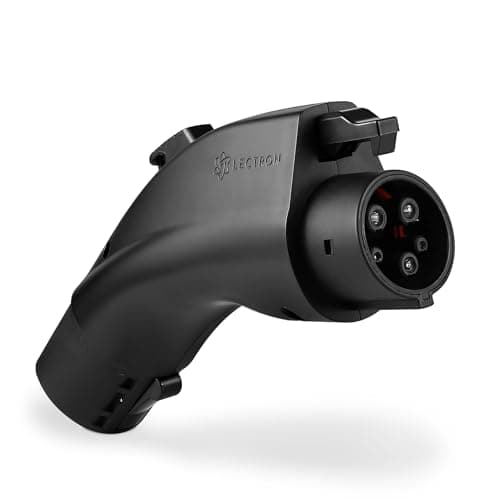
The Lectron NACS-to-J1772 adapter is the default choice for a non-Tesla EV that wants to charge at a Tesla-style NACS charger. It is widely used, rated for a full 48 amps, and works at Tesla Wall Connectors, Destination Chargers, and the Mobile Connector. It is AC only, so it does not unlock Superchargers, and it points the wrong way for a Tesla trying to use a J1772 charger.

If you own a J1772 car, this is probably the first adapter anyone recommends to you, and the recommendation holds up. We compile the published specs and owner feedback and explain what the adapter can and cannot do; we have not bench-tested it.

What it actually does

The name tells you the direction: NACS to J1772means from a NACS charging source to a J1772 car. One end sockets onto a Tesla-style NACS connector; the other end is a J1772 plug for your car's port. In practice, that lets a non-Tesla EV pull AC power from Tesla Wall Connectors (the wall units in homes and businesses), Tesla Destination Chargers (hotels and public venues), and the portable Tesla Mobile Connector. If you have ever pulled into a hotel and found only Tesla-style connectors, this is the part that gets you charging.

The 48-amp rating and what it means for speed

The Lectron is rated for 48 amps at 240 volts. That matters because a home Level 2 circuit is capped by code at a 48-amp continuous draw, so the adapter can carry the fastest current a home charger will ever deliver without being the weak link. On most setups you will actually see 40 amps or less, which is well within its rating. The adapter never adds speed; it simply avoids subtracting any. Your real rate is set by your car's onboard charger and the NACS charger you plug into, generally landing around 25 miles of range per hour at Level 2, per US Department of Energy figures.

AC only: not for Superchargers

This is the limit to understand before you buy. The Lectron is a passive AC adapter. It works at Tesla's AC chargers, but it does not make your J1772 car compatible with Tesla Superchargers, which are DC fast chargers. No simple adapter does. If your goal is road-trip DC fast charging, this is not the product for that, and you should not expect it to be.

Check the direction against your car. The Lectron is for a J1772 car using a Tesla-style charger. If your car already has a NACS port, or you are trying to charge a Tesla at a J1772 station, you need the opposite adapter; see our best J1772-to-Tesla adapters. And if the connector names are still fuzzy, the NACS vs J1772 guide sorts them out.

Build, fit, and safety

As a current-carrying part, the fit is what matters most. The Lectron is designed to seat firmly at both ends so the contacts stay tight under load, and it has the long track record and volume of owner feedback that a value-brand rival cannot match. On safety, the standard to look for on any EV adapter is UL 2251; confirm the current listing on the live product page before you leave a car charging on any adapter unattended, and stop using it if it ever feels loose or gets unusually warm. None of that is unique to this unit; it is basic hygiene for a part that carries the whole charging current.

How it compares to the value pick

The main alternative is the EVDANCE NACS-to-J1772 adapter, which does the identical job, is rated even higher (to 80 amps), and usually costs less. What you get by paying up for the Lectron is track record and the reassurance of the most-reviewed option in the category. If brand history matters more to you than saving a little, the Lectron is the conservative buy; if price leads, the EVDANCE is worth a look. We line them up on the best NACS-to-J1772 adapters page.

Who should buy it

Buy the Lectron if you drive a J1772 EV and regularly encounter Tesla-style AC chargers: a workplace, a relative's Wall Connector, or a hotel chain that standardized on Destination Chargers. Skip it if your car already has a NACS port, if you need to charge a Tesla at a J1772 station, or if you are chasing DC fast charging, because none of those is what this adapter is built for.
The short answer

Quick picks

#ProductBest forScorePrice
01
Lectron NACS → J1772 Adapter

The default adapter for a J1772 car to use a Tesla-style (NACS) home or destination charger — rated for the full 48 amps.

A J1772 car using NACS chargers
8.0
$108.28Amazon

#ad · Live prices from the Amazon Product API, as of Jul 18, 2026. Where we have no verified live price, we show none — we would rather leave a gap than print a number that has gone stale.

In detail

The picks, in full

01
Lectron Lectron NACS → J1772 Adapter

A J1772 car using NACS chargers

Lectron NACS → J1772 Adapter

NACS → J177248A / 240VAC chargingTesla connectors
8.0/10

The default adapter for a J1772 car to use a Tesla-style (NACS) home or destination charger — rated for the full 48 amps.

Compatibility
9
Safety listing
8
Build quality
8
Value
7

Pros

  • Lets a non-Tesla (J1772) EV charge from Tesla Wall Connectors, Destination Chargers and Mobile Connectors
  • Rated for 48 amps — no bottleneck on a fast home circuit
  • Widely used and well-reviewed for AC home charging

Cons

  • AC charging only — it does not enable Tesla Supercharger (DC) use
  • Costs more than the reverse (J1772-to-NACS) adapters

Don't buy this if…

your car already has a NACS port, or you need to charge a Tesla at a J1772 station. This adapter points the wrong way for that — you want a J1772-to-NACS adapter instead.

$108.28View on Amazon

Price as of Jul 18, 2026. Prices change — Amazon's is the one that counts.

#ad · we may earn a commission from this link to Lectron NACS → J1772 Adapter

Before you buy: three quick checks

The Lectron is a simple purchase, but a minute of confirming these will save you a return.

  • Direction. Your car has a J1772 port and you want to use a Tesla-style NACS charger. If either half of that is not true, this is the wrong adapter.
  • AC, not DC. You are charging at a Tesla Wall Connector, Destination Charger, or Mobile Connector, not a Supercharger. This adapter does not do Superchargers.
  • Rating headroom. The 48-amp rating covers any home circuit. If your setup somehow exceeds that, you are into hardwired 48-amp territory and should confirm the rating chain end to end.

If all three line up, this is a straightforward, well-supported adapter that does its one job. For the charger it plugs into, see our best home EV chargers roundup.

How we picked

We do not run a testing lab

We compiled published specifications from manufacturer manuals and spec sheets, verified the safety listings (UL / ETL), computed the real running and installation costs, checked the wiring math against the NEC continuous-load rule, and read aggregated owner reviews — then scored each product against a published rubric. The scores are judgments from documented research — they are not bench measurements, because we do not have a test lab and we are not going to pretend we do. Every spec and cost figure is cited in Sources.

Questions

Frequently asked

Can I Supercharge my non-Tesla EV with the Lectron adapter?
No. The Lectron is an AC-only adapter. It works at Tesla Wall Connectors and Destination Chargers, which are AC, but not at Superchargers, which are DC fast chargers. No passive adapter changes that.
Will it work with a Tesla Wall Connector at a friend's house?
Yes. That is one of the most common uses. The adapter fits over the Wall Connector's NACS plug and presents a J1772 plug to your car, so your non-Tesla EV can charge from it at AC Level 2 speeds.
Does the 48-amp rating limit my charging?
No. A home Level 2 circuit is capped at 48 amps continuous, and most run at 40 amps or less, so the Lectron's rating covers the fastest home charging you are likely to meet. Your car and the charger set the actual speed.
What if my car already has a NACS port?
Then you do not need the Lectron. A NACS-port car that wants to use a J1772 charger needs the reverse adapter; see our J1772-to-Tesla adapters page for that direction.

Keep reading

Receipts

Sources

We do not run a testing lab, and we do not pretend to. Where a measured number came from someone else's lab, we name them and link them. Where we could not verify something, we say so on the page rather than quietly leaving it out. Read our full method.