HUB 05
EV Charging Guides & Buying Advice
The pre-purchase questions answered with math and citations — cost to charge, wire size, connector standards and real install costs.
We earn a commission when you buy through our Amazon links, at no extra cost to you. It never affects our rankings, and we say so when the cheaper product is the better buy. How this works.
Before you buy a charger you have questions the product pages do not answer: what a charge actually costs, what breaker and wire a 40-amp charger needs, whether Level 2 is worth it over the cord in the trunk, and what this NACS thing everyone keeps mentioning is. These guides answer those with arithmetic you can reproduce and sources you can check.
Start with the money question
The one guide the whole category skips is the cost math, so we led with it: our cost to charge an EV at home guide shows the formula, a worked example, and a table across a range of electricity rates so you can find your own number. Home charging is dramatically cheaper than gas, and it is worth seeing exactly how cheap before you spend on hardware.
Then the practical ones
- Types of EV chargers — Level 1 vs 2 vs 3, AC vs DC, and which actually matters at home.
- Level 2 installation cost — real dollar ranges and what drives them, including the panel-upgrade question.
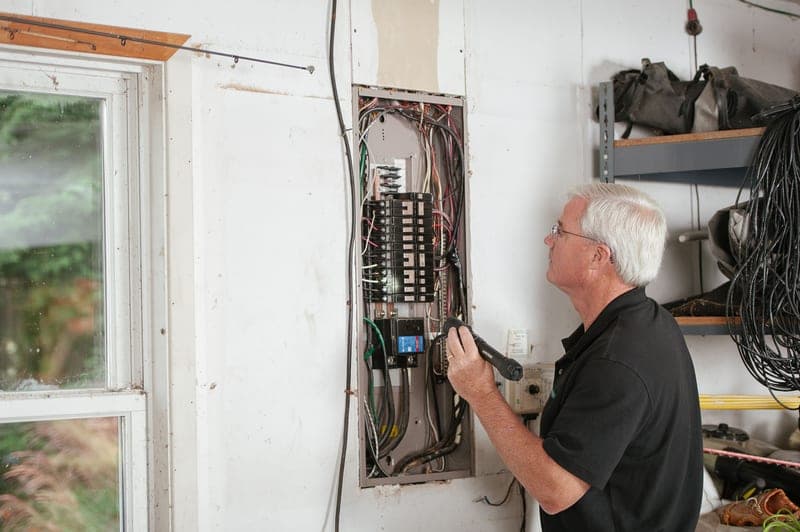
- Wire size and breaker — the NEC continuous-load math that decides what amperage your home can support.
- NACS vs J1772 — the connector standards, which car uses which, and why adapters exist.
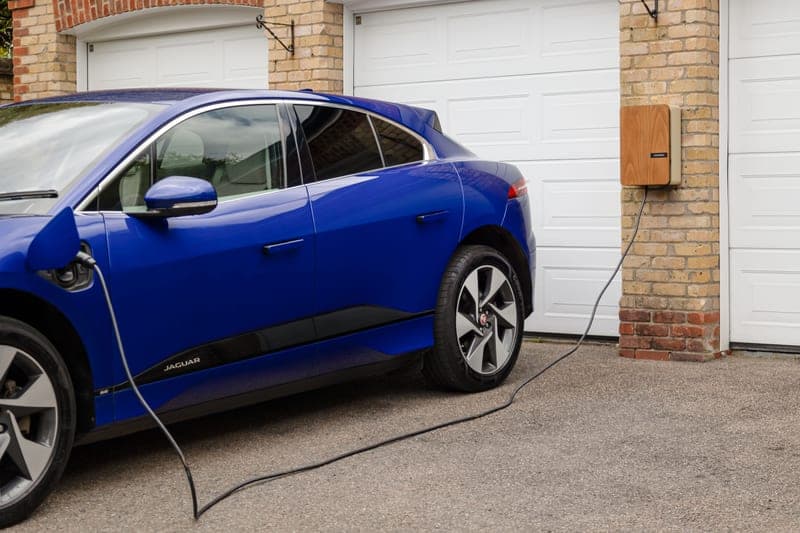
- How to charge an EV at home— the beginner's walkthrough, from the outlet you need to the first charge.
- Charging in an apartment or rental — the renter's options when you cannot hardwire a wall.
- EV charger troubleshooting — safe, step-by-step fixes when a charger stops working.
- EV charging in cold weather — why winter cuts range and slows charging, and the habits that help.
- What amp charger do I need? — how to land on 32, 40, or 48 amps for your car and panel.
- How long does it take to charge an EV? — the time formula and real numbers by charging level.
- Can I install it myself? — where DIY ends and a licensed electrician begins.
- EV charging on a road trip — DC fast charging, planning, and what to keep in the trunk.
- Gifts for EV owners — the accessories that actually get used, sorted by budget.
- Do I need a smart EV charger? — when Wi-Fi and an app pay off, and when they do not.
- How to save money charging — the rate-plan and off-peak levers that cut your bill.
- How to charge a Tesla at home — the three routes, without assuming the Tesla-branded charger.
- Are charging adapters safe? — what the UL listing means and how to use one safely.
- Can I use a dryer outlet? — NEMA 14-30 vs 14-50, and the circuit limits that matter.
- Should I charge to 100%? — daily 80% vs full, and the LFP exception.
- Charging a plug-in hybrid — why a PHEV often needs nothing more than the free Level 1 cord.
- The best EV charger brands — what Emporia, Grizzl-E, ChargePoint and the rest are each good at.
- Tethered vs untethered — attached-cable vs socket-only chargers, and why US homes skew tethered.
Charging away from home, and by vehicle
Home is only half of it. For public charging, start with how to use a public charger, the networks explained tour, and the etiquette that keeps stations civil. DC fast charging and using a Supercharger in a non-Tesla cover the road-trip end, and CCS vs NACS untangles the connectors. If you rent or street-park, see charging without a driveway.
Buying for a specific car? We have per-vehicle setups for the F-150 Lightning, Hyundai Ioniq 5, Chevy Bolt, Rivian, and Mustang Mach-E — plus a new-owner checklist for the first week. When something goes wrong, why is my EV charging so slow and why a charger trips the breaker are the two we get asked most, and can you use an extension cord and can you use a regular outlet settle the two safety questions every new owner has.
We keep adding per-vehicle setups as the popular models land: the best-selling Tesla Model Y and Model 3, the Chevy Equinox EV, Hyundai Ioniq 6, Subaru Solterra, Nissan Ariya, and Honda Prologue. On the public side, Plug and Charge explains automatic billing, home vs public cost settles the money question, and battery preconditioning speeds up road-trip stops. Two-car homes should read charging two EVs in one household, and when something sticks, a connector that won't unplug and amperage that keeps dropping are the two we field most. Renters in shared parking should start with charging in a parking garage.
The latest per-vehicle additions cover the Tesla Cybertruck, Kia EV9, Chevy Blazer EV, Audi Q4 e-tron, Polestar 2, BMW iX, GMC Hummer EV, Lucid Air, VW ID. Buzz, and the Mini Cooper SE. For public charging, step-by-step network guides now cover Electrify America, ChargePoint and EVgo, alongside what a CCS connector is, kW vs amps, why EVs charge 10 to 80%, whether every charger works with every EV, and why a public charger will not start. On cost and safety, see does charging raise your electric bill, can a generator charge an EV, and EV charging gifts under $50.
The per-vehicle library also covers the Cadillac Lyriq, Kia EV6, Volkswagen ID.4, BMW i4, Kia EV9 and Nissan Leaf, and the EV charger buying mistakes page collects the errors those guides keep having to correct.
Money, paperwork and the things that go wrong
The money question first: the federal credit for home charging equipment has lapsed, and the EV charger tax credit page sets out what you can still claim and where the remaining rebates are. Before you buy hardware, EV charger vs 240V outlet decides whether you need a wall unit or just a receptacle, and what a CT clamp is explains the sensor behind every charger that claims load management. What is OCPP covers the open protocol on smart-charger listings and, honestly, when it is worth paying for. When the install is in and something is off, the two we field most are a charger that will not connect to Wi-Fi and a breaker that is hot to the touch— one is almost always harmless, and the other has four specific signs worth knowing.
Buying for someone else, and the November question
Charging gear is a genuinely good gift and an easy one to get wrong, so we write the gift guides for the gifter— who each pick suits, what to confirm before buying, and what not to buy blind. Start with gifts for EV owners for every budget at once, or go straight to the one that matches your recipient: a new EV owner, a Tesla owner, someone who rents and cannot install anything, or an EV road-tripper. By budget, the tiers run under $50, under $150, and big-budget.
And if you are wondering whether to buy now or wait, our Black Friday and Cyber Monday deals page sets out what has actually discounted in this category in past years — with dates and sources — what reliably has not, and which purchases are not worth delaying. No predicted percentages, and no deals that have not happened.
How to use them
Each guide bridges back to the product pages it supports, so you can go from "what breaker do I need" straight to the chargers that fit it. And a standing rule across every one of them: we are enthusiasts, not licensed electricians, so anything touching your panel or wiring is framed as standard practice to confirm with a professional and your local code — never as instructions to do it yourself. Our full method is on the how we research page.
Everything in this hub