HUB 02
Portable & Travel EV Chargers
A plug-in EVSE you can throw in the trunk. The category the incumbents ignore — and often the smarter buy than a wall unit.
We earn a commission when you buy through our Amazon links, at no extra cost to you. It never affects our rankings, and we say so when the cheaper product is the better buy. How this works.
A portable charger is a Level 2 EVSE that plugs into a 240-volt outlet instead of being wired to the wall. It costs less than a mounted unit, travels in the trunk, and — the part most buying guides skip — often does the exact same job at home. If you already have, or can add, a NEMA 14-50 outlet, a portable is frequently the smarter buy.
What to buy first
The WOLFBOX dual-level portable is the one to beat: it ships with both a 240-volt and a 120-volt plug, so it charges fast at home and still works at a standard outlet on the road. The full ranking is the best portable EV chargers roundup. If a 240-volt outlet is not an option where you park, the best 110V EV chargers ranks the Level 1 cords that run from an ordinary household socket.
How the category divides
- Level 2 vs Level 1. A true Level 2 portable pulls 240 volts and adds ~25 miles per hour. A Level 1 unit runs on a normal 120-volt outlet and adds only ~3–5 miles per hour — useful as an emergency backup, hopeless as a daily charger.
- Fixed vs adjustable amperage. An adjustable portable lets you dial the current down for a weaker circuit — genuinely useful if you travel to homes with different wiring.
- Plug type. Most use a NEMA 14-50, the same 240-volt outlet a plug-in wall charger uses. Some include adapters for other outlets.
What decides the price
Portables are cheaper than wall units to begin with, so the spread is smaller. You pay more for a longer cable, a sturdier weatherproof build, adjustable current, and a built-in delay timer for off-peak charging. What you should not pay a premium for is a big-brand name on what is a fundamentally simple device — several value brands make well-built 40-amp portables.
The mistake buyers make
Underestimating the outlet. A portable is only as safe as the receptacle it plugs into, and a cheap NEMA 14-50 outlet is the part that overheats under a continuous 40-amp EV load. If you are going the plug-in route, budget for a proper industrial-grade receptacle and a licensed electrician — see the NEMA 14-50 outlet guide and the NEMA 14-50 charger guide. If you are weighing a portable against a fixed wall unit, our portable vs hardwired comparison lays out the trade. Not sure how many amps to buy? The 16A vs 32A vs 40A guide breaks it down, and renters should start with the best charger for renters. Tesla owners have their own two-route path in the portable EV charger for a Tesla guide; if you are weighing the slow-but-anywhere option, see 120V vs 240V charging; and before you leave one plugged in outdoors, read can you leave a portable charger outside.
Deciding whether a portable is right for you? See are portable chargers worth it and how fast a portable charges, keep a backup in the trunk, and see the per-vehicle picks for a Rivian or an F-150 Lightning.
If two portables are on your shortlist, the head-to-head pages settle it faster than two reviews: Lectron NACS Portable vs Lectron Portable is the connector decision for a Tesla-port car, and MUSTART vs Lectron Portable is the build-versus-price one. Still unsure whether you need a wall unit at all? EV charger vs 240V outlet works through the outlet-plus-portable route against a hardwired charger.
Start here
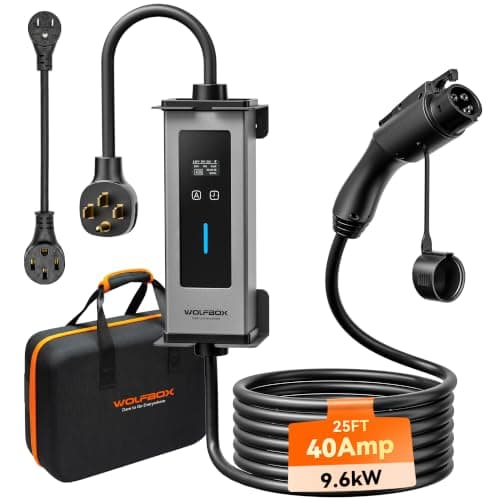
The Best Portable EV Chargers
Our ranked shortlist of plug-in, take-anywhere chargers, led by the dual-level WOLFBOX - one charger for home and the road.
Read the guide →
Everything in this hub
All of Portable & Travel Chargers
Roundup
The Best Portable EV Chargers
Our ranked shortlist of plug-in, take-anywhere chargers, led by the dual-level WOLFBOX - one charger for home and the road.
Top pick: WOLFBOX Portable (Level 1/2) · 4 ranked, 3 with live prices
$299.99Amazon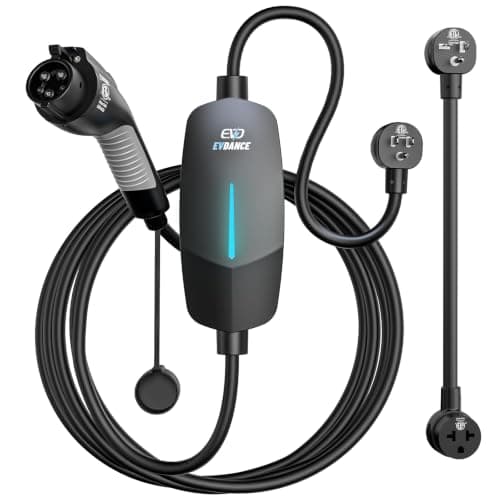
Roundup
The Best 110V EV Chargers
The Level 1 cords that run from a normal wall outlet, ranked - led by the ETL-listed EVDANCE, which is sized to the circuit instead of past it.
Top pick: EVDANCE Level 1&2 (12A/16A) · 6 ranked, 6 with live prices
$107.99AmazonHead to head
Portable vs Hardwired EV Charger
Plug-in portable or hardwired wall unit? Cost, mobility, install and the 40A-vs-48A amperage gap, settled.
Top pick: WOLFBOX Portable (Level 1/2) · 2 ranked, 2 with live prices
$299.99Amazon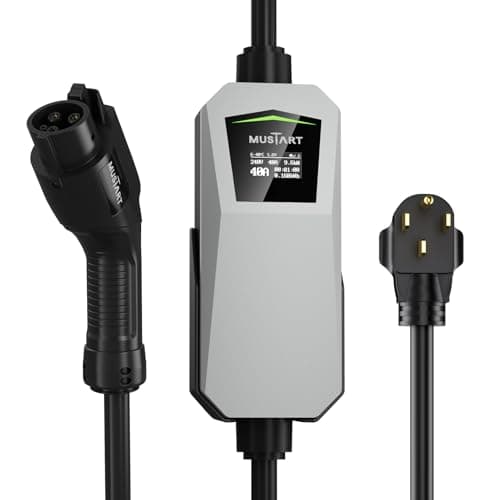
Head to head
MUSTART vs WOLFBOX Portable EV Charger
Head to head: the budget MUSTART 40A portable against the dual-level (120V/240V) WOLFBOX portable — cheapest vs most flexible.
Top pick: MUSTART 40A Portable · 2 ranked, 1 with live prices
Check price on Amazon →Head to head
MUSTART vs EVDANCE Portable EV Charger
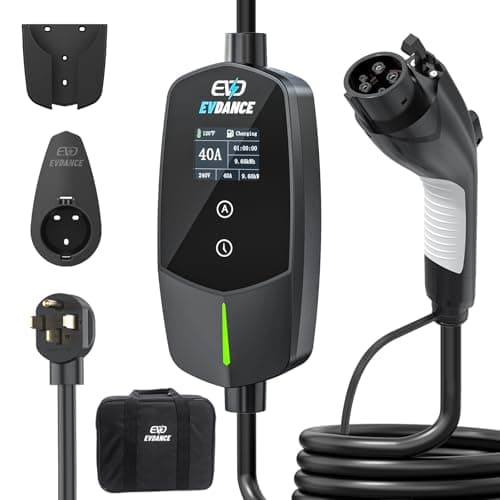
Head to head: the cheapest-in-class MUSTART 40A portable against the EVDANCE 40A with a longer cable and an off-peak delay timer.
Top pick: MUSTART 40A Portable · 2 ranked, 1 with live prices
Check price on Amazon →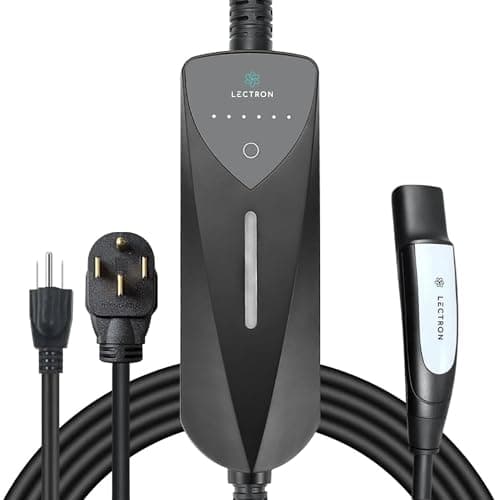
Head to head
Lectron NACS Portable vs WOLFBOX J1772 Portable
Head to head: the Lectron NACS dual-level portable against the WOLFBOX J1772 dual-level portable — your car's plug narrows it, then brand and features decide.
Top pick: Lectron NACS Portable (8–40A) · 2 ranked, 1 with live prices
Check price on Amazon →Roundup
The Best Portable EV Chargers for Road Trips
A travel EVSE earns its place the night the DC fast charger is down and a motel has a dryer outlet. Four portables plus the adapter that unlocks them, ranked on adjustable amperage and what they plug into.
Top pick: WOLFBOX Portable (Level 1/2) · 5 ranked, 3 with live prices
$299.99Amazon