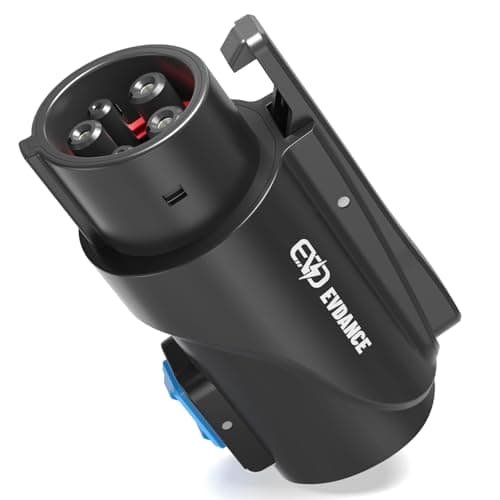
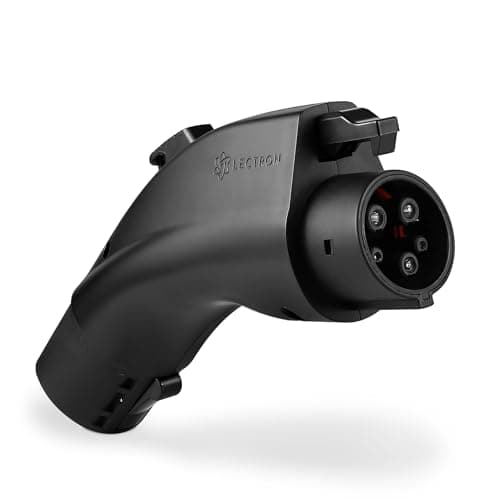
If you drive a non-Tesla EV with a J1772 charge port and want to plug into a Tesla-style NACS charger, the Lectron NACS-to-J1772 adapter is the default pick, with the longest track record and a full 48-amp rating. The EVDANCE NACS-to-J1772 adapter does the exact same job, usually for less, and is the value alternative. Both are for AC charging only, and neither one unlocks Tesla Superchargers.
This is the adapter people reach for after a hotel, a friend's garage, or a workplace turns out to have a Tesla-style connector instead of the J1772 plug their car expects. It is a small, passive piece of hardware, but it carries the full charging current, so which one you buy and how it is rated genuinely matters. We compile the published specs and safety information and do the math on what it can and cannot do; we have not bench-tested either unit.
Which direction does this adapter go?
Read the name literally: a NACS-to-J1772 adapter goes from a NACS charging source toa J1772 car. One end is a socket that fits over a Tesla-style NACS connector; the other end is a J1772 plug that goes into your car's J1772 port. So the charger is the Tesla-style one, and the car is the ordinary non-Tesla EV.
Get the direction right before you buy. A NACS-to-J1772 adapter is for a J1772 car using a NACS charger. If instead you own a Tesla (or a new NACS-port EV) and you want to use a J1772 charger, you need the opposite part. That is covered on our best J1772-to-Tesla adapters page. Buying the wrong direction is the single most common adapter mistake.
If the connector shapes are still a blur, start with our plain-English NACS vs J1772 guide. It explains why North America is shifting to the Tesla-style NACS plug while the enormous installed base of home and public equipment is still J1772, which is exactly the gap these adapters bridge.
The two picks at a glance
1. Lectron NACS-to-J1772 — the default
The Lectron is the one most J1772 drivers end up with, and for good reason: it is widely used, widely reviewed, and rated for a full 48 amps, so it will not throttle you on a fast home circuit. It lets a non-Tesla EV charge from Tesla Wall Connectors, Destination Chargers, and the portable Tesla Mobile Connector. If you want the conservative choice with the most owner feedback behind it, this is it. We cover it in depth in our Lectron NACS adapter review.
2. EVDANCE NACS-to-J1772 — the value pick
The EVDANCE does the identical job and is rated even higher, to 80 amps and 250 volts, which is comfortably above anything a home or public AC circuit will ask of it. It usually undercuts the Lectron on price. The trade is track record: it is a value brand with less history behind it, so it is worth checking that the fit is snug on your specific connector. Functionally, for AC home and destination charging, the two are interchangeable.
AC only: what this adapter can and cannot do
Every adapter on this page is a passive, AC-only device. That single fact answers most of the questions buyers have:
- It works at Tesla Wall Connectors (home and business), Tesla Destination Chargers (hotels, restaurants, parking structures), and the Tesla Mobile Connector. These are all AC Level 2 chargers.
- It does not work at Tesla Superchargers. Superchargers are DC fast chargers, and a simple passive adapter does not turn your J1772 car into a Supercharger-compatible vehicle. Do not buy this expecting road-trip DC speeds.
AC Level 2 charging tops out around 25 miles of range per hour, and up to roughly 40 at higher amperage, per US Department of Energy figures. That is the ballpark you should expect through one of these adapters at a healthy NACS charger, the same as you would get from a J1772 charger of the same power. The adapter changes the plug shape; it does not change the physics of AC charging.
Where you will plug in
It helps to know which chargers this adapter actually opens up, because they are more common than many J1772 drivers realize:
- Tesla Destination Chargers. Hotels, restaurants, wineries, and parking structures install these Tesla-branded AC units to draw in EV drivers. With the adapter they become yours to use too, which can quietly solve overnight charging on a road trip.
- Tesla Wall Connectors.The wall unit in a friend's or relative's garage, or at a small business, is AC and works with the adapter.
- The Tesla Mobile Connector. The portable unit a Tesla owner keeps in the trunk is also AC, so you can borrow a charge in a pinch.
None of this touches Superchargers, which stay off-limits to a passive adapter. But the AC side of the Tesla network is large, and this adapter is the key that makes it available to a non-Tesla car.
Lectron or EVDANCE: how to decide
Because the two do the same job, the decision comes down to what you value:
- Buy the Lectron if you want the most-reviewed, longest-running option and the reassurance that comes with it. It is the conservative default, and its 48-amp rating covers every home circuit.
- Buy the EVDANCE if you would rather spend less for the same function. Its 80-amp rating has even more headroom, and for AC home and destination charging it is functionally a match; the trade is a shorter brand track record, so confirm the fit is snug when it arrives.
Whichever you choose, keep the direction straight: this is for a J1772 car using a Tesla-style charger. For the reverse case, see the J1772-to-Tesla adapters.
Not sure your car takes a J1772 plug?
Almost every non-Tesla EV sold in North America before the NACS switchover uses a J1772 port for AC charging, including most Chevrolet, Ford, Nissan, Volkswagen, Hyundai, and Kia EVs of the last decade. If your car came with a J1772 charging cable, or its home charger ends in the familiar rounded J1772 plug, this adapter points the right way for you. Once brands started building the Tesla-style NACS port into new cars, that is the moment the opposite adapter becomes the one to buy instead. The NACS vs J1772 guide shows both plug shapes side by side if you want to be certain.
Why the 48-amp rating is enough
A home Level 2 circuit is capped by code at a continuous draw of 48 amps (on a 60-amp breaker), and most plug-in setups run at 40 amps or less. The Lectron's 48-amp rating covers the fastest home circuit you are likely to meet, and the EVDANCE's 80-amp rating has headroom to spare. In practice, neither adapter is the bottleneck; your car's onboard charger and the charger you are plugged into set the actual speed. What you are paying for in the rating is margin and safety, not extra miles per hour.
If you are still choosing the charger itself rather than just the adapter, our best home EV chargers roundup walks through the Level 2 units that pair with these adapters.
How to choose a NACS-to-J1772 adapter
There are only a handful of things that actually separate one of these adapters from another. Here is what to weigh, in order.
Safety listing: look for UL 2251
Because the adapter carries the full charging current, the relevant safety standard is worth knowing. For EV charging connectors and adapters, that standard is UL 2251 (with UL 2252 as a closely related listing). When a manufacturer publishes a UL listing, it is a real reassurance that the plug, pins, and housing were evaluated to carry this load. Our reverse-direction pick, the LENZ J1772-to-NACS adapter, states UL 2251 certification outright, for example. For any NACS-to-J1772 adapter, check the current listing on the live product page before you rely on it, and treat a clearly stated listing as a point in its favor.
Amperage rating vs your circuit
Match or exceed the amperage your charger can deliver. A 48-amp rating covers the fastest home circuit; an 80-amp rating has margin on top of that. You do not need to overthink this, because both of our picks already clear the ceiling of home AC charging. The rule is simply that the adapter's rating should never be the smallest number in the chain.
Fit and build quality
A loose or rattly adapter is the thing to avoid. The connection needs to seat firmly at both ends so the contacts stay tight under load; a poor fit means heat, and heat is what you are trying to avoid in a current-carrying joint. When a value-brand unit arrives, seat it fully at both ends and confirm it does not wobble before you leave a car charging on it unattended. If anything feels loose or gets unusually warm, stop using it.
Where you will actually use it
Think about the real-world scenario. Most J1772 drivers buy this adapter for a specific place: a hotel chain that installed Tesla Destination Chargers, a relative with a Tesla Wall Connector in the garage, or a workplace that standardized on NACS. Keep the adapter in the car so it is there when you arrive. It is small enough to live in the frunk or a door pocket, and it is exactly the kind of thing that is useless the one time you need it and left it at home.
One adapter, one direction. If your household mixes a Tesla and a non-Tesla EV, you may end up owning adapters that point both ways. A NACS-to-J1772 adapter lets the non-Tesla car use Tesla equipment; a J1772-to-Tesla adapter lets the Tesla use J1772 equipment. They are not interchangeable. Label them if you keep both.