HUB 04 · Cable Management & Accessories
EV Charger Surge Protection
Skip the plug-in surge protector: the right answer is a panel-level device, and for dwelling services the code has required one since the 2020 NEC.
We earn a commission when you buy through our Amazon links, at no extra cost to you. It never affects our rankings, and we say so when the cheaper product is the better buy. How this works.
Do not buy a surge protector for your EV charger — buy one for your panel. There is no consumer power strip that handles a continuous 40-amp 240-volt load, and the protection that actually matters is a whole-home surge protective device (SPD) installed at or next to your service equipment. Since the 2020 NEC, 230.67 has required a Type 1 or Type 2 SPD on services supplying dwelling units — so if your panel was installed or replaced recently, you may already have one. Ask your electrician before you buy anything.
This question comes up because an EV charger is the most expensive thing most people have ever hardwired into their house, and the instinct to protect it is sound. The instinct to protect it at the charger is what leads people wrong. Understanding why reframes the purchase usefully: you are not protecting a charger, you are protecting a house that now contains a charger.
Why there is no charger-sized surge protector
Point-of-use surge protectors — the power strips behind a television — are built for 15- or 20-amp 120-volt circuits feeding electronics that draw a few amps. An EV charger is a 240-volt appliance pulling 32 or 40 amps continuously for hours. Those are different worlds:
- Most Level 2 installs are hardwired. There is no plug, so there is nowhere to insert a strip. The conductors run from the breaker to the charger's terminals.
- Where there is a plug, it is a 50-amp 240-volt receptacle. A NEMA 14-50 is not a configuration surge strips are made in, and anything claiming to be one for a continuous 40-amp load deserves deep suspicion.
- Adding a connection point to a high-current path is a downgrade. Every extra set of contacts carrying 40 amps for eight hours is another place to develop resistance and heat. This is the same reason we are careful about outlet adapters.
What the code requires, and what it protects
NEC 230.67, introduced in the 2020 code, requires that services supplying dwelling units be provided with a surge protective device. The key details:
- It must be a Type 1 or Type 2 SPD — the classes designed to be installed at the service, not a point-of-use strip.
- It must be integral to the service equipment or immediately adjacent to it, with an exception allowing placement at each next-level distribution equipment downstream.
- Replacing service equipment triggers it. The code is explicit that replacement is not a grandfathering event — so if your EV project includes a panel upgrade, the SPD comes with it.
The rationale in the code-making process was the growing amount of sensitive electronics in homes, including life-safety equipment like smoke alarms, AFCIs and GFCIs. An EV charger is simply another expensive load benefiting from the same protection. Note that this is a requirement on the service, not on the charger — nothing in Article 625 demands a dedicated SPD for EV charging equipment.
If a panel upgrade is part of your charger project, this is nearly free. A panel-mounted SPD is an inexpensive device and installing it while the panel is already open costs almost nothing in labor. Retrofitting one later is a separate visit. If your electrician is quoting a Level 2 install that touches the panel, this is the moment to ask — and if the panel is being replaced, 230.67 means it is not optional.
What surge protection does not fix
Be clear about the failure modes an SPD addresses, because people buy one expecting it to solve unrelated problems:
- It does not stop breaker trips. A charger tripping its breaker is an overcurrent, GFCI or wiring problem, not a surge. See why your charger trips the breaker.
- It does not replace GFCI protection. Different hazard, different device. Whether you need a GFCI breaker covers that rule.
- It does not prevent slow charging or dropped sessions. Those are usually the car, the circuit or the app — see why charging is slow.
- It does not make an undersized circuit safe. Nothing does except the right wire and breaker; the wire size guide has the table.
What protects a charger in practice
Since the surge device itself is panel-mounted electrician work rather than something you add to a cart, here is where the protection you can buy actually sits. Published specifications from the live listings, with live prices:
| Component | Best for | Published specs / rating | Price |
|---|---|---|---|
| Industrial NEMA 14-50 Outlet | The outlet a plug-in charger needs | NEMA 14-50R · 50A · 125/250V · 3-pole 4-wire · ETL listed | $17.99 |
| Emporia Level 2 (48A) | Most people who want the smart features too | Up to 48A / 11.5kW · J1772 · 25ft cable · Wi-Fi + app | Not verified today |
| Grizzl-E Classic (40A) | People who want a charger, not an app | 40A / 9.6kW · J1772 · NEMA 14-50 plug · UL certified | Not verified today |
#ad Prices read live from the Amazon Product API as of October 16, 2026, and they move. Specs are the manufacturer's published claims from the live listing — we have not bench-measured them. Where we have no verified price we print none rather than a number that has gone stale.
Read the enclosure rating and the listing columns. Those two predict how a charger survives a decade outdoors far better than any surge accessory, and a properly rated receptacle is the part that most often overheats under a continuous 40-amp load.
What to look for, and what to buy
Start by asking whether you already have one. If your service equipment was installed or replaced under the 2020 NEC or later, an SPD should already be there. This is a two-minute question for your electrician and it may end the purchase entirely.
A Type 1 or Type 2 SPD, installed at the panel. This is electrician work at the service equipment, not a consumer accessory you install yourself — which is why there is no SPD among our picks. Specify it as a line item on the install quote.
For the charger itself, the enclosure rating is your real protection. The realistic threats to a home charger are water and physical damage, not lightning. A NEMA 4 or IP66 unit outdoors, and an install that sheds weather, buy you far more service life than any surge device. See how long chargers last for what actually fails.
A quality receptacle, if yours is plug-in. A cheap 14-50 receptacle run at 40 amps nightly is a genuine failure point — heat, loosening terminals, scorching. An ETL-listed industrial-grade outlet is the correct part here and costs very little.
A charger that tolerates a power event gracefully. A unit that resumes charging after an outage without needing an app or a manual reset is worth more in a storm-prone area than any add-on device.
The gear
Recommended gear for this guide
The products this guide refers to, with prices pulled live from Amazon and dated on each card.
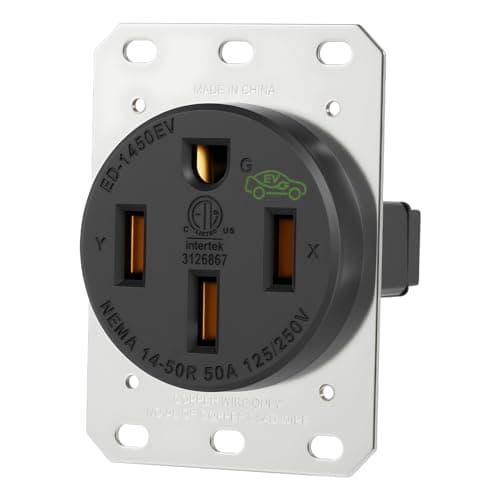
The outlet a plug-in charger needs
Industrial NEMA 14-50 Outlet
The receptacle a plug-in charger actually plugs into — buy the industrial-grade, listed version, because the cheap ones are the part that fails.
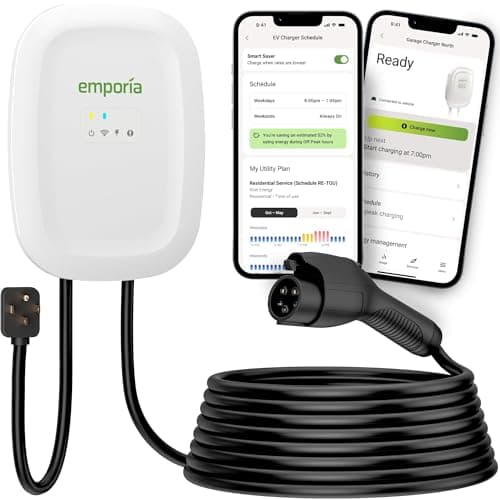
Most people who want the smart features too
Emporia Level 2 (48A)
The smart charger that does not charge a smart-charger premium — 48-amp capability and real energy monitoring for the price of a dumb one.
- Grizzl-E
People who want a charger, not an app
Grizzl-E Classic (40A)
A UL-certified metal box that just charges, with none of the app dependence that dates the smart units — the value default.
#ad · As an Amazon Associate we earn from qualifying purchases.
Questions
Frequently asked
Do I need a surge protector for my EV charger?
Is a whole-home surge protector required by code?
Can lightning damage my EV charger?
Will a surge protector stop my charger from tripping the breaker?
Keep reading
Related
- Do I Need a GFCI Breaker?The other protective device, and a different hazard entirely.
- NEMA 14-50 OutletsWhy receptacle quality matters more than surge gadgets.
- How Long Do Chargers Last?What actually ends a charger's life, in order.
- Charger Tripping the BreakerThe problem people mistake for a surge issue.
- Outdoor Charger SetupWeather protection, which matters far more than lightning.
- Level 2 Installation CostWhere an SPD sits in the install quote.
Receipts
Sources
- Mike Holt — NEC 230.67 surge protection, 2020 Code change analysis
- Leviton — NEC code requirements for surge protection (230.67)
- EC&M — NEC Article 625, Electric Vehicle Charging Systems
We do not run a testing lab, and we do not pretend to. Where a measured number came from someone else's lab, we name them and link them. Where we could not verify something, we say so on the page rather than quietly leaving it out. Read our full method.