HUB 05 · Guides & Buying Advice
EV Charging in Cold Weather: What Winter Actually Changes
Batteries hate the cold, and winter reshapes how you charge more than how you drive. Here is what changes and how to work with it.
We earn a commission when you buy through our Amazon links, at no extra cost to you. It never affects our rankings, and we say so when the cheaper product is the better buy. How this works.
Cold weather does two things to an EV: it temporarily reduces range, and it slows charging, because a cold battery cannot accept or deliver energy as readily as a warm one. Neither is a fault, and neither is permanent — the range comes back when it warms up. The fixes are habits, not hardware: precondition the battery while plugged in, charge in a garage if you have one, and plug in every night so the car starts warm and full.
The first winter with an EV surprises people. The range figure drops, charging feels slower, and it is easy to assume something is wrong. Nothing is — this is battery chemistry meeting cold air, and every EV does it. What matters is understanding why, so you can adjust a few habits and stop worrying about the rest. We compile published facts here and point to the government sources; the specific numbers depend on your car and your climate.
Why cold cuts range
Two things happen at once when it gets cold. First, the battery's chemistry slows down — the same pack simply delivers less usable energy at low temperatures. Second, and often larger, is cabin heating: keeping you warm draws real power from the same battery that moves the car, and unlike a gas car there is no waste engine heat to borrow. Add cold, dense air and winter tires and the range you see in January can be meaningfully below the sticker figure. The US Department of Energy notes that fuel economy and EV range both fall in cold weather for these reasons. It is temporary: the range returns as temperatures rise.
Why cold slows charging
A cold battery also charges more slowly, because the same chemistry that limits how fast energy comes out limits how fast it goes in. The car's battery-management system deliberately throttles the charge rate to protect a cold pack, so a session that is quick in summer can take noticeably longer on a freezing morning — especially the first part, before the pack warms from the charging itself. This is most visible at DC fast chargers, but it affects home Level 2 charging too. If your car charges slower in the cold, that is the system working correctly, not a charger fault.
The one habit that fixes most of it:plug in every night. A car that stays plugged in keeps the battery from getting stone-cold, starts each morning full, and lets you warm the cabin from grid power instead of the battery — which is the single biggest winter-range saver below.
Preconditioning: the winter superpower
Preconditioning means warming the battery and cabin while the car is still plugged in, using grid electricity rather than the battery. Most EVs let you schedule this for your departure time through the car or its app. Done right, you leave with a warm cabin, a warmer and more efficient battery, and a full charge — and you spent the utility's energy to get there instead of your range. It is the closest thing winter charging has to a free lunch, and it costs nothing extra if you are plugged in overnight anyway.
Charge in a garage if you can
Even an unheated garage is usually several degrees warmer than the open air, and that is enough to help the battery accept a charge faster and hold more usable range overnight. If you charge outdoors, that is fine too — EV chargers are built for it — but a weather-rated unit matters more. A rugged, outdoor-rated charger like a cast-aluminum Grizzl-E Classic shrugs off a carport winter, though note that stiff cables are a common cold-weather complaint across brands, so expect to wrestle any cable a little on the coldest mornings.
Practical winter charging habits
- Leave it plugged in. Nightly charging keeps the pack from getting fully cold and starts you full. There is no harm in staying plugged in after the charge completes.
- Precondition on a schedule. Set the car to warm up for your departure time while still on the charger, so the heating comes from the grid, not the battery.
- Charge to a bit higher in winter.Because usable range shrinks, you may want a higher daily charge target in the cold than you use in summer — check your car's guidance.
- Expect slower sessions and plan for them. Build in extra time for a cold charge, especially on a road trip where you rely on fast charging.
- Do not panic about the range drop.It is normal and temporary. Home charging is cheap enough that a lower winter efficiency barely moves your monthly cost — see the cost to charge guide.
Is a portable charger okay in winter?
Yes — a quality Level 2 portable is rated for outdoor use and works in the cold; the same cold-battery slowdown applies as with any charger. A dual-level portable that can also charge on a 120-volt outlet is handy in winter as a fallback if a 240-volt outlet is iced up or occupied. As always, plug it directly into a properly rated outlet, never a household extension cord, and keep the connector off the ground and clear of snow and ice with a holster or hook.
The gear
Recommended gear for this guide
The products this guide refers to, with prices pulled live from Amazon and dated on each card.
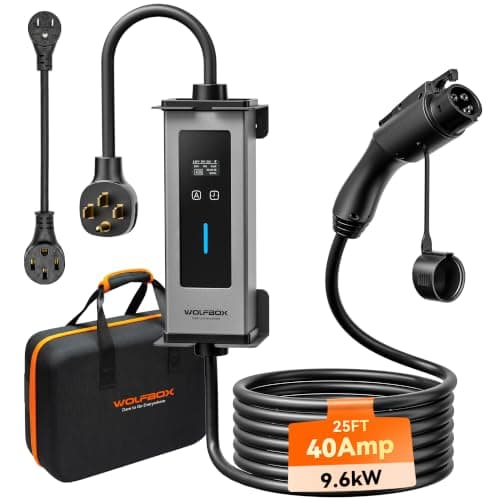
One charger for home and travel
WOLFBOX Portable (Level 1/2)
A dual-level portable that charges on both 120V and 240V, ships with both plug adapters, and adds a delay timer for off-peak charging — a genuine take-anywhere charger.
#ad · As an Amazon Associate we earn from qualifying purchases.
Questions
Frequently asked
Why does my EV lose range in cold weather?
Why does my EV charge more slowly when it is cold?
What is preconditioning and should I use it?
Should I keep my EV plugged in overnight in winter?
Do I need a special charger for cold climates?
Keep reading
Related
Receipts
Sources
- US DOE / fueleconomy.gov — EV charging basics
- US DOE Alternative Fuels Data Center — charging at home
We do not run a testing lab, and we do not pretend to. Where a measured number came from someone else's lab, we name them and link them. Where we could not verify something, we say so on the page rather than quietly leaving it out. Read our full method.