Skip to content
Volt & Cable

HUB 01 · Level 2 Home Chargers

The Best EV Chargers for a Chevy Equinox EV

The Equinox EV is one of the cheapest cars on sale that can genuinely use a 48-amp charger — which makes it one of the few where paying for 48 amps is not wasted money. Six chargers, ranked for this car.

By Stephen V.Updated How we research
#ad

We earn a commission when you buy through our Amazon links, at no extra cost to you. It never affects our rankings, and we say so when the cheaper product is the better buy. How this works.

The short answer

Quick picks

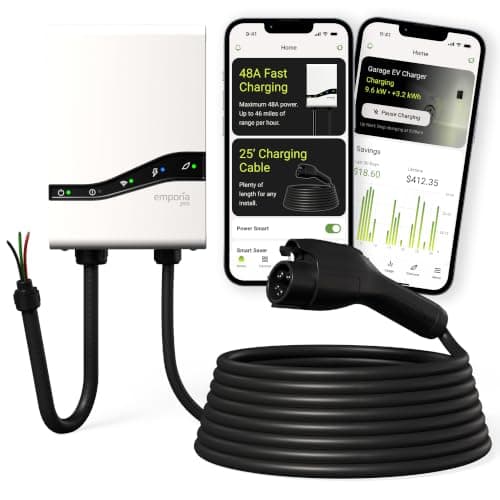
  • Emporia Emporia Pro (48A, PowerSmart)
    01 Emporia Pro (48A, PowerSmart)
    8.8

    The one charger that changes the electrical answer rather than working around it — it watches the whole panel and backs off instead of tripping the main.

    Best for: A 100-amp service you would rather not upgrade

    $599.00Amazon
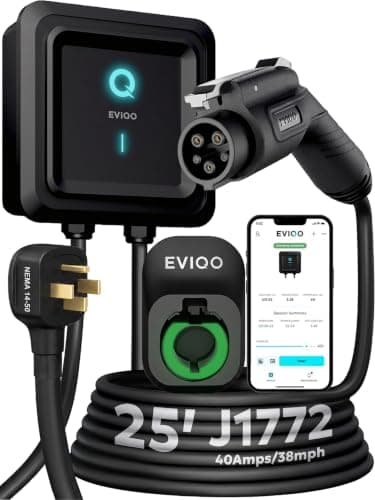
  • EVIQO EVIQO Level 2 (40A)
    02 EVIQO Level 2 (40A)
    8.6

    A weatherproof, UL-and-ETL-listed smart charger that regularly sits at the bottom of the price band — a lot of charger for the money.

    Best for: Budget-conscious buyers who still want smart features

    $449.99Amazon
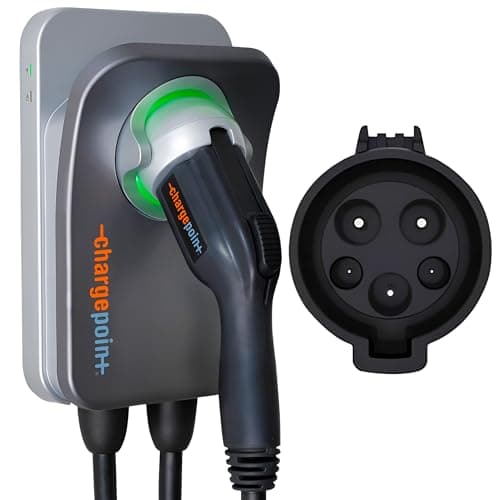
  • ChargePoint ChargePoint Home Flex
    03 ChargePoint Home Flex
    8.2

    The polished, well-supported option — adjustable up to 50 amps and tied into the largest public charging app in North America.

    Best for: Buyers who want the established brand and app

    $599.00Amazon
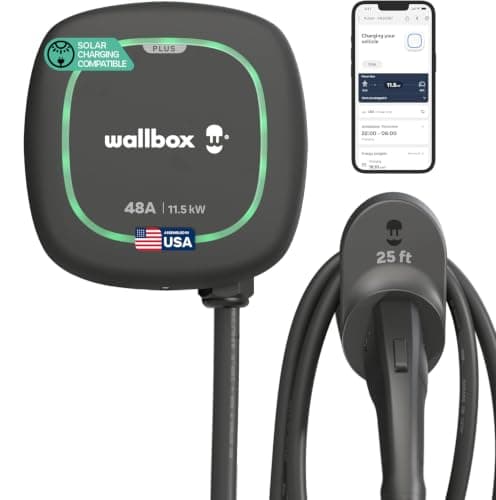
  • Wallbox Wallbox Pulsar Plus (48A)
    04 Wallbox Pulsar Plus (48A)
    8.4

    One of the smallest 48-amp units you can buy — a genuinely compact hardwired charger for a tidy wall.

    Best for: A compact, fast, hardwired install

    $699.00Amazon
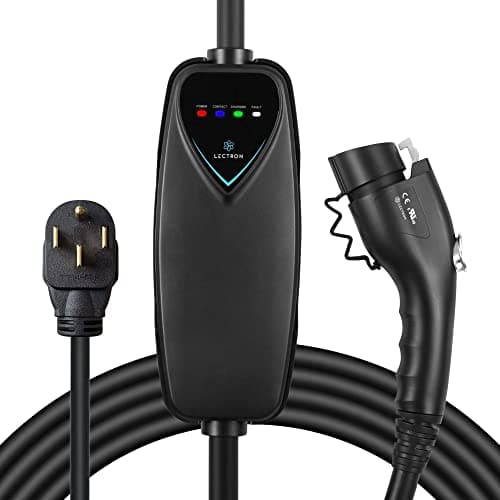
  • Lectron Lectron Level 2 (40A)
    05 Lectron Level 2 (40A)
    7.4

    A simple, ETL-listed plug-in charger from a known EV brand — a no-frills, low-cost way to charge at Level 2.

    Best for: A simple, inexpensive plug-in charger

    $269.99Amazon
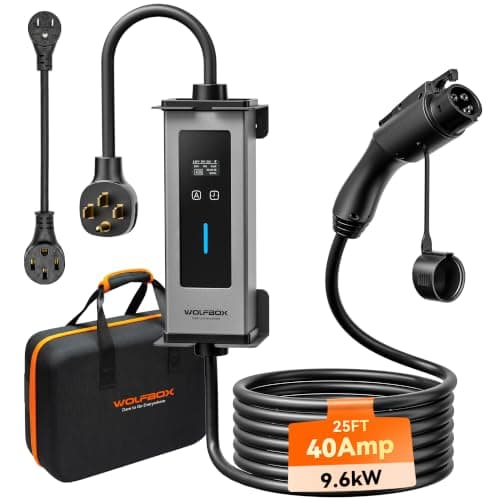
  • WOLFBOX WOLFBOX Portable (Level 1/2)
    06 WOLFBOX Portable (Level 1/2)
    8.6

    A dual-level portable that charges on both 120V and 240V, ships with both plug adapters, and adds a delay timer for off-peak charging — a genuine take-anywhere charger.

    Best for: One charger for home and travel

    $299.99Amazon

#ad · Live prices from the Amazon Product API, as of October 16, 2026. Where we have no verified live price, we show none — we would rather leave a gap than print a number that has gone stale.

For a Chevrolet Equinox EV the charger that matches the car is the Emporia Proin its J1772 form — 48 amps hardwired, which is exactly what the Equinox's 11.5 kW onboard charger can take, in a NEMA 4 enclosure, with panel-wide load management included for households whose service is tight. If you would rather not spend that, the EVIQO Level 2 at 40 amps still refills the 85 kWh pack overnight with hours to spare, for meaningfully less, and plugs into a NEMA 14-50 outlet instead of needing a hardwired run.

Most per-car charger advice is the same advice with a different badge at the top, because most EVs cap their AC charging at 7.7 or 11 kW and the charger decision collapses to "buy any 40-amp unit." The Equinox EV is one of the exceptions worth writing about: Chevrolet specifies an 11.5 kW onboard charger across the trims, and 11.5 kW at 240 volts is 48 amps. That is the top of what residential Level 2 hardware offers, and it means the 48-amp premium buys something real here instead of sitting unused the way it does on a Jeep 4xe or a Chevy Bolt.

It does not follow that you should buy 48 amps. The honest version of this page is a two-part answer: here is the charger that uses the whole car, and here is the cheaper one that finishes the job by morning anyway. Which of those is right depends on your daily mileage, not on the spec sheet.

The short version

  • Emporia Pro (48A, PowerSmart) — best overall for an Equinox EV. The only pick here that delivers the car's full 11.5 kW, in a NEMA 4 enclosure, with the Vue monitor and mains sensors in the box so a 100-amp service can often take it without an upgrade. Hardwired.
  • EVIQO Level 2 (40A) — best value, and the pick most Equinox owners should buy. UL and ETL listed, IP66/NEMA 4, a 25-foot cable, and 9.6 kW — which is about 83% of what the car can take and still more than enough overnight. Full review.
  • ChargePoint Home Flex — best for time-of-use scheduling. Adjustable in the app up to 50 amps, so it fits whatever breaker your electrician lands, and the same account covers public charging on a trip. Full review.
  • Wallbox Pulsar Plus (48A) — best compact 48-amp unit. The other way to get the full 11.5 kW, in the smallest box in this group — worth the premium if wall space in the garage is genuinely tight. Full review.
  • Lectron Level 2 (40A) — cheapest honest route to Level 2. ETL-listed, no app, plugs into a 14-50. If the outlet already exists, this is the lowest-cost way to stop charging an 85 kWh battery from a wall socket.
  • WOLFBOX Portable (Level 1/2) — best one to keep in the trunk. 6–40 amps, with both a 14-50 and a household 5-15 plug, so it covers the garage and the relative's house. Full review.

What the Equinox EV actually accepts

Three published numbers decide this whole page, and they are the car's, not the charger's:

  • An 11.5 kW onboard charger. This is the ceiling on AC charging. A Level 2 charger can offer more; the car will not take it. 11.5 kW divided by 240 V is roughly 48 amps, which is why a 48-amp charger is the exact match and an 80-amp charger is money set on fire. Chevrolet has offered a 19.2 kW AC option on some Equinox EV AWD trims; it is not listed in the current configurator, so treat 11.5 kW as the figure unless your window sticker says otherwise.
  • An 85 kWh battery. Big, by the standards of a crossover at this price. At 11.5 kW a full charge is in the region of eight hours; at 9.6 kW (40 amps) it is closer to nine and a half. Both fit inside a normal overnight window, which is the single most important thing to understand before you spend on amperage.
  • A J1772 inlet for Level 2. The Equinox EV uses the standard J1772 connector for AC charging, with a CCS1 port for DC fast charging, so every charger on this page plugs straight in with no adapter. Using Tesla Superchargers is a separate DC adapter question, covered in the best J1772 to Tesla adapters.

The arithmetic that should decide your purchase. Work out your real daily mileage, not your worst week. At roughly 3 miles per kWh, a 40-mile commute is about 13 kWh — which a 40-amp charger replaces in under an hour and a half, and a 48-amp charger replaces about ten minutes sooner. The 48-amp premium only pays for itself if you regularly arrive home near empty and leave again early. Our guide to what amperage you actually need runs the numbers properly.

Why 48 amps costs more than the charger

The sticker on a 48-amp charger is only part of the bill. Because an EV charger is a continuousload, NEC 625.42 requires the circuit to be rated at 125% of the charger's output: a 48-amp charger needs a 60-ampbreaker and wire sized for it, and at that amperage the units are hardwired rather than plug-in. A 40-amp charger needs a 50-amp circuit and can use a NEMA 14-50 receptacle, which many garages already have. The gap between those two installs is frequently larger than the gap between the two chargers — our wire size and breaker guide and the Level 2 installation cost guide set out what each route involves.

There is also the panel to consider. Adding 48 amps of continuous load to an older 100-amp service often fails the load calculation outright. That is the specific reason the Emporia Pro leads this list rather than the Wallbox: it ships with the Vue energy monitor and mains current sensors, and under the 2023 NEC a load calculation may count an energy management system's capped setpoint instead of the charger's nameplate. If your panel is the obstacle, read the load-managed charger roundup and the 100-amp panel roundup before you choose amperage at all.

How the picks compare on paper

Published manufacturer figures from the live listings, with the live price alongside. The column that matters for an Equinox EV is the first one: only two of these reach the car's 48-amp ceiling.

ChargerBest forPublished specs (manufacturer)Price
Emporia Pro (48A, PowerSmart)A 100-amp service you would rather not upgradeUp to 48A hardwired · J1772 · PowerSmart + Vue monitor · UL · ENERGY STAR · NEMA 4$599.00
EVIQO Level 2 (40A)Budget-conscious buyers who still want smart features40A / 9.6kW · J1772 · 25ft cable · UL & ETL, IP66/NEMA 4$449.99
ChargePoint Home FlexBuyers who want the established brand and appAdjustable to 50A · J1772 · NEMA 14-50 plug · Energy Star$599.00
Wallbox Pulsar Plus (48A)A compact, fast, hardwired installHardwired 48A / 11.5kW · J1772 · 25ft cable · Energy Star + UL$699.00
Lectron Level 2 (40A)A simple, inexpensive plug-in charger40A / 9.6kW · J1772 · NEMA 14-50 plug · ETL · 16ft extension$269.99
WOLFBOX Portable (Level 1/2)One charger for home and travel6–40A · 9.6kW · J1772 · Level 1/2 · NEMA 14-50 + 5-15 · ETL · IP66 · 25ft$299.99

#ad Prices read live from the Amazon Product API as of October 16, 2026, and they move. Specs are the manufacturer's published claims from the live listing — we have not bench-measured them. Where we have no verified price we print none rather than a number that has gone stale.

What we left out, and why

80-amp chargers. A 19.2 kW unit cannot push more than 11.5 kW into an Equinox EV with the standard onboard charger, and it needs a 100-amp dedicated circuit to do it. The 80-amp roundup explains who those are genuinely for; an Equinox owner is not on that list unless the window sticker shows the 19.2 kW option.

NACS wall chargers. The Equinox EV charges on AC through a J1772 inlet, so a Tesla-style NACS charger would need an adapter in the loop permanently — more parts, no benefit. The NACS home charger roundup is for cars with a native NACS port.

Level 1 only. A household outlet adds roughly 3–4 miles of range an hour. Against an 85 kWh battery that is a multi-day refill from low, which works only if your daily driving is very short. We make that case honestly in can you live with only Level 1 charging, and it is a harder case with this car than with a small-battery EV.

In detail

The picks, in full

01
Emporia Emporia Pro (48A, PowerSmart)

A 100-amp service you would rather not upgrade

Emporia Pro (48A, PowerSmart)

Up to 48A hardwiredJ1772PowerSmart + Vue monitorUL · ENERGY STAR · NEMA 4
8.8/10

The one charger that changes the electrical answer rather than working around it — it watches the whole panel and backs off instead of tripping the main.

Charge speed
10
Build & weather
8
Smart features
10
Cable & connector
9
Value
7

Pros

  • PowerSmart reads the whole panel through the bundled Vue energy monitor and throttles the charger when the house draws hard, so a tight service is a setting rather than a rebuild
  • Full 48 amps — about 11.5 kW — when hardwired on a 60-amp circuit, so you are not trading speed for the load management
  • UL listed, ENERGY STAR certified and NEMA 4 rated, on a 25-foot cable, with the J1772 connector most non-Tesla EVs use

Cons

  • The most expensive charger in this group, and the premium buys panel headroom rather than charging speed
  • The Vue monitor has to go inside your electrical panel, so this is licensed-electrician work — there is no version of this you install yourself in an afternoon
  • Whether load management is accepted in place of a service upgrade is your local inspector's call, not the manufacturer's

Don't buy this if…

…your panel already has room for the circuit you want. If the load calculation passes without help, PowerSmart solves a problem you do not have — the standard Emporia Level 2 charges at exactly the same rate for meaningfully less.

$599.00View on Amazon

Price as of October 16, 2026. Prices change — Amazon's is the one that counts.

#ad · we may earn a commission from this link to Emporia Pro (48A, PowerSmart)

02
EVIQO EVIQO Level 2 (40A)

Budget-conscious buyers who still want smart features

EVIQO Level 2 (40A)

40A / 9.6kWJ177225ft cableUL & ETL, IP66/NEMA 4
8.6/10

A weatherproof, UL-and-ETL-listed smart charger that regularly sits at the bottom of the price band — a lot of charger for the money.

Charge speed
8
Build & weather
9
Smart features
8
Cable & connector
8
Value
10

Pros

  • Carries both UL and ETL listings plus an IP66 / NEMA 4 weatherproof rating
  • Wi-Fi app with scheduling, at a price that undercuts the established brands
  • Long 25-foot cable and a plug-in NEMA 14-50 install

Cons

  • Newer brand with a shorter track record than ChargePoint or Wallbox
  • 40-amp ceiling, so not the fastest if your panel could do more

Don't buy this if…

…you want the reassurance of a long-established brand and support network. The hardware is well-certified, but if brand maturity matters to you, the ChargePoint is the safer pick.

$449.99View on Amazon

$510.9912% off

Price as of October 16, 2026. Prices change — Amazon's is the one that counts.

#ad · we may earn a commission from this link to EVIQO Level 2 (40A)

03
ChargePoint ChargePoint Home Flex

Buyers who want the established brand and app

ChargePoint Home Flex

Adjustable to 50AJ1772NEMA 14-50 plugEnergy Star
8.2/10

The polished, well-supported option — adjustable up to 50 amps and tied into the largest public charging app in North America.

Charge speed
9
Build & weather
8
Smart features
9
Cable & connector
8
Value
7

Pros

  • Amperage is adjustable in the app to match whatever breaker you install, up to 50A
  • Integrates with ChargePoint's large public-network app — one app for home and away
  • Long track record and responsive support, which budget brands cannot match

Cons

  • Costs more than equally capable chargers from newer brands
  • The experience leans hard on the ChargePoint account and app

Don't buy this if…

…price is your first priority. The Emporia matches most of what this does for meaningfully less — you are paying here for brand maturity and the unified app, which are real but not free.

$599.00View on Amazon

$657.999% off

Price as of October 16, 2026. Prices change — Amazon's is the one that counts.

#ad · we may earn a commission from this link to ChargePoint Home Flex

04
Wallbox Wallbox Pulsar Plus (48A)

A compact, fast, hardwired install

Wallbox Pulsar Plus (48A)

Hardwired 48A / 11.5kWJ177225ft cableEnergy Star + UL
8.4/10

One of the smallest 48-amp units you can buy — a genuinely compact hardwired charger for a tidy wall.

Charge speed
10
Build & weather
8
Smart features
8
Cable & connector
8
Value
8

Pros

  • Physically tiny for a 48-amp charger — the least obtrusive box in this roundup
  • Full 48-amp hardwired speed, matching the fastest home units
  • Energy Star and UL certified

Cons

  • Hardwired only at 48A — no plug-in convenience if you might move it
  • App has historically drawn more owner complaints than the hardware

Don't buy this if…

…you want to unplug and take the charger with you, or you rent. This is a hardwired fixture — a portable EVSE or a plug-in unit is the right call for anyone who might move.

$699.00View on Amazon

$799.9913% off

Price as of October 16, 2026. Prices change — Amazon's is the one that counts.

#ad · we may earn a commission from this link to Wallbox Pulsar Plus (48A)

05
Lectron Lectron Level 2 (40A)

A simple, inexpensive plug-in charger

Lectron Level 2 (40A)

40A / 9.6kWJ1772NEMA 14-50 plugETL · 16ft extension
7.4/10

A simple, ETL-listed plug-in charger from a known EV brand — a no-frills, low-cost way to charge at Level 2.

Charge speed
8
Build & weather
8
Smart features
5
Cable & connector
8
Value
8

Pros

  • ETL certified — a real safety listing at a budget price
  • Plug-in NEMA 14-50 install — no electrician needed if the outlet exists, and it ships with a 16-foot extension cord for reach
  • Straightforward and inexpensive, from an established EV-charging brand

Cons

  • No app, energy monitoring, or scheduling — a bare-bones charger
  • 40-amp ceiling

Don't buy this if…

…you want energy monitoring or scheduling. For similar money the Emporia adds real smart features — this Lectron's appeal is simplicity, a trusted brand, and price.

$269.99View on Amazon

Price as of October 16, 2026. Prices change — Amazon's is the one that counts.

#ad · we may earn a commission from this link to Lectron Level 2 (40A)

06
WOLFBOX WOLFBOX Portable (Level 1/2)

One charger for home and travel

WOLFBOX Portable (Level 1/2)

6–40A · 9.6kWJ1772 · Level 1/2NEMA 14-50 + 5-15ETL · IP66 · 25ft
8.6/10

A dual-level portable that charges on both 120V and 240V, ships with both plug adapters, and adds a delay timer for off-peak charging — a genuine take-anywhere charger.

Charge speed
8
Portability
10
Build & weather
8
Cable & connector
8
Value
9

Pros

  • Charges on both 120V (Level 1) and 240V (Level 2), and ships with both the NEMA 5-15 and NEMA 14-50 plug adapters — one charger for home and the road
  • Adjustable current (6–40A) plus a built-in delay timer, so you can dial it down for a weaker circuit and start on cheaper overnight rates without an app
  • ETL certified with an IP66 weather rating and a 25-foot cable — a genuine take-anywhere travel charger

Cons

  • A portable brick that lives on the floor or a hook, not a tidy mounted wall unit
  • 40-amp draw needs a properly rated 14-50 outlet — do not run it flat-out on a worn receptacle

Don't buy this if…

…you want a permanent, tidy wall installation with per-charge energy data in an app. A portable trades the mounted look and the app for the ability to come with you.

$299.99View on Amazon

Price as of October 16, 2026. Prices change — Amazon's is the one that counts.

#ad · we may earn a commission from this link to WOLFBOX Portable (Level 1/2)

How we ranked these for the Equinox specifically

Does it reach 48 amps? This is the criterion that separates a car-specific page from a generic roundup. Only the Emporia Pro and the Wallbox Pulsar Plus deliver the Equinox's full 11.5 kW; the ChargePoint Home Flex is adjustable up to 50 amps and reaches it too if the circuit is there. Everything else on this page is 40 amps, which leaves about 17% of the car's AC capability on the table — a real difference, and for most owners an irrelevant one.

Plug-in or hardwired, and what your garage already has. A 40-amp charger on an existing NEMA 14-50 receptacle is a short job you may be able to do yourself. A 48-amp charger is a hardwired 60-amp circuit and a permit in most jurisdictions. Check what is already on the wall before you shortlist: our EV charger vs 240V outlet page compares the two routes, and do I need a permit for an EV charger covers the paperwork.

Cable length against where the port is. The Equinox EV's charge port sits on the driver's side front fender. If the charger lands on the opposite wall of the garage, or you reverse in, a 25-foot cable is the difference between a tidy install and a cable stretched across the floor. The EVIQO, Wallbox and WOLFBOX picks all publish 25 feet; the ChargePoint is shorter. The cable length guide covers how to measure the run properly, and the long-cable roundup ranks reach specifically.

A named safety listing. UL or ETL on the unit, stated by the manufacturer. Every pick on this page has one. At 40 to 48 amps of continuous current in an attached garage this is not the line item to economize on, and plenty of cheaper Amazon chargers simply do not state a listing.

An outdoor rating, if the charger lives outside. The Emporia Pro, EVIQO and Wallbox picks publish NEMA 4 enclosures; the ChargePoint publishes Type 3R. If the unit will be exposed to driven rain, snow or hose-down, that difference matters — we rank chargers by their published weather figures in the cold-weather charger roundup and the outdoor roundup.

Scheduling, if your utility has time-of-use rates. On a time-of-use tariff, moving the charge to the overnight window is worth more money than any amperage upgrade. The ChargePoint, EVIQO and Emporia units all schedule in-app. The Equinox EV can also schedule from the car, so a simple charger is not a dealbreaker — see best dumb EV chargers if you would rather not involve an app at all.
How we picked

We do not run a testing lab

We compiled published specifications from manufacturer manuals and spec sheets, verified the safety listings (UL / ETL), computed the real running and installation costs, checked the wiring math against the NEC continuous-load rule, and read aggregated owner reviews — then scored each product against a published rubric. The scores are judgments from documented research — they are not bench measurements, because we do not have a test lab and we are not going to pretend we do. Every spec and cost figure is cited in Sources.

Questions

Frequently asked

What size charger does a Chevy Equinox EV need?
A 40-amp charger is enough for nearly every Equinox EV owner, and a 48-amp charger is the exact match for the car's published 11.5 kW onboard charger. Anything above 48 amps is wasted on the standard car: the onboard charger, not the wall unit, sets the ceiling. Going below 40 amps is fine too if your panel demands it — it simply lengthens the overnight charge.
Does the Chevy Equinox EV use J1772 or NACS?
For Level 2 AC charging it uses the standard J1772connector, with a CCS1 port for DC fast charging. Every charger on this page connects natively with no adapter. Using a Tesla Supercharger is a separate question that needs a DC NACS adapter rather than a different home charger — see can you use a Tesla Supercharger with a non-Tesla EV.
How long does it take to charge an Equinox EV at home?
On the published figures, a full charge of the 85 kWh pack is in the region of eight hours at 11.5 kW (48 amps) and about nine and a half at 9.6 kW (40 amps), before charging losses and the taper near full. Nobody charges from empty every night, though — the number that matters is how long your daily mileage takes to replace, which is usually one to two hours. Our how long to charge an EV guide shows the method.
Is the charge cord that comes with the car good enough?
Only if your driving is light. A portable cord on a household 120-volt outlet adds roughly 3–4 miles of range an hour, so an 85 kWh battery takes days to refill from low. Plugged into a 240-volt outlet, a portable unit like the WOLFBOX pick here is a genuine Level 2 charger — the question is amperage, not portability. See are portable EV chargers worth it.
Do I need a 60-amp breaker for an Equinox EV charger?
Only if you install a 48-amp charger. NEC 625.42 treats EV charging as a continuous load and requires the circuit to be rated at 125% of the charger's output, so 48 amps needs a 60-amp breaker and 40 amps needs a 50-amp breaker. Your electrician decides this from the load calculation, not from the car — the wire size and breaker guide has the full table.

Keep reading

Receipts

Sources

We do not run a testing lab, and we do not pretend to. Where a measured number came from someone else's lab, we name them and link them. Where we could not verify something, we say so on the page rather than quietly leaving it out. Read our full method.