HUB 05 · Guides & Buying Advice
EV Charging Etiquette: The Unwritten Rules
Charging in public is a shared resource. A handful of simple courtesies keep it working for everyone — here they are.
We earn a commission when you buy through our Amazon links, at no extra cost to you. It never affects our rankings, and we say so when the cheaper product is the better buy. How this works.
Public charging etiquette comes down to a few courtesies: move your car promptly once it is done, never park in a charging spot without charging, do not unplug a car that is still charging, and leave the connector holstered and tidy. Follow those and you will be a good citizen of a shared resource that everyone increasingly depends on.
Unlike a gas pump, an EV charger can be occupied for anywhere from twenty minutes to hours, so the social rules matter more. None of this is complicated — it is mostly the golden rule applied to a parking-lot power outlet.
Move promptly when you're done
The single most important courtesy: once your session finishes, move your car so someone else can charge. This is especially true at DC fast chargers, where a full battery hogging a stall is the top complaint. Many networks charge idle fees for exactly this reason. Set a notification so you know when the car is done, and treat a finished charger like a fire lane, not a parking space.
Don't ICE a charging spot — or block it with a done EV
"ICE-ing" is parking an internal-combustion car in an EV charging spot; the EV equivalent is parking a not-charging EV there. Both take a working charger out of service for no reason. If every stall is full and you only need a short top-up, wait or come back — do not park-and-hope in a way that blocks an active charger.
Can I ever unplug someone else's car?
Not if it is still charging. Unplugging a vehicle mid-session is the cardinal sin of charging etiquette. The one gray area is a car that has clearly finished(many EVs and apps show this, and some owners leave a note): in some communities it is accepted to move a completed car's connector to your own, but only if the other car is truly done and its charge port allows it. When in doubt, wait — and never unplug a car that might still be charging.
Share thoughtfully at Level 2
At a bank of Level 2 chargers — a workplace or apartment lot — the culture is cooperative: take what you need, not a full 100% if others are waiting, and move when your battery is comfortably topped up. Some sites use a shared charger like the dual-cable units in our home charger roundup; the same share-the-power spirit applies.
Leave it tidy
Return the connector to its holster rather than dropping it on the ground — a plug left in a puddle is the next driver's problem and shortens the equipment's life. Coil the cable off the walkway. A little of the same care you would give your own cable at home keeps public stations working.
The gear
Recommended gear for this guide
The products this guide refers to, with prices pulled live from Amazon and dated on each card.
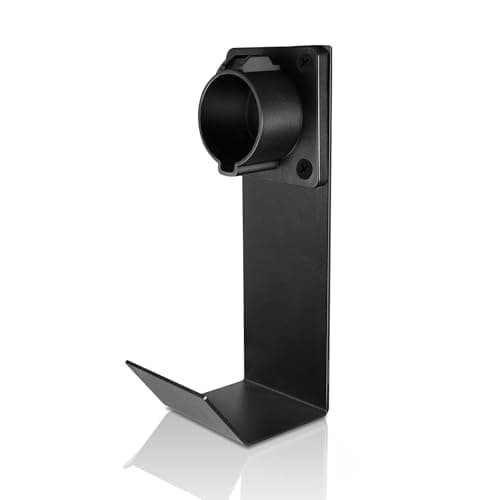
Docking a J1772 connector
Lectron J1772 Holster + J-Hook
A connector dock and cable hook in one — the tidiest, cheapest fix for a J1772 plug that otherwise sits on the floor.
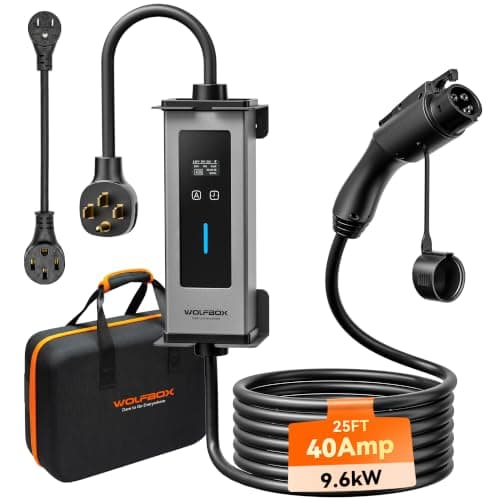
One charger for home and travel
WOLFBOX Portable (Level 1/2)
A dual-level portable that charges on both 120V and 240V, ships with both plug adapters, and adds a delay timer for off-peak charging — a genuine take-anywhere charger.
#ad · As an Amazon Associate we earn from qualifying purchases.
Questions
Frequently asked
Is it ever okay to unplug someone else's EV?
What is 'ICE-ing' a charging station?
How long should I stay at a public charger?
Should I charge to 100% at a public station?
Keep reading
Related
Receipts
Sources
We do not run a testing lab, and we do not pretend to. Where a measured number came from someone else's lab, we name them and link them. Where we could not verify something, we say so on the page rather than quietly leaving it out. Read our full method.