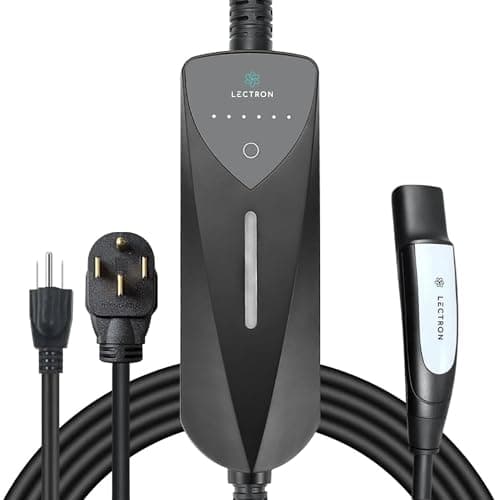
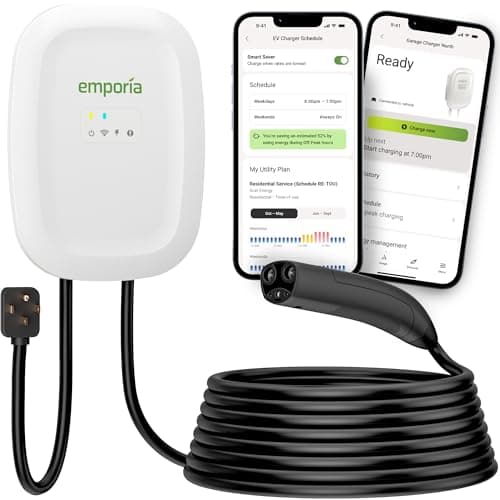
For most households with a NACS port on the car, the Emporia Level 2 NACS is the one to buy. It is the same UL-listed, Energy-Star-certified charger we already rate best for most homes, with the Tesla-style connector on the end of the cable instead of a J1772 head — so nothing dangles off the handle and nothing gets left at a friend's house. If your electrician is hardwiring anyway and you want one unit that adapts to any breaker, the ChargePoint Home Flex NACS is the more flexible buy: its amperage is selectable from 16 all the way to 50.
This page exists because the connector question has finally flipped. For a decade, “home charger” meant a J1772 plug, and Tesla owners carried an adapter. Now the Tesla connector has been standardized as SAE J3400— the thing everyone still calls NACS — and the US Department of Energy notes that manufacturers began shipping it as a native port from 2025. If your car came with that port, you no longer have to buy a J1772 charger and an adapter to go with it. You can buy the plug your car already takes.
The short version
Every charger below has a factory NACS connector, was verified in stock before it was listed here, and is priced live on this page. The picks split by how you are installing and what constrains you:
- Emporia Level 2 NACS — best for most people. UL and Energy Star, 25-foot cable, real energy monitoring, and a price that does not punish you for the connector.
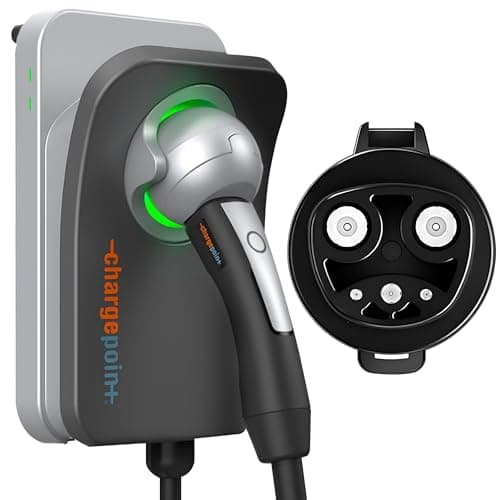
- ChargePoint Home Flex NACS — best established brand. Hardwired, with amperage selectable from 16 to 50 amps in the app.
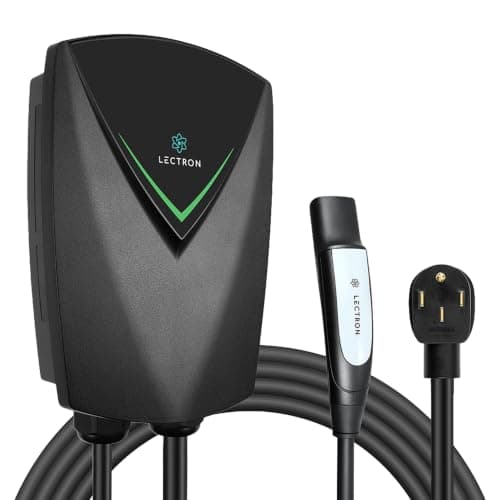
- Lectron Nexus NACS — best named safety listing. Certified to UL 2594, the standard written for EV supply equipment, and it plugs into a 14-50 outlet.
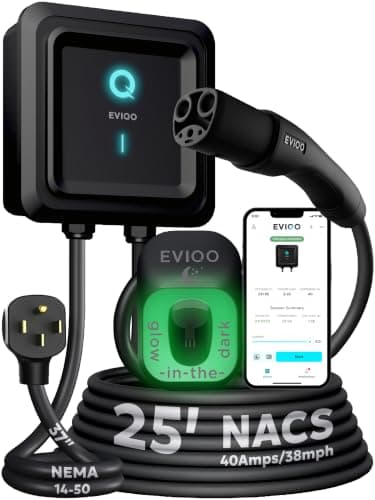
- EVIQO NACS — best for an outdoor wall. IP66 / NEMA 4 with both UL and ETL listings, usually the cheapest properly certified unit here.
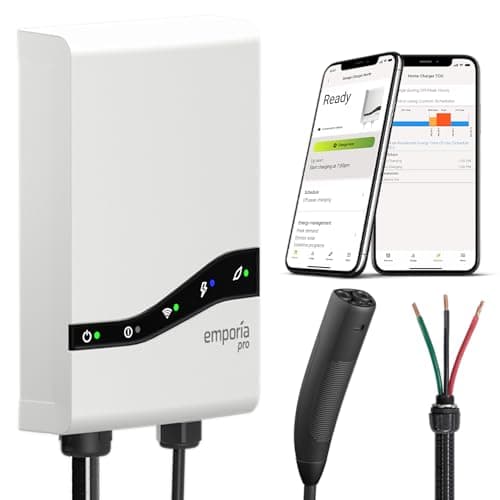
- Emporia Pro NACS — best for a tight panel. PowerSmart load management backs the charger off instead of forcing a service upgrade.
- Lectron NACS Portable — best for renters and travel. Not bolted to anything; 240 volts at home, 120 volts on the road.
First: does your car actually have a NACS port?
This is the whole decision, and it takes ten seconds to answer — look at the charge port on the car. A NACS/J3400 inlet is the small, round-shouldered five-pin socket Tesla has used for years. A J1772 inlet is the larger, flat-topped five-pin socket with a latch tab on the upper edge. Teslas have the former. So do a growing share of 2025-onward EVs from the manufacturers that committed to the standard, which is most of them.
If your port is J1772, stop here and buy a J1772 charger instead — our best home EV chargers roundup ranks those, and a NACS charger would just mean an adapter permanently hanging off the plug. If your port is NACS, keep reading. And if your household has one of each, the honest answer is usually a J1772 charger plus a cheap, safety-listed adapter for the NACS car, which we cover in the best J1772-to-Tesla adapters. The full connector explainer, with the standards timeline, is in NACS vs J1772.
The shortlist, ranked
1. Emporia Level 2 NACS — the default for most homes
The Emporia wins for the same reason its J1772 sibling wins our main roundup: it does not charge a premium for being good. It is UL listed and Energy Star certified, runs a 25-foot cable, and gives you genuine per-charge energy monitoring and scheduling in the app — the features that let you push charging onto cheaper overnight rates. Adding a NACS connector has not turned it into a boutique product; it sits in the same price band as ordinary J1772 wall units.
The honest caveat is the amperage. The listing says 48 amps, and the hardware is capable of it, but this version ships with a NEMA 14-50 plug. A 14-50 lives on a 50-amp circuit, and because EV charging is a continuous load that a circuit must be sized to carry at 125%, the most a plug-in charger can legally pull is 40 amps. So on the plug it is a 40-amp charger. Emporia sells a hardwired-preconfigured version of the same unit if you want the full 48, and that is the one to order if an electrician is coming anyway. Do not pay for 48 amps and then plug it into a 14-50.
2. ChargePoint Home Flex NACS — the one that fits any panel
The Home Flex is the pick when you do not yet know what circuit you will end up with. ChargePoint's own installation documentation lists selectable output at 16, 24, 32, 40, 48 or 50 amps, set in the app, with hardwired installs accepting breakers from 20 all the way to 80. That means you buy the charger first and let the electrician tell you what the panel can spare, rather than discovering after the fact that you bought speed you cannot use. It carries a NEMA 3R outdoor rating, and the same account runs both this charger and the largest public charging network in North America.
What you give up is portability and money. This is the hardwired NACS variant, so it is a fixture: no unplugging it, no taking it to the next house, and the install is licensed work rather than a plug-and-go afternoon. It also costs more than the newer brands here for hardware that charges at the same rate. You are paying for support, a mature app and the amperage flexibility — all real, none free. Our full write-up of the J1772 version is in the ChargePoint Home Flex review.
3. Lectron Nexus NACS — the one that names its safety standard
Most budget chargers say “certified.” The Lectron Nexus listing says UL 2594, which is the standard specifically written for electric vehicle supply equipment, with ETL as the testing laboratory. That distinction matters more than it sounds: a component listing on an internal part is not the same as the whole appliance being evaluated against the EVSE standard, and naming the standard is what separates the two. It plugs into a NEMA 14-50, so if you already have a properly rated outlet there is no electrician involved at all, and it ships with a Tesla-style holder so the connector has somewhere to live off the garage floor.
Two trade-offs. The cable is 23 feet rather than the 25 of the Emporia and EVIQO — a small difference that stops being small if your charge port ends up on the far side of the car. And it is a 40-amp plug-in unit; Lectron's 48-amp Nexus is a separate, hardwired-only listing. For a straightforward plug-in install with a certification you can look up, though, this is the value pick.
4. EVIQO NACS — the one to bolt to an outside wall
If the charger is going somewhere weather actually reaches — a carport, a driveway post, an exterior wall — the EVIQO has the strongest enclosure spec of the plug-in picks: IP66 and NEMA 4, with both UL and ETL listings behind it. It also runs a 25-foot cable and a Wi-Fi app with scheduling, and it typically sits at the bottom of the price band for a properly certified NACS unit, which is the same reason its J1772 sibling earns a place in our main roundup.
The nuisance is the radio: the listing specifies 2.4 GHz Wi-Fi only. That is normal for this class of hardware, but it is genuinely annoying on mesh routers that merge both bands behind one network name and will not let a 2.4-only device join without a workaround. Worth knowing before, not after. The other caveat is brand age — EVIQO is newer than ChargePoint, and however good the certificates are, a shorter support history is a shorter support history.
5. Emporia Pro NACS — when the panel is the problem
There is a specific and expensive scenario this charger solves. Your panel is full, or close to it, and an electrician has told you that adding a 60-amp circuit means a service upgrade costing more than the charger. The Pro's PowerSmart load management is the alternative: it watches household demand and throttles the charger when the dryer, the oven and the air conditioning are all running, then lets it back up when they stop. It charges at the full 48 amps — about 11.5 kW — when the house is quiet, which for overnight charging is nearly always.
That is the only reason to buy it. It costs meaningfully more than the standard Emporia NACS, and the premium buys the load management, not one extra mile per hour of charging. If your panel has a spare 60-amp slot, the cheaper Emporia is the same charger at the same speed. Work out which situation you are in before you spend the difference — our installation cost guide covers what a panel upgrade actually runs.
6. Lectron NACS Portable — for renters, movers and road trips
Every other charger here gets screwed to a wall. This one does not, and for a lot of people that is the deciding feature. It ships with both a 240-volt NEMA 14-50 plug and a 120-volt 5-15 plug, so it runs at full Level 2 speed at home and still gets a slow trickle from an ordinary outlet at a rental or a relative's house. Its current adjusts from 8 amps up to 40, so it can be dialed down for a circuit you do not know the history of, and it carries an ETL certification, which counts for something on a charger that gets used outdoors.
The trade is exactly what you would expect: it is a brick that lives on a hook rather than a tidy mounted box, the cable is 20 feet, and there is no app or energy monitoring. If you rent, if you might move within a few years, or if you want one charger that also covers travel, that trade is worth making. We make the broader case in portable vs hardwired.
One thing a NACS home charger does not do:it will not Supercharge your car. Every unit here is AC Level 2 equipment, which is the same charging your car does from a J1772 charger and tops out around 40 to 50 amps. The Tesla-shaped plug does not make the electricity in your garage into DC fast charging — that is a different, far heavier class of hardware that does not go in a house. The connector shape is about convenience, not speed.
How to choose a NACS home charger
A NACS charger is an ordinary Level 2 charger with a different plug molded onto the end of the cable. That is genuinely the whole difference, and it is worth saying plainly because the marketing around the connector transition implies otherwise. Everything that decides whether a charger is right for your house — amperage, install type, safety listing, cable length — is exactly what it would be for a J1772 unit. Here is the order to decide in.
Your panel sets the speed, not the box
The number on the listing is a ceiling. What you actually get is set by the circuit your electrical panel can support. EV charging is a continuous load, so code requires the circuit to be rated at 125% of the charger's draw:
- A 40-amp charger needs a 50-amp breaker and typically 6 AWG copper.
- A 48-amp charger needs a 60-amp breaker, and often heavier wire on a long run.
Run the arithmetic the other way and you get the rule that explains half of this page: a NEMA 14-50 outlet sits on a 50-amp circuit, and 50 divided by 1.25 is 40. Every plug-in charger, NACS or J1772, is capped at 40 amps for that reason. Only hardwiring gets you past it. The complete breakdown, including wire gauge and long-run derating, is in our wire size and breaker guide; treat those figures as standard NEC continuous-load practice and confirm specifics with a licensed electrician.
Plug-in or hardwired
Plug-in means the charger ends in a NEMA 14-50 plug and goes into a receptacle. It is cheaper, it is reversible, and if the outlet already exists you can install it yourself in an afternoon. It is also capped at 40 amps and only as safe as the receptacle behind it — which is why we tell people to buy a listed, industrial-grade 14-50 outlet rather than the cheapest one on the shelf, because that receptacle is the part that quietly overheats under a continuous 40-amp draw.
Hardwired means the charger is wired directly to the circuit. It unlocks 48 or 50 amps, it looks tidier, and it is a permanent fixture that stays with the house. If you rent, or you expect to move inside a few years, plug-in or portable is the right call and the extra amps are not worth losing the charger over.
The safety listing matters more on a value-brand charger
The NACS category is newer than the J1772 one, which means a higher share of the listings are from brands nobody had heard of two years ago. That is not automatically bad — two of our picks are from newer brands — but it does raise the value of a real certification. Look for UL or ETL on the whole appliance, and treat a listing that names UL 2594(the EVSE standard) as a better signal than a vague “certified.” Energy Star is a bonus, not a safety claim. This device pulls 40 amps continuously for hours at a time in an attached garage; it is not where to save twenty dollars.
Cable length is the spec people regret
Cable length is boring until it is three feet short. The units here run 23 to 25 feet. Before you buy, measure from where the charger will be mounted to where the car's charge port sits when parked — and then check it works when the car is parked the other way round, because you will do that eventually. Our note on how much cable length you actually need walks through the measurement.
Smart features are for time-of-use rates
App scheduling and energy monitoring earn their keep in exactly one situation: your utility charges different rates at different times, and you want charging to happen during the cheap window. If you are on a flat rate and you just want a full battery each morning, a simpler charger has less to go wrong and no cloud service to outlive. What the smart units do not change is the cost of the electricity itself — the running-cost arithmetic is the same for every charger on this page, and we show it in what it costs to charge an EV at home.
When to buy a J1772 charger and an adapter instead
There are two cases where the adapter route wins. The first is a mixed household: one NACS car, one J1772 car. Buy the J1772 charger and give the NACS car a safety-listed J1772-to-Tesla adapter, which costs a fraction of a second charger. The second is uncertainty about your next car — though that case is weakening quickly, since the industry is moving toward NACS ports, not away from them. If you go the adapter route, buy the certified adapter, not the cheapest one; it carries the full charging current and it is the one part of the chain nobody inspects.