HUB 05 · Guides & Buying Advice
Charging an EV Without a Driveway
Street parking doesn't rule out an EV — it just changes the plan. Here are the realistic ways to charge when you can't run a cable to your own wall.
We earn a commission when you buy through our Amazon links, at no extra cost to you. It never affects our rankings, and we say so when the cheaper product is the better buy. How this works.
You can own an EV without a driveway — millions do — but the plan shifts from "charge at home overnight" to a blend of workplace charging, public Level 2 where you park regularly, occasional DC fast charging, and, where a friendly outlet exists, a portable cord. The key is having two or three reliable places you charge, not one perfect one.
Home charging is the easiest way to run an EV, but it is not the only way. If you park on the street or in a lot with no outlet, here is how people make it work day to day.
Anchor on where you already spend hours
The trick to no-home charging is to piggyback on time the car is already parked. If your workplace has Level 2 chargers, that is your "home" charging — a full workday adds plenty of range. A gym, grocery store, or shopping center with ChargePoint or similar Level 2 does the same during errands. Two or three such anchors usually cover a normal week without a single DC stop.
DC fast charging as the backstop
For weeks the Level 2 anchors do not cover, a DC fast chargertops you up in a coffee-break, the way a gas station would. It costs more per mile than home or workplace charging, so it is the backstop, not the daily plan — but knowing the reliable fast chargers near you removes the range anxiety.
Curbside and shared solutions
Some cities are adding curbsideLevel 2 chargers on lamp-posts and bollards, and some apartment lots are retrofitting chargers — ask your building or council, because availability is growing fast. If you share a garage, our apartment charging guide covers making the case to a landlord and the portable-first setups that work in shared spaces.
The portable in the trunk
Even without your own wall, a portable chargerearns its place. A relative's 240-volt dryer-adjacent outlet, a friend's garage, or even a standard 120-volt outlet for a slow overnight top-up all become chargeable with a cord in the trunk. A dual-level unit like the WOLFBOX Portable covers both; a cheap Level 1 unit like the SEGUMAis featherweight insurance. Never use a household extension cord to reach an outlet — that is genuinely unsafe, as our extension-cord guide explains.
Is it worth it without home charging?
Honestly, an EV is at its best with home charging, and if you can eventually get any form of it — workplace, curbside, a shared unit — do. But plenty of people run EVs on public and workplace charging alone. Go in with a realistic plan and two or three anchor spots, and it works. If it does not fit your life yet, that is a fair conclusion too.
The gear
Recommended gear for this guide
The products this guide refers to, with prices pulled live from Amazon and dated on each card.
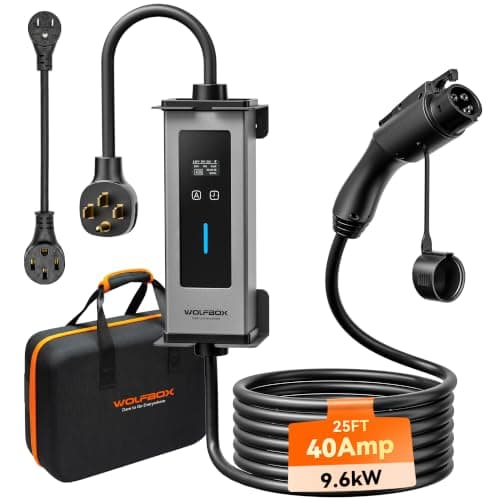
One charger for home and travel
WOLFBOX Portable (Level 1/2)
A dual-level portable that charges on both 120V and 240V, ships with both plug adapters, and adds a delay timer for off-peak charging — a genuine take-anywhere charger.
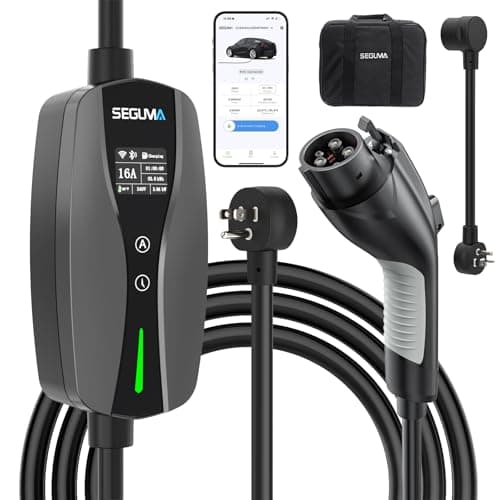
A 120V backup that is not dumb
SEGUMA Wi-Fi Level 1/2 (12A/16A)
A 120-volt cord that plugs into any household outlet and lives in the trunk — with app scheduling, a live display, and 16 amps on 240 volts if you have the outlet.
#ad · As an Amazon Associate we earn from qualifying purchases.
Questions
Frequently asked
Can I own an EV without a driveway or home charger?
Where do people charge if they street-park?
Is public charging enough to live with day to day?
Can I run a cable to my car from an apartment window?
Keep reading
Related
- Charging in an ApartmentThe renter's fuller playbook.
- Best Portable EV ChargersThe cord that unlocks any outlet you find.
- EV Charging Networks ExplainedFinding public Level 2 near where you park.
- Can You Use an Extension Cord?Why the obvious workaround is unsafe.
- DC Fast Charging ExplainedThe backstop when Level 2 doesn't cover a week.
Receipts
Sources
We do not run a testing lab, and we do not pretend to. Where a measured number came from someone else's lab, we name them and link them. Where we could not verify something, we say so on the page rather than quietly leaving it out. Read our full method.