HUB 05 · Guides & Buying Advice
EV Charging in a Condo or HOA
More than 30 states now limit how much an HOA can stand in the way — here's how right-to-charge laws work and how to get a charger approved.
We earn a commission when you buy through our Amazon links, at no extra cost to you. It never affects our rankings, and we say so when the cheaper product is the better buy. How this works.
If you own a condo or live under an HOA, you may have more right to install a charger than you think: over 30 states now have "right-to-charge" lawsthat stop an association from unreasonably denying an EV charger in a space you own or control. The association can still set reasonable rules — but in these states it cannot simply say no.
Charging where a board or shared electrical setup is involved is more about paperwork than wiring. Knowing your state's law and following the process is what gets a charger approved.
What right-to-charge laws do
These laws prohibit HOAs and condo associations from unreasonably restricting the installation of EV charging in an owner's deeded or assigned parking space. States including California, Colorado, Florida, Hawaii, Illinois, Maryland, New Jersey, Oregon, Virginia and Washington have among the strongest versions; California uniquely extends protections to renters at the civil-code level. Because the details vary widely, confirm your own state's statute rather than assuming.
What the association can still require
A right-to-charge law is not a blank check. Associations may typically require you to: pay all installation and electricity costs, carry liability insurance naming the association, use a licensed electrician, and follow reasonable design and safety rules. Many statutes also give the board a defined response window (often 60–90 days), after which silence can count as approval. Submit a clean, complete request and you remove the board's easiest reasons to stall.
The practical process
Read your CC&Rs and your state law, then submit a written request with a licensed electrician's plan, the equipment spec, proof of insurance, and how the electricity will be metered to you. For metering, sub-metering or a dedicated circuit off your unit's panel keeps the cost clearly yours. This is where a plain, well-certified Level 2 charger on a dedicated circuit is easier to approve than anything exotic.
The portable-first fallback
While approval is pending — or if your building simply cannot support a dedicated Level 2 circuit — a portable charger is the pragmatic bridge. If you can reach any outlet, even a 120-volt one, a portable adds miles overnight; our renter charging guide and apartment guide cover the shared-garage and no-dedicated-circuit situations in depth.
The gear
Recommended gear for this guide
The products this guide refers to, with prices pulled live from Amazon and dated on each card.
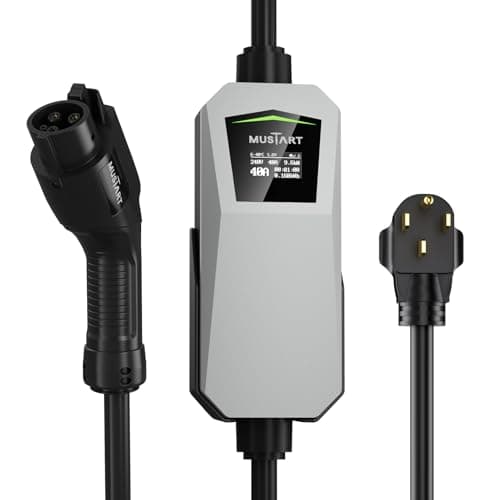
The cheapest capable portable
MUSTART 40A Portable
A budget 40-amp portable with an LCD readout — the value pick when you just need 240V charging that moves.
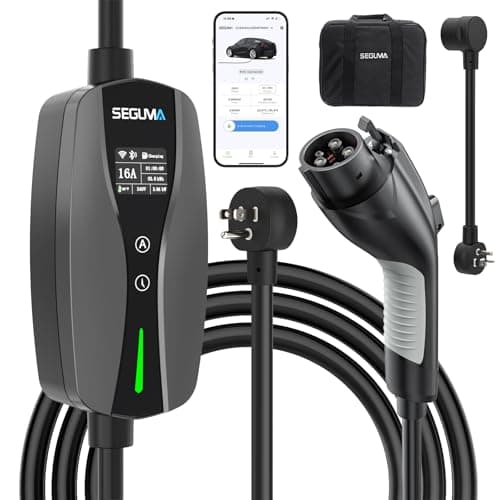
A 120V backup that is not dumb
SEGUMA Wi-Fi Level 1/2 (12A/16A)
A 120-volt cord that plugs into any household outlet and lives in the trunk — with app scheduling, a live display, and 16 amps on 240 volts if you have the outlet.
#ad · As an Amazon Associate we earn from qualifying purchases.
Questions
Frequently asked
Can my HOA stop me from installing an EV charger?
What is a right-to-charge law?
Who pays for a condo EV charger installation?
What if my building can't support a Level 2 charger?
Keep reading
Related
- Charging in an ApartmentThe renter and shared-garage playbook.
- Best Charger for RentersPortable-first setups for shared parking.
- Charging Without a DrivewayWhen you have no assigned space at all.
- Best Portable EV ChargersThe bridge while approval is pending.
- Living With Level 1 OnlyWhen a standard outlet is all you can get.
Receipts
Sources
We do not run a testing lab, and we do not pretend to. Where a measured number came from someone else's lab, we name them and link them. Where we could not verify something, we say so on the page rather than quietly leaving it out. Read our full method.