HUB 05 · Guides & Buying Advice
EV Charger Error Codes Explained
A blinking fault light isn't random. Chargers report a handful of fault categories — here's what they mean and what to do.
We earn a commission when you buy through our Amazon links, at no extra cost to you. It never affects our rankings, and we say so when the cheaper product is the better buy. How this works.
EV charger error lights look alarming but map to a small set of causes: a ground fault, over-temperature, a communication error between car and charger, over-current, or simply no powerto the unit. Each brand codes them differently — by blink pattern, color or an app message — but the categories, and the safe responses, are consistent.
Always check your charger's manual for its exact code meanings; the categories below tell you what class of problem you are looking at and how seriously to take it.
Ground fault (the one to respect)
A ground-fault code means the charger's internal protection (the CCID) detected current leaking where it should not — a genuine safety trip. Unplug, inspect the connector and outlet for moisture or damage, and try once more. If it recurs, stop: repeated ground faults point to a real wiring, moisture or equipment problem that an electrician should diagnose. Do not defeat or bypass it. Damp outdoor installs are a common trigger — see our GFCI guide and charging in the rain.
Over-temperature
An over-temperature fault means the plug, cable or unit got too hot — often from a loose or worn connection at a plug-in outlet, which is exactly why a quality NEMA 14-50 receptacle matters. Let it cool, inspect the plug and outlet for discoloration or melting, and if you find heat damage, retire that outlet until an electrician replaces it. A cheap outlet cooking under load is a leading cause of this fault.
Communication error
The car and charger constantly "talk" over the control-pilot signal. A communication fault — the session won't start, or drops instantly — is often a connector not fully seated, a dirty contact, or an adapter in the chain. Reseat the connector firmly, clean the contacts, and remove any unnecessary adapter to test. See are adapters safe for how a poor adapter can cause this.
Over-current and no-power faults
An over-current fault means the charger drew more than the circuit allows — check that the charger's amperage is set correctly for the breaker, per our wire size and breaker guide. A no-power or dead-unit state usually means a tripped breaker or lost supply; if resetting the breaker doesn't hold, or it trips again, treat it as a circuit issue for an electrician. Our tripping-breaker guide covers this in depth.
The universal first steps
For any code: note the exact pattern, unplug and reseat, try the car's included cord or a different outlet to isolate the fault, and consult the manual. If a fault repeats — especially a ground fault or over-temperature — stop using the setup and get it inspected. Our general troubleshooting guide and why-it-stops guide complement this.
The gear
Recommended gear for this guide
The products this guide refers to, with prices pulled live from Amazon and dated on each card.
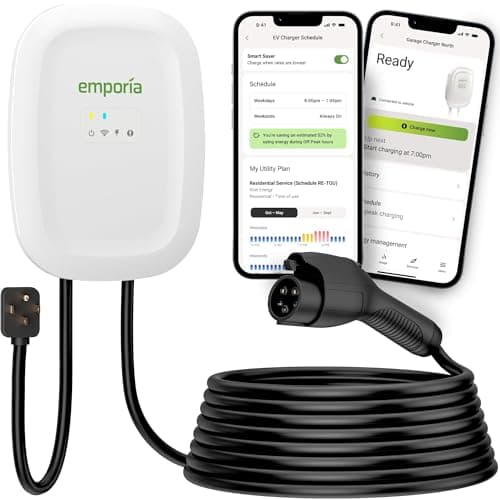
Most people who want the smart features too
Emporia Level 2 (48A)
The smart charger that does not charge a smart-charger premium — 48-amp capability and real energy monitoring for the price of a dumb one.
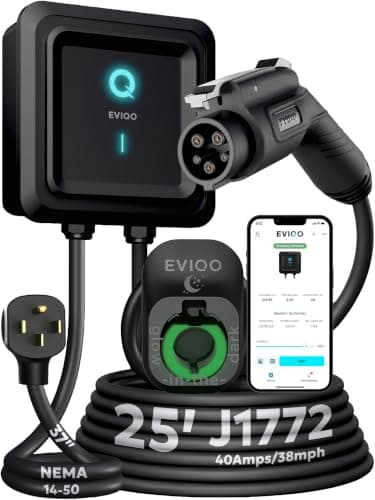
Budget-conscious buyers who still want smart features
EVIQO Level 2 (40A)
A weatherproof, UL-and-ETL-listed smart charger that regularly sits at the bottom of the price band — a lot of charger for the money.
#ad · As an Amazon Associate we earn from qualifying purchases.
Questions
Frequently asked
What does a ground fault error on an EV charger mean?
Why is my EV charger showing an over-temperature fault?
What is a communication error on a charger?
Should I keep resetting a charger that keeps faulting?
Keep reading
Related
- EV Charger TroubleshootingThe full diagnostic walkthrough.
- Why Does My EV Stop Charging?When a stop isn't a coded fault.
- Charger Tripping the BreakerThe over-current and no-power side.
- Do I Need a GFCI Breaker?Why ground faults appear on plug-in circuits.
- NEMA 14-50 OutletsThe quality receptacle that prevents over-temp faults.
Receipts
Sources
We do not run a testing lab, and we do not pretend to. Where a measured number came from someone else's lab, we name them and link them. Where we could not verify something, we say so on the page rather than quietly leaving it out. Read our full method.