HUB 05 · Guides & Buying Advice
Best Gifts for an EV Road-Tripper
Long-distance EV driving is a solved problem right up until the one charger you need has the wrong plug. This is the kit that fixes that.
We earn a commission when you buy through our Amazon links, at no extra cost to you. It never affects our rankings, and we say so when the cheaper product is the better buy. How this works.
The EV road-trip problem is not range any more — it is compatibility. The charger at the motel has the wrong plug; the cabin has a welder outlet instead of a proper socket; the fast charger that was supposed to be there is broken. Every gift on this page is insurance against one of those, and almost all of it is small enough to live permanently in the trunk.
This is one of the easier people to buy for, because road-trippers accumulate problems that have cheap, specific solutions — and they rarely get round to buying the solution until the night it strands them. If you want context first, our EV charging on a road trip guide is the full walkthrough.
The connector adapter: more chargers, same car
The most valuable thing in an EV road-tripper's trunk is the adapter that lets them use a charging network their car was not born to use. Which one they need depends entirely on their charge port, and getting it backwards makes it useless, so this is the one thing worth confirming before you buy:
- Non-Tesla car (Ford, Hyundai, Kia, Chevy, Rivian and most others) — they want a NACS-to-J1772 adapter, which lets them draw from Tesla-style destination chargers. Our NACS-to-J1772 roundup ranks them.
- Tesla or NACS-port car — they want the opposite, J1772-to-NACS, to use the very large installed base of J1772 stations.
Buy one with a named UL listing: it carries the full charging current, and that listing matters more than the price difference between the good ones and the anonymous ones. Our adapter safety guide explains why. One limit to be honest about — these are AC adapters. DC fast-charging adapters are a separate, vehicle-specific and network-approved category, covered in our non-Tesla Supercharger guide.
The outlet adapters: for cabins, relatives and workshops
This is the gift road-trippers do not know to ask for. Once you are away from public infrastructure, the useful electricity is in ordinary buildings — and it comes out of outlets that are all slightly the wrong shape. A small set of plug adapters turns those into charging points:
- NEMA 14-30 — the four-prong dryer outlet. The most common useful socket in someone else's house.
- NEMA 6-50 — the welder or shop outlet. Common in garages, workshops and rural outbuildings.
- NEMA 10-30 — the older three-prong dryer outlet, found in pre-1996-ish homes. This one carries real caveats about grounding, covered in our 10-30 guide, and should be the last resort of the three.
The rule that applies to all of them: the charging current has to be turned down to what the host circuit can safely carry. An adapter changes the shape of a plug, not the rating of the wiring behind it. Our travel plug adapter guide covers the set properly, and the outlet adapter roundup ranks the individual parts.
The portable charger: for the overnight stop
A portable Level 2 charger is what makes those adapters worth carrying. It is the difference between arriving at a holiday rental and hoping there is a charger nearby, and arriving, plugging into the garage outlet, and leaving with a full battery. Combined with a couple of plug adapters it turns most buildings with a 240-volt socket into an overnight charging stop.
Our portable charger roundup ranks the field with live prices, and how fast does a portable charge sets expectations honestly.
The emergency cord
Finally, the cheap insurance: a compact Level 1 / Level 2 cord that will run off an ordinary household socket. It charges slowly, and that is the point — it is what you use when the plan has failed and there is nothing available but a standard outlet on the side of a building. Our emergency charger guide makes the case for keeping one in the car permanently.
The free part of the gift: point them at our EV charging apps guide and how to find charging stations. Most road-trip charging failures are planning failures, not hardware failures, and the apps are free.
The gear
Recommended gear for this guide
The products this guide refers to, with prices pulled live from Amazon and dated on each card.

A J1772 car using NACS chargers
Lectron NACS → J1772 Adapter
The default adapter for a J1772 car to use a Tesla-style (NACS) home or destination charger — rated for the full 48 amps.
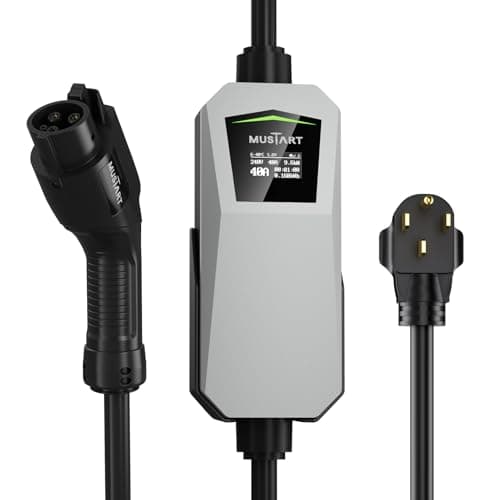
The cheapest capable portable
MUSTART 40A Portable
A budget 40-amp portable with an LCD readout — the value pick when you just need 240V charging that moves.
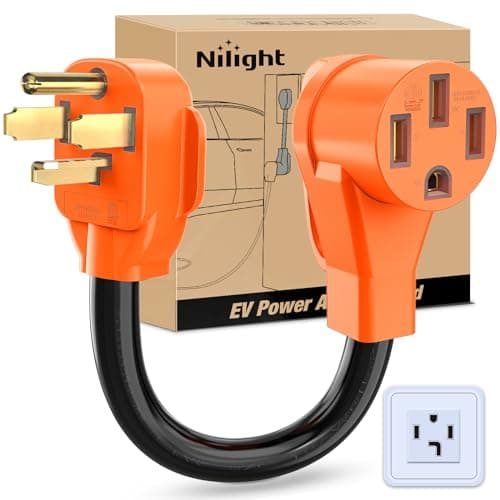
A four-prong (14-30) dryer outlet
Nilight NEMA 14-30P → 14-50R Adapter
The adapter for the outlet most American homes already have — a modern four-prong dryer receptacle — and the only one in its price band that publishes its conductor gauge.
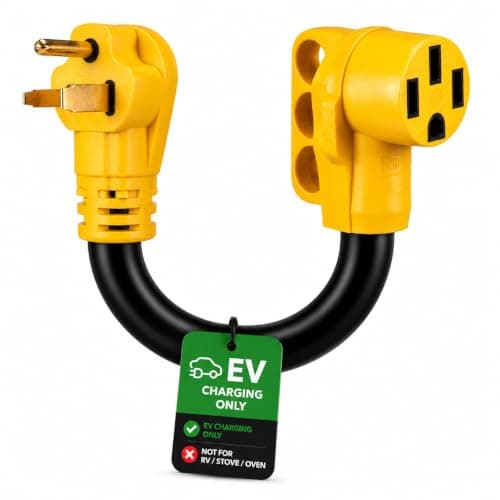
A welder or shop 6-50 outlet
Suplevel NEMA 6-50P → 14-50R Adapter
The best-documented cord in the category — 6-gauge wire and a named ETL listing behind a 50-amp welder outlet, where most rivals ship 10 AWG and mention no certification at all.
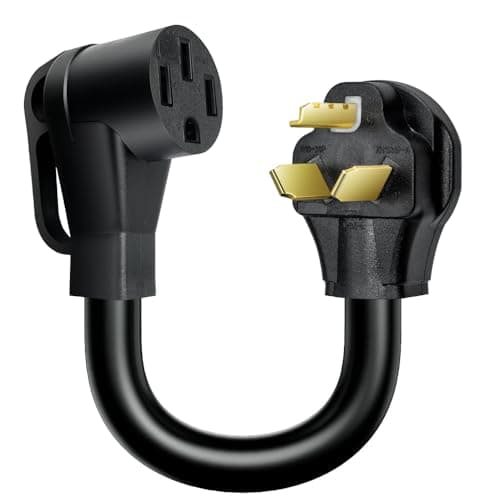
An old three-prong 10-30 outlet, with caveats
air2yun NEMA 10-30P → 14-50R Adapter
The least-bad way to charge from a three-prong dryer outlet — but the right answer is having an electrician convert that outlet, not adapting around it.
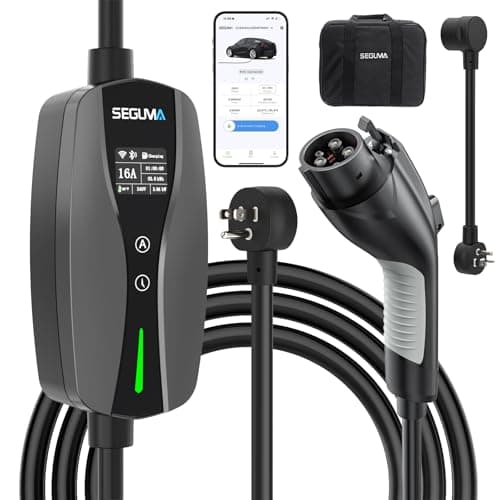
A 120V backup that is not dumb
SEGUMA Wi-Fi Level 1/2 (12A/16A)
A 120-volt cord that plugs into any household outlet and lives in the trunk — with app scheduling, a live display, and 16 amps on 240 volts if you have the outlet.
#ad · As an Amazon Associate we earn from qualifying purchases.
Questions
Frequently asked
What should an EV owner keep in the trunk for road trips?
Which charging adapter do I buy for a road-tripper?
Can you charge an EV from a dryer or welder outlet on a trip?
Do adapters work for DC fast charging on a road trip?
Keep reading
Related
- EV Charging on a Road TripThe full planning walkthrough.
- Travel Plug AdaptersThe outlet-shape problem, solved properly.
- Best Outlet AdaptersThe individual parts, ranked.
- Best Portable EV ChargersWhat makes the adapters worth carrying.
- Gifts for EV OwnersThe all-budget gift guide.
- Black Friday EV Charger Deals 2026Whether to buy the trunk kit now or wait.
Receipts
Sources
- US DOE / fueleconomy.gov — EV charging basics
- US DOE Alternative Fuels Data Center — charging station locator
- Tesla — North American Charging Standard (NACS)
We do not run a testing lab, and we do not pretend to. Where a measured number came from someone else's lab, we name them and link them. Where we could not verify something, we say so on the page rather than quietly leaving it out. Read our full method.