HUB 05 · Guides & Buying Advice
Charging a Ford F-150 Lightning at Home
The Lightning charges over a standard J1772 plug at home, so almost any good Level 2 charger works — here's how to pick one, and where an adapter comes in.
We earn a commission when you buy through our Amazon links, at no extra cost to you. It never affects our rankings, and we say so when the cheaper product is the better buy. How this works.
The F-150 Lightning charges at home through a standard J1772plug, which means almost any good Level 2 charger works — you do not need Ford's own Charge Station Pro. Buy a 48-amp-capable J1772 charger to make the most of the truck's big onboard charger, put it on a properly sized circuit, and you are set. An adapter only enters the picture when you want to use Tesla-style chargers away from home.
The Lightning ships with Ford's Mobile Power Cord and can be paired with the Charge Station Pro, but neither is the only way to charge it. Because the truck uses the same J1772 connector for AC charging as most other non-Tesla EVs, the entire third-party charger market is open to you — often at a lower price and with better features than a single-brand unit.
The connector: J1772 at home, CCS on the road
For everyday home charging the Lightning uses the J1772 AC connector, the standard on the large majority of home and public Level 2 equipment. For DC fast charging on a road trip it uses the CCS port below it. That matters for one reason: the charger you mount in your garage is an AC J1772 unit, and that is a competitive, well-stocked category. Our NACS vs J1772 explainercovers why the standards are the way they are, and Ford has begun offering a NACS adapter so newer Lightnings can also use Tesla Superchargers for DC — but that is a DC road-trip accessory, separate from the AC charger at home.
What Level 2 charger to buy
The Lightning has a large onboard AC charger — on most configurations it accepts up to about 48 amps (roughly 11.5 kW), and the extended-range truck paired with the Charge Station Pro can go higher still. Confirm your own truck's rating, but the practical takeaway is that a 48-amp charger is worth it here in a way it is not on a small-battery car: the bigger the battery, the more a faster charger shortens an overnight fill. A 48-amp unit needs a 60-amp circuit, so check your panel first.
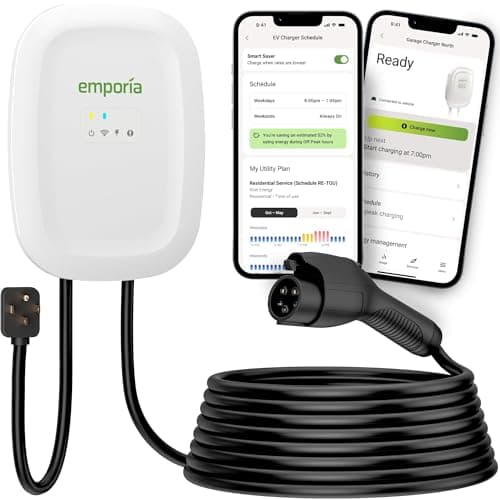
A well-certified 48-amp smart unit like the Emporia Level 2 is the value default; the full field is in our best 48-amp EV chargers roundup, and if you would rather match the charger to a smaller breaker, the 40-amp unitsstill fill the truck overnight. Whichever you choose, the circuit is set by your panel, not the charger's label — the wire size and breaker guide shows the math.
Plug-in or hardwired, and the outlet
A plug-in charger on a NEMA 14-50 outletis capped at 40 amps; hardwiring is what unlocks the full 48. For a truck you keep for years, many owners hardwire for the extra speed and the cleaner install. Either way the outlet is a real safety component under a continuous truck-sized load — buy the industrial-grade, listed receptacle and have a licensed electrician install it on a correctly sized circuit.
Using an adapter away from home
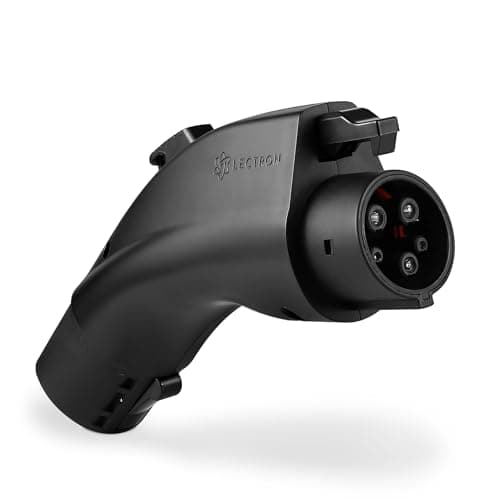
Because the Lightning is a J1772 car, a NACS-to-J1772 adapterlets it draw AC power from Tesla Wall Connectors and Destination Chargers — handy at hotels and offices that installed Tesla equipment. That is AC only; it does not unlock Superchargers, which is a DC connection handled by Ford's own NACS adapter and the car. Keep the two straight and you will never buy the wrong part.
How long it takes
The Lightning's battery is far larger than a typical car's, so even at a healthy Level 2 rate a full charge from low is an all-night affair — which is exactly why home charging suits it: you plug in overnight and wake up full. Our how long to charge an EV guide has the time formula so you can plug in your own battery size and amperage. For most owners the daily reality is topping up a partial battery, not filling an empty one, and Level 2 handles that with room to spare.
The gear
Recommended gear for this guide
The products this guide refers to, with prices pulled live from Amazon and dated on each card.
Most people who want the smart features too
Emporia Level 2 (48A)
The smart charger that does not charge a smart-charger premium — 48-amp capability and real energy monitoring for the price of a dumb one.
A J1772 car using NACS chargers
Lectron NACS → J1772 Adapter
The default adapter for a J1772 car to use a Tesla-style (NACS) home or destination charger — rated for the full 48 amps.
#ad · As an Amazon Associate we earn from qualifying purchases.
Questions
Frequently asked
Do I need Ford's Charge Station Pro to charge an F-150 Lightning at home?
What amp charger should I get for an F-150 Lightning?
Can an F-150 Lightning use a Tesla Supercharger?
Should I hardwire or plug in the charger for a Lightning?
Keep reading
Related
- Best 48-Amp EV ChargersThe faster chargers a big truck battery rewards.
- Wire Size & BreakerThe 60-amp circuit a 48-amp charger needs.
- Best NACS-to-J1772 AdaptersUse Tesla AC chargers with a J1772 truck.
- Portable Charger for a LightningA travel-and-backup unit for the truck.
- How Long to Charge an EVThe time math for a truck-sized battery.
- NEMA 14-50 OutletsThe receptacle a plug-in charger needs.
Receipts
Sources
We do not run a testing lab, and we do not pretend to. Where a measured number came from someone else's lab, we name them and link them. Where we could not verify something, we say so on the page rather than quietly leaving it out. Read our full method.