HUB 03 · Adapters & Connectors
Do I Need an Adapter to Charge My EV?
Often the answer is no for home charging — but an adapter can open up chargers you'd otherwise skip. Here's when it's worth having.
We earn a commission when you buy through our Amazon links, at no extra cost to you. It never affects our rankings, and we say so when the cheaper product is the better buy. How this works.
For everyday charging on a charger that matches your car's connector, you need no adapter at all. An adapter earns its place when you want to use a charger with the otherconnector — a J1772 car at a Tesla-style charger, or a NACS-port car at a J1772 charger. It widens where you can charge; it is rarely required for the charging you already do.
New owners often assume an adapter is a mandatory purchase. Usually it is not — but a cheap one in the frunk removes a lot of "can I charge here?" friction. Here is the honest picture.
When you don't need an adapter
If your car's connector matches the chargers you use, you are set with nothing extra:
- A J1772 carcharging at J1772 home and public chargers — the large majority of Level 2 equipment. No adapter.
- A NACS-port car (Tesla or 2025+ EV) charging at a native NACS charger, or Supercharging at NACS stalls. No adapter.
In both cases the plug simply matches. Buying a charger that matches your car — a native NACS home charger for a NACS car, or a J1772 chargerfor a J1772 car — is the cleanest setup and skips the adapter entirely.
When an adapter is worth having
An adapter turns "I can't use that one" into "I can use anything." The two genuinely useful cases:
- A J1772 car that wants Tesla AC chargers. Hotels and workplaces often installed Tesla Wall or Destination Connectors. A NACS-to-J1772 adapter opens all of those up.
- A NACS-port car that wants the J1772 network. The installed base of J1772 chargers dwarfs NACS today, so a J1772-to-NACS adapter massively widens where a Tesla or 2025+ EV can charge.
Both are cheap, and both are about options, not necessity. Which direction you need is a two-question check — see which adapter do I need.
What an adapter can't do
The passive adapters here are AC Level 2 only. They do not enable DC fast charging or Tesla Supercharging — that is the car's port and automaker DC adapters, covered in our Supercharger access guide. And an adapter does not change charging speed: a certified adapter is rated well above home current and is not a bottleneck.
Bottom line
Do not buy an adapter thinking your car cannot charge without one — it almost certainly can, on matching chargers. Buy one because it is cheap insurance that lets you charge at more places. Pick the right direction, look for a named UL listing, and keep it in the car.
The gear
Recommended gear for this guide
The products this guide refers to, with prices pulled live from Amazon and dated on each card.
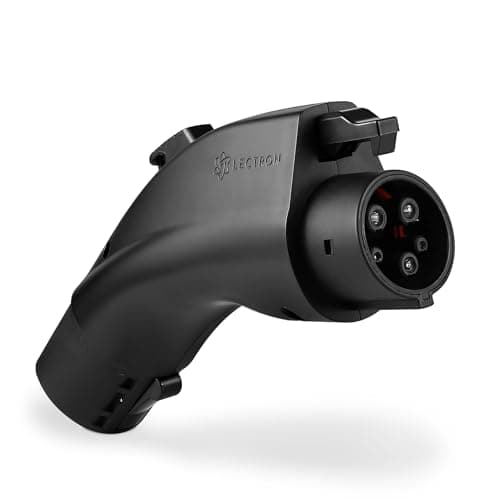
A J1772 car using NACS chargers
Lectron NACS → J1772 Adapter
The default adapter for a J1772 car to use a Tesla-style (NACS) home or destination charger — rated for the full 48 amps.
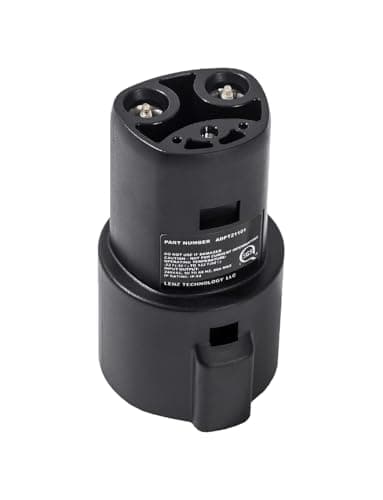
A Tesla / NACS car using J1772 chargers
LENZ J1772 → NACS Adapter
A UL-2251-certified J1772-to-NACS adapter — the one a Tesla or a 2026+ NACS-port EV needs to use the huge installed base of J1772 chargers.
#ad · As an Amazon Associate we earn from qualifying purchases.
Questions
Frequently asked
Do I need an adapter to charge my EV at home?
Usually not. If your home charger matches your car's connector — J1772 charger for a J1772 car, NACS charger for a NACS car — no adapter is needed. An adapter is for using chargers with the other connector type.
When is an EV charging adapter actually useful?
When you want to use a charger your car's plug does not match — a J1772 car at a Tesla AC charger, or a NACS-port car at the huge J1772 network. It widens where you can charge for a small cost, which is why many owners keep one in the frunk.
Will an adapter let my EV use any charger?
For AC Level 2 charging, the right adapter bridges J1772 and NACS in the needed direction. It does not enable DC fast charging or Supercharging, and it does not change speed. So it widens AC access but is not a universal key to every charger.
Is it better to buy a matching charger or use an adapter?
For your primary home charger, buy one that matches your car's connector — it is the cleanest setup with nothing to lose or wear. Keep an adapter as well for the away-from-home chargers that use the other connector.
Keep reading
Related
- Which Adapter Do I Need?Pick the correct direction in two questions.
- NACS vs J1772 ExplainedThe connector split behind the question.
- Best NACS Home ChargersSkip the adapter with a matching charger.
- Supercharger Access for Non-TeslasWhat an adapter can't do — DC charging.
- Are Charging Adapters Safe?Using one confidently once you've bought it.
Receipts
Sources
- US DOE / fueleconomy.gov — EV charging basics
- Consumer Reports — Tesla Superchargers and NACS adoption
We do not run a testing lab, and we do not pretend to. Where a measured number came from someone else's lab, we name them and link them. Where we could not verify something, we say so on the page rather than quietly leaving it out. Read our full method.