Skip to content
Volt & Cable

HUB 01 · Level 2 Home Chargers

The Best 32-Amp EV Chargers

Thirty-two amps is not a compromise — it is the legal ceiling on the 40-amp circuit most homes can actually spare. These are the chargers that do it right, ranked.

By Stephen V.Updated How we research
#ad

We earn a commission when you buy through our Amazon links, at no extra cost to you. It never affects our rankings, and we say so when the cheaper product is the better buy. How this works.

The short answer

Quick picks

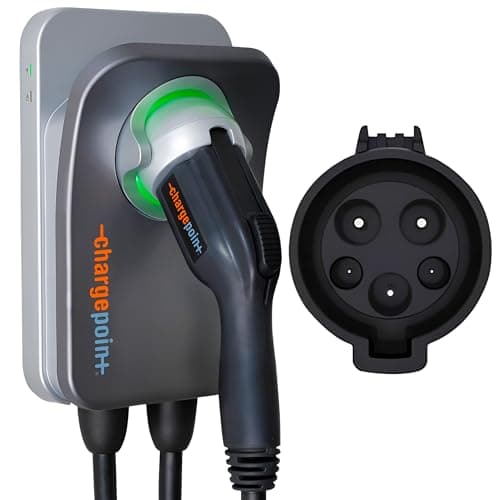
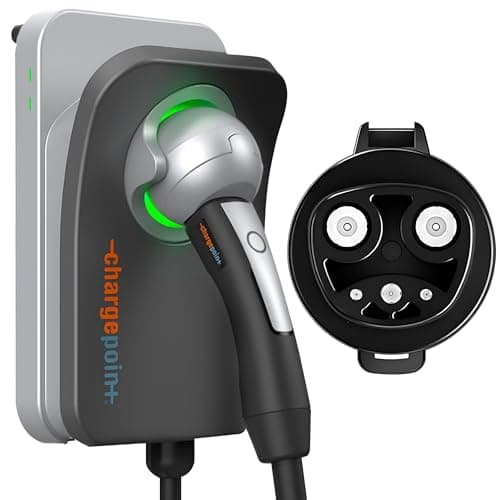
  • ChargePoint ChargePoint Home Flex
    01 ChargePoint Home Flex
    8.2

    The polished, well-supported option — adjustable up to 50 amps and tied into the largest public charging app in North America.

    Best for: Buyers who want the established brand and app

    $599.00Amazon
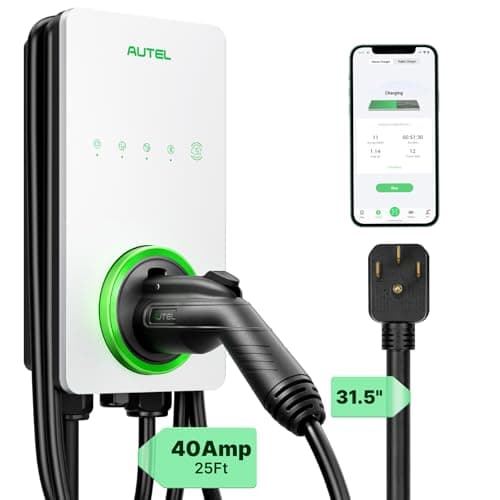
  • Autel Autel MaxiCharger (40A)
    02 Autel MaxiCharger (40A)
    8.6

    A feature-dense smart unit with Wi-Fi, Bluetooth and a separate holster in the box — strong if you want everything and a clean install.

    Best for: Feature-maximalists who want a tidy install

    $375.99Amazon
  • ChargePoint ChargePoint Home Flex NACS (hardwired)
    03 ChargePoint Home Flex NACS (hardwired)
    8.6

    The established-brand pick: amperage selectable from 16 all the way to 50, so one unit fits whatever breaker your panel can actually spare.

    Best for: Buyers who want the mature brand and app

    $549.00Amazon
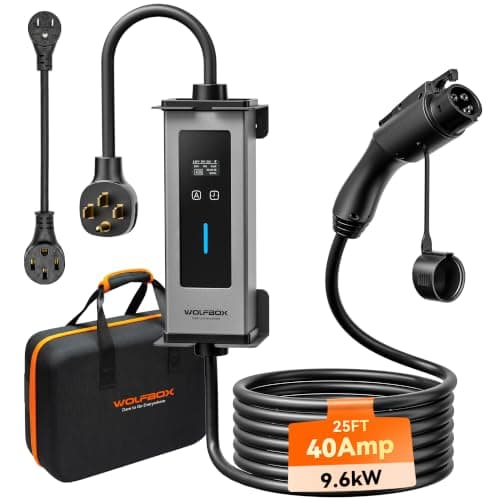
  • WOLFBOX WOLFBOX Portable (Level 1/2)
    04 WOLFBOX Portable (Level 1/2)
    8.6

    A dual-level portable that charges on both 120V and 240V, ships with both plug adapters, and adds a delay timer for off-peak charging — a genuine take-anywhere charger.

    Best for: One charger for home and travel

    $299.99Amazon
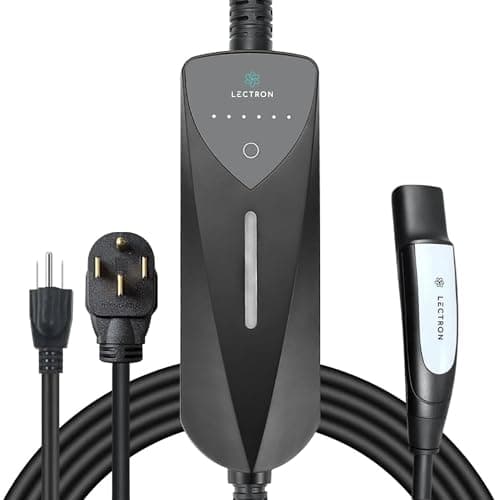
  • Lectron Lectron NACS Portable (8–40A)
    05 Lectron NACS Portable (8–40A)
    8.4

    A NACS charger that is not bolted to anything — 240-volt speed at home, a 120-volt plug for the road, and it moves when you do.

    Best for: Renters and anyone who travels

    Check priceAmazon

#ad · Live prices from the Amazon Product API, as of October 16, 2026. Where we have no verified live price, we show none — we would rather leave a gap than print a number that has gone stale.

Buy a charger that is adjustable, then set it to 32 amps — do not buy a charger whose output is fixed at 32. Our pick is the ChargePoint Home Flex, because its amperage is selectable from 16 all the way to 50, so the same box runs at 32 amps on the 40-amp breaker you have today and at 40 or 48 if you ever upgrade the circuit. If you want the same flexibility with a holster and a tidier install, the Autel MaxiCharger is adjustable from 40 amps down to 16.

Thirty-two amps has a reputation as the budget option, and that reputation is wrong. It is the number the National Electrical Code arrives at when you put a charger on a 40-amp breaker, and a 40-amp breaker is what an enormous number of American panels can spare without a service upgrade. Searching for a "32-amp charger" is therefore usually the right instinct expressed in the wrong units: what you want is a charger that willrun at 32 amps, and almost every charger worth buying gets there by being adjustable rather than by being built small.

As everywhere on this site, nothing here was bench-tested. The picks come from the manufacturers' published specifications on their live listings, their documented amperage ranges, the verified safety listings, and the code arithmetic below. Scores are judgments against our published rubric, not lab measurements, and no price is written into this page — every number renders live and date-stamped.

The short version

  • ChargePoint Home Flex — best 32-amp charger overall. For the person who wants one charger to outlive one circuit. Amperage is selectable 16–50A in the app, so 32 today and more later with no new hardware. Full review.
  • Autel MaxiCharger — best with a holster included. For the buyer who wants the install to look finished. Adjustable 40A down to 16A, 25-foot cable, holster in the box. Full review.
  • ChargePoint Home Flex NACS — best for a Tesla or other NACS car. For the driveway whose cars use the Tesla-style plug. Same 16–50A adjustment, hardwired, NACS head. Full review, or see it against the plug-in alternative in ChargePoint NACS vs Lectron Nexus.
  • WOLFBOX Portable — best 32-amp charger you can unplug. For renters and anyone who wants the charger to move. Adjustable 6–40A, so 32 is a setting, and it travels. Full review.
  • Lectron NACS Portable — best adjustable NACS portable. For a Tesla owner who wants one cable for home and travel. Adjustable 8–40A with a NACS head. Full review.

Why 32 amps, specifically

EV charging is a continuous load, and the code treats continuous loads conservatively: NEC 625.42 requires the branch circuit to be rated at 125% of the charger's continuous output, which is the same thing as saying the charger may draw no more than 80% of the breaker. Run that in both directions and the whole category falls into place:

  • 40-amp breaker × 80% = 32 amps. At 240 volts that is 7.7 kW.
  • A car averaging 3 miles per kWh therefore gains about 23 miles of range per hour.
  • Over a ten-hour overnight window that is roughly 230 miles added while you sleep — comfortably more than the US average daily drive of about 37 miles.

Compare that with the 48-amp charger people reach for instead: 11.5 kW, about 34 miles per hour, roughly 340 miles overnight. It is genuinely faster. It also needs a 60-amp circuit, heavier wire, and in many cases a panel with capacity it does not have. For a daily commute the extra 110 miles of overnight headroom buys you nothing at all, because both numbers are far past what you actually drove that day. Our what amp charger do I need guide works through the choice in full, and the wire size and breaker guide has the complete table.

The trap to avoid. A charger sold as "32A" with a fixed output is not cheaper in any way that matters, and it locks the ceiling in at 7.7 kW forever. An adjustable charger set to 32 costs about the same, runs identically, and is still the right charger the day you add a bigger breaker. That is the entire argument of this page: buy the range, not the number.

How the picks compare on paper

These are the manufacturers' published figures from the live listings, with the live price alongside. The column that matters most is the amperage range: every unit here can be set to 32 amps, which is exactly why it is on the list.

ChargerBest forPublished range / specsPrice
ChargePoint Home FlexBuyers who want the established brand and appAdjustable to 50A · J1772 · NEMA 14-50 plug · Energy Star$599.00
Autel MaxiCharger (40A)Feature-maximalists who want a tidy install40A / 9.6kW · J1772 · 25ft cable + holster · Wi-Fi + Bluetooth$375.99
ChargePoint Home Flex NACS (hardwired)Buyers who want the mature brand and app16–50A adjustable · NACS (J3400) · Hardwired · NEMA 3R outdoor$549.00
WOLFBOX Portable (Level 1/2)One charger for home and travel6–40A · 9.6kW · J1772 · Level 1/2 · NEMA 14-50 + 5-15 · ETL · IP66 · 25ft$299.99
Lectron NACS Portable (8–40A)Renters and anyone who travels8–40A adjustable · NACS (J3400) · NEMA 14-50 + 5-15 · ETL certified · 20ftNot verified today

#ad Prices read live from the Amazon Product API as of October 16, 2026, and they move. Specs are the manufacturer's published claims from the live listing — we have not bench-measured them. Where we have no verified price we print none rather than a number that has gone stale.

In detail

The picks, in full

01
ChargePoint ChargePoint Home Flex

Buyers who want the established brand and app

ChargePoint Home Flex

Adjustable to 50AJ1772NEMA 14-50 plugEnergy Star
8.2/10

The polished, well-supported option — adjustable up to 50 amps and tied into the largest public charging app in North America.

Charge speed
9
Build & weather
8
Smart features
9
Cable & connector
8
Value
7

Pros

  • Amperage is adjustable in the app to match whatever breaker you install, up to 50A
  • Integrates with ChargePoint's large public-network app — one app for home and away
  • Long track record and responsive support, which budget brands cannot match

Cons

  • Costs more than equally capable chargers from newer brands
  • The experience leans hard on the ChargePoint account and app

Don't buy this if…

…price is your first priority. The Emporia matches most of what this does for meaningfully less — you are paying here for brand maturity and the unified app, which are real but not free.

$599.00View on Amazon

$657.999% off

Price as of October 16, 2026. Prices change — Amazon's is the one that counts.

#ad · we may earn a commission from this link to ChargePoint Home Flex

02
Autel Autel MaxiCharger (40A)

Feature-maximalists who want a tidy install

Autel MaxiCharger (40A)

40A / 9.6kWJ177225ft cable + holsterWi-Fi + Bluetooth
8.6/10

A feature-dense smart unit with Wi-Fi, Bluetooth and a separate holster in the box — strong if you want everything and a clean install.

Charge speed
8
Build & weather
9
Smart features
9
Cable & connector
9
Value
8

Pros

  • Ships with a separate holster, so you get tidy cable management out of the box
  • Both Wi-Fi and Bluetooth, so app control still works if your garage Wi-Fi is weak
  • Weather-rated enclosure for indoor or outdoor mounting

Cons

  • 40-amp ceiling means it is not the fastest option if your panel could support 48A
  • The feature set is more than a set-and-forget charger buyer needs

Don't buy this if…

…your electrical panel can support a 48-amp circuit and you want the fastest home charging. The 48A Emporia will add range quicker; the Autel's strength is features and the in-box holster, not top speed.

$375.99View on Amazon

$470.0020% off

Price as of October 16, 2026. Prices change — Amazon's is the one that counts.

#ad · we may earn a commission from this link to Autel MaxiCharger (40A)

03
ChargePoint ChargePoint Home Flex NACS (hardwired)

Buyers who want the mature brand and app

ChargePoint Home Flex NACS (hardwired)

16–50A adjustableNACS (J3400)HardwiredNEMA 3R outdoor
8.6/10

The established-brand pick: amperage selectable from 16 all the way to 50, so one unit fits whatever breaker your panel can actually spare.

Charge speed
10
Build & weather
9
Smart features
9
Cable & connector
8
Value
7

Pros

  • Amperage is set in the app — 16, 24, 32, 40, 48 or 50 amps — so the charger adapts to the circuit instead of the other way round
  • Hardwired at up to 50 amps, the fastest configuration in this roundup
  • NEMA 3R outdoor-rated enclosure, and one ChargePoint account covers home charging and the largest public network in North America

Cons

  • Hardwired only — there is no unplugging this one and taking it with you, and the install is licensed work
  • Costs more than equally capable NACS chargers from newer brands

Don't buy this if…

…you rent or you might move. A hardwired charger stays with the house — the plug-in Lectron Nexus or the Lectron NACS portable is the one that leaves with you.

$549.00View on Amazon

Price as of October 16, 2026. Prices change — Amazon's is the one that counts.

#ad · we may earn a commission from this link to ChargePoint Home Flex NACS (hardwired)

04
WOLFBOX WOLFBOX Portable (Level 1/2)

One charger for home and travel

WOLFBOX Portable (Level 1/2)

6–40A · 9.6kWJ1772 · Level 1/2NEMA 14-50 + 5-15ETL · IP66 · 25ft
8.6/10

A dual-level portable that charges on both 120V and 240V, ships with both plug adapters, and adds a delay timer for off-peak charging — a genuine take-anywhere charger.

Charge speed
8
Portability
10
Build & weather
8
Cable & connector
8
Value
9

Pros

  • Charges on both 120V (Level 1) and 240V (Level 2), and ships with both the NEMA 5-15 and NEMA 14-50 plug adapters — one charger for home and the road
  • Adjustable current (6–40A) plus a built-in delay timer, so you can dial it down for a weaker circuit and start on cheaper overnight rates without an app
  • ETL certified with an IP66 weather rating and a 25-foot cable — a genuine take-anywhere travel charger

Cons

  • A portable brick that lives on the floor or a hook, not a tidy mounted wall unit
  • 40-amp draw needs a properly rated 14-50 outlet — do not run it flat-out on a worn receptacle

Don't buy this if…

…you want a permanent, tidy wall installation with per-charge energy data in an app. A portable trades the mounted look and the app for the ability to come with you.

$299.99View on Amazon

Price as of October 16, 2026. Prices change — Amazon's is the one that counts.

#ad · we may earn a commission from this link to WOLFBOX Portable (Level 1/2)

05
Lectron Lectron NACS Portable (8–40A)

Renters and anyone who travels

Lectron NACS Portable (8–40A)

8–40A adjustableNACS (J3400)NEMA 14-50 + 5-15ETL certified · 20ft
8.4/10

A NACS charger that is not bolted to anything — 240-volt speed at home, a 120-volt plug for the road, and it moves when you do.

Charge speed
8
Portability
10
Build & weather
7
Cable & connector
8
Value
9

Pros

  • Ships with both a 240-volt 14-50 plug and a 120-volt 5-15 plug, so it is a home charger and a road-trip cord in one
  • Current adjusts from 8 to 40 amps, which lets you dial it down for an unfamiliar outlet instead of hoping
  • ETL certified, with overvoltage, overcurrent and over-temperature protection built in — an independent safety listing, which not every portable on Amazon can show
  • Nothing is fixed to the wall — it goes in the trunk and leaves with you when you move, though a wall mount is in the box if you want one

Cons

  • A brick on a hook rather than a tidy mounted box
  • 20-foot cable — still shorter than the 25-foot portables here, so it has some say in where the car parks
  • No app or energy monitoring — charging status is LED indicators on the unit, not a phone screen

Don't buy this if…

…you want a permanent, tidy wall install with per-charge energy data. A portable trades the mounted look and the app for the ability to come with you.

Check price on Amazon →

No buyable offer at the last price check (October 16, 2026). We show nothing rather than a stale number.

#ad · we may earn a commission from this link to Lectron NACS Portable (8–40A)

What to look for in a charger you intend to run at 32 amps

An adjustable amperage range that includes 32. This is the whole specification. ChargePoint publishes 16–50A, Autel 16–40A, WOLFBOX 6–40A, Lectron 8–40A. A charger with a single fixed 40-amp output cannot legally sit on a 40-amp breaker at all, because 40 amps continuous needs a 50-amp circuit. That single fact rules out more Amazon listings than any other.

Where the setting lives. Some chargers set amperage in an app, some with a physical switch inside the enclosure, some during the installer's commissioning. An app is convenient but means the setting is one bad update from changing; a restricted-access physical setting is what the code contemplates for equipment that relies on its ampere setting. Neither is wrong — just know which you are buying, and that setting it correctly is your job, not the box's.

Plug-in versus hardwired. A 32-amp charger on a 40-amp circuit is almost always hardwired, because the common 240-volt receptacle — the NEMA 14-50 — belongs on a 50-amp circuit. If you want a plug-in install on 40 amps you are looking at a NEMA 6-50 or a hardwired unit; our outlet types explainer covers which receptacle goes with which breaker.

A real safety listing. UL or ETL, named on the listing. At 32 amps for eight hours a night the thing is a space heater with a plug on it, and the certification is the only evidence you have that it was built for that duty.

Cable length before features. A 25-foot cable that reaches your charge port is worth more than any app. If the parking spot is awkward, read the long-cable roundup before you choose on amperage at all.
How we picked

We do not run a testing lab

We compiled published specifications from manufacturer manuals and spec sheets, verified the safety listings (UL / ETL), computed the real running and installation costs, checked the wiring math against the NEC continuous-load rule, and read aggregated owner reviews — then scored each product against a published rubric. The scores are judgments from documented research — they are not bench measurements, because we do not have a test lab and we are not going to pretend we do. Every spec and cost figure is cited in Sources.

Questions

Frequently asked

Is a 32-amp charger fast enough?
For almost everyone, yes. Thirty-two amps at 240 volts is 7.7 kW, roughly 23 miles of range per hour, or about 230 miles over a ten-hour night. The average US driver covers about 37 miles a day, so a 32-amp charger refills a normal day's driving in under two hours. The households that genuinely need more are the ones that routinely drain a large battery and need it full again the same evening.
Can I put a 40-amp charger on a 40-amp breaker and just use it carefully?
No. NEC 625.42 treats EV charging as a continuous load and requires the circuit to be rated at 125% of the charger's output, so a 40-amp charger needs a 50-amp circuit. "Using it carefully" is not a code-compliant method and it is not something an inspector will sign off. If 40 amps is the breaker you have, 32 amps is the charger setting you get — which is exactly why every pick on this page is adjustable.
Does running a 48-amp charger at 32 amps waste money?
A little, and it is usually worth it anyway. You pay for hardware headroom you are not using today, but you also get a charger that survives a future circuit upgrade. What genuinely wastes money is paying for 48-amp capability and the heavier wire and 60-amp breaker to feed it when your daily driving never needed it.
Will a 32-amp setting slow down charging for a car that can take more?
Yes, proportionally — the car draws what the charger offers. A car with an 11.5 kW onboard charger will take 7.7 kW from a 32-amp setting. That is the correct trade for a 40-amp circuit, and the car is unharmed by it; onboard chargers are designed to accept whatever the supply equipment advertises.

Keep reading

Receipts

Sources

We do not run a testing lab, and we do not pretend to. Where a measured number came from someone else's lab, we name them and link them. Where we could not verify something, we say so on the page rather than quietly leaving it out. Read our full method.