HUB 05 · Guides & Buying Advice
What Amp EV Charger Do I Need?
The number on the box is a ceiling, not a target. Your real answer is the lowest of three things — here's how to find it before you overspend.
We earn a commission when you buy through our Amazon links, at no extra cost to you. It never affects our rankings, and we say so when the cheaper product is the better buy. How this works.
For most homes, a 40-amp charger is the right answer: it adds range faster than almost anyone drives, runs on a 50-amp circuit many panels already have, and is the ceiling for a plug-in install anyway. Buy 48 amps only if you can run a hardwired 60-amp circuit and genuinely need faster daytime charging; drop to 32 amps if your panel is tight. The real number is the lowest of what your car accepts, what your panel can supply, and what your driving needs — not the biggest number you can buy.
Amperage is where EV-charger shopping goes wrong, because the instinct is "more is better" and it usually is not. A charger's amp rating is a maximum, not a promise, and paying for headroom you cannot use is the most common way to overspend in this category. Three numbers decide what you actually need, and your answer is the smallest of them.
The three numbers that set your real speed
Your charging rate is capped by whichever of these is lowest — a bigger charger cannot beat the smallest one:
- What your car's onboard charger accepts.Every EV converts the AC from a home charger using a built-in onboard charger with a fixed limit — often 32, 40, or 48 amps' worth of power. If your car caps at 32 amps, a 48-amp wall unit does nothing extra. This is the number people forget, and it is often the binding one. Check your car's spec sheet.
- What your electrical panel can supply.Amperage needs a circuit sized to 125% of the charger's draw (the continuous-load rule), so 40 amps needs a 50-amp breaker and 48 amps needs a 60-amp one. A panel without that spare capacity means an upgrade — the wire and breaker guide has the full math.
- What your driving actually needs.At 40 amps (9.6 kW) you add ~30 miles of range an hour and refill 250–300 miles overnight. Unless you routinely drain a big battery and must refill it fast during the day, that is already more than enough.
32 vs 40 vs 48 amps, in practice
| Amperage | Breaker needed | Install | Best for |
|---|---|---|---|
| 32 amps | 40-amp | Plug-in or hardwired | Tight panels; cars that cap at 32A; light daily mileage |
| 40 amps | 50-amp | Plug-in (NEMA 14-50) or hardwired | Most homes — the sweet spot |
| 48 amps | 60-amp | Hardwired only | Capable panels; big batteries; fast daytime top-ups |
The jump most people should think hardest about is 40 to 48. It is not just "a bit faster" — it means a hardwired install, a heavier circuit, and possibly a panel upgrade, for roughly a 20% speed increase your car and your schedule may not use. The full 40-amp case is in our 40-amp roundup; the 48-amp case, for the homes that fit it, is in the 48-amp roundup.
The plug-in shortcut.If you want a plug-in charger on a NEMA 14-50 outlet — the flexible, renter-friendly route — the decision is made for you: plug-in units are capped at 40 amps by code. So "what amp do I need?" becomes "40" the moment you choose plug-in.
Why buying too many amps is a real cost
Over-buying amperage is not free headroom — it costs money three ways. A higher-amp charger needs a heavier, pricier circuit and possibly a panel upgrade; it forces a hardwired install (no plug-in flexibility) once you pass 40 amps; and it delivers nothing if your car's onboard charger or your driving cannot use it. The honest move is to size the amperage to the lowest of your three numbers and spend the savings on a better cable, a proper outlet, or simply keeping it. What a charge costs to run, by the way, does not change with amperage — only how fast the energy goes in; see the cost to charge guide.
Find your number in three checks
Work these in order and the amperage picks itself — you are looking for the smallest of the three.
1. Look up your car's onboard charger
Find the AC onboard-charger rating in your car's spec sheet (often expressed in kW or amps). If it caps at, say, 7.7 kW / 32 amps, there is no point buying a 48-amp wall unit — the car sets the ceiling.
2. Check what your panel can spare
Note your service size and free breaker slots. A 50-amp circuit (for 40 amps) is within reach for many panels; a 60-amp circuit (for 48 amps) is more demanding and may need an upgrade. A licensed electrician confirms this; the installation cost guide covers what an upgrade runs.
3. Be honest about your driving
Add up a normal day. If overnight charging at 40 amps comfortably covers it — and for most drivers it covers it several times over — you do not need 48. Buy the speed you will use, not the biggest number on the shelf.
Short version: most people should buy a 40-amp charger. Go 48 only with a capable panel, a hardwired install, a car that accepts it, and a real need for daytime speed. Drop to 32 for a tight panel or a car that caps there.
The gear
Recommended gear for this guide
The products this guide refers to, with prices pulled live from Amazon and dated on each card.
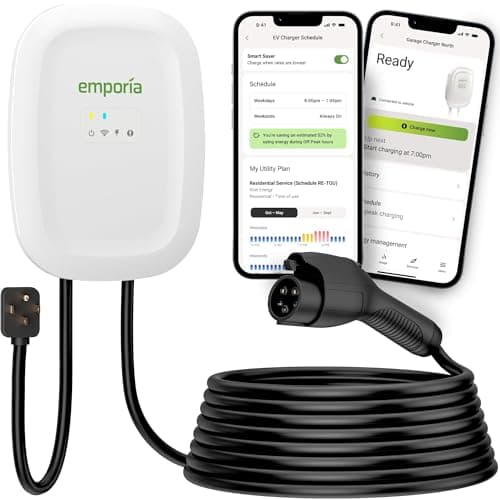
Most people who want the smart features too
Emporia Level 2 (48A)
The smart charger that does not charge a smart-charger premium — 48-amp capability and real energy monitoring for the price of a dumb one.
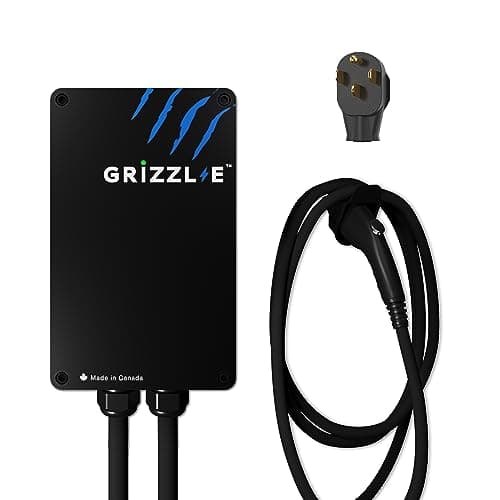
People who want a charger, not an app
Grizzl-E Classic (40A)
A UL-certified metal box that just charges, with none of the app dependence that dates the smart units — the value default.
#ad · As an Amazon Associate we earn from qualifying purchases.
Questions
Frequently asked
What amp EV charger do most people need?
Is a 48-amp charger worth it over 40?
Does a higher-amp charger charge every car faster?
What amp charger can I plug into a NEMA 14-50 outlet?
Keep reading
Related
Receipts
Sources
- US DOE / fueleconomy.gov — EV charging basics
- US DOE Alternative Fuels Data Center — charging at home
We do not run a testing lab, and we do not pretend to. Where a measured number came from someone else's lab, we name them and link them. Where we could not verify something, we say so on the page rather than quietly leaving it out. Read our full method.