HUB 05 · Guides & Buying Advice
How to Charge a Tesla at Home
Tesla's own wall unit is one option, not the only one. Here are the three ways to charge a Tesla at home and how to pick the cheapest that fits.
We earn a commission when you buy through our Amazon links, at no extra cost to you. It never affects our rankings, and we say so when the cheaper product is the better buy. How this works.
You do not need Tesla's own wall connector to charge a Tesla at home. Any of three setups works: a third-party charger with a native NACS (Tesla-style) plug for the cleanest no-adapter install; a standard J1772 charger plus a cheap J1772-to-NACS adapter, often the least expensive route; or a portablefor renters and travelers. All charge a Tesla at the same Level 2 speed — the choice is about install, price, and flexibility.
Because Teslas use the NACS connector (now the J3400 standard), new Tesla owners assume they are locked into Tesla's hardware. They are not. The home charging market has caught up, and there are now several ways to charge a Tesla at home, some cheaper than the branded unit. Here is how they compare.
Option 1: a native NACS home charger
The tidiest option is a third-party Level 2 charger that ships with a native NACS plug — a Tesla plugs straight in, no adapter dangling off the handle. Several mainstream brands now make them, often with more features or a better price than Tesla's own unit, and many are UL listed. Our best NACS home chargers roundup ranks them, and the Emporia NACS is our top pick. This is the buy if you want a permanent, clean install and no adapter to keep track of.
Option 2: a J1772 charger plus an adapter
The often-cheapest route is a standard J1772 charger — the most common and competitive type — plus an inexpensive J1772-to-NACS adapterthat presents a Tesla plug to the car. The huge J1772 charger market means more choice and lower prices, and the adapter is a small one-time cost. The trade-off is a small part to keep on the connector, and one more thing that must be certified — look for a named UL 2251 listing, as our LENZ adapter review covers. This is the buy if you want the widest charger selection and the lowest total price, and you do not mind the adapter.
Option 3: a portable, for renters and travelers
If you rent, cannot hardwire, or want a charger that travels, a portable is the answer. A NACS portable plugs a Tesla in directly; a J1772 portable works with the same adapter as above. Either plugs into a 240-volt outlet, needs no install, and comes with you. See the portable roundup, and for the renter's full picture, charging in an apartment.
What about Tesla's own Wall Connector?It is a good unit, especially if you also own a non-Tesla EV (the Universal version has both plugs) — but for a Tesla-only home it is one option among several, not a requirement. We weigh it in the J1772 charger vs Tesla Wall Connector comparison. Do not assume it is the default just because it is the branded one.
Speed, cost, and the outlet
Whichever route you pick, a Tesla charges at the same Level 2 rate — the adapter or the connector type does not change the speed, which is set by your car, the charger, and your circuit. What a charge costs is set by your electricity rate, and it is cheap; the math is in our cost to charge guide. If you go plug-in, remember the outlet is the safety part — a listed, industrial-grade NEMA 14-50 receptacle on a properly rated circuit, installed by a licensed electrician.
Bottom line
Charging a Tesla at home is not a single-brand decision. For a clean permanent install, buy a native NACS charger. For the lowest total cost and widest choice, buy a J1772 charger plus a certified adapter. For a rental or travel, buy a portable. All three deliver the same charge; pick the one whose install and price fit your home.
The gear
Recommended gear for this guide
The products this guide refers to, with prices pulled live from Amazon and dated on each card.
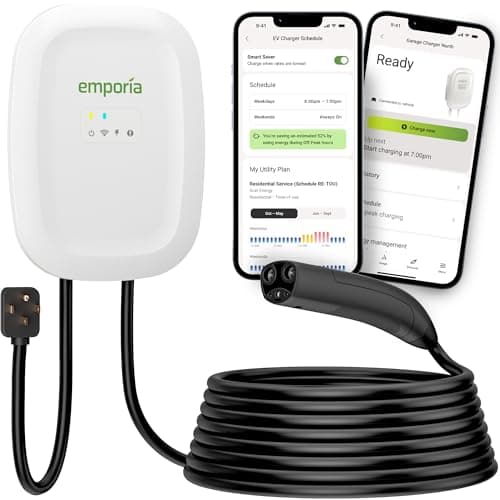
Most NACS-port households
Emporia Level 2 NACS (48A)
The charger we already rate best for most homes, with a Tesla-style plug on the end — UL and Energy Star listed, and no adapter in the loop.
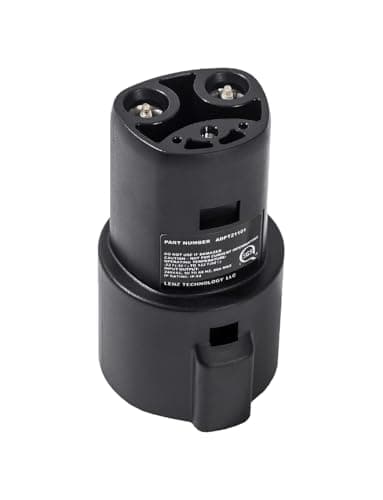
A Tesla / NACS car using J1772 chargers
LENZ J1772 → NACS Adapter
A UL-2251-certified J1772-to-NACS adapter — the one a Tesla or a 2026+ NACS-port EV needs to use the huge installed base of J1772 chargers.
#ad · As an Amazon Associate we earn from qualifying purchases.
Questions
Frequently asked
Do I need Tesla's own charger to charge a Tesla at home?
What is the cheapest way to charge a Tesla at home?
Is it safe to charge a Tesla with a J1772 adapter?
Does a Tesla charge slower with an adapter?
Keep reading
Related
- Best NACS Home ChargersNative Tesla-plug chargers, no adapter needed.
- Best J1772-to-Tesla AdaptersThe cheap-route adapter for a J1772 charger.
- Charger vs Tesla Wall ConnectorWhen the Tesla-branded unit is worth it.
- NACS vs J1772 ExplainedThe connector standards behind the choice.
- Lectron NACS Portable ReviewThe take-it-with-you Tesla-plug charger option.
- Charging an F-150 LightningThe per-vehicle setup for Ford's electric truck.
- Charging a Hyundai Ioniq 5J1772 or NACS, depending on model year.
- Charging a Mustang Mach-EThe J1772 home setup for Ford's electric SUV.
- Supercharger Access for Non-TeslasThe DC side of the same NACS question.
- Charging a Model Y at HomeThe model-specific setup for the best-selling Tesla.
- Charging a Model 3 at HomeTrim-by-trim amperage for the sedan.
- Charging a Cybertruck at HomeThe NACS truck's 11.5 kW home setup.
- Portable EV Charger for a TeslaThe take-anywhere option, two ways.
Receipts
Sources
- Consumer Reports — Tesla Superchargers and NACS adoption
- US DOE / fueleconomy.gov — EV charging basics
We do not run a testing lab, and we do not pretend to. Where a measured number came from someone else's lab, we name them and link them. Where we could not verify something, we say so on the page rather than quietly leaving it out. Read our full method.