HUB 05 · Guides & Buying Advice
Charging a Kia EV9 at Home
The EV9 charges on a standard Level 2 home charger — but the connector depends on your model year, because Kia is mid-transition to the NACS port.
We earn a commission when you buy through our Amazon links, at no extra cost to you. It never affects our rankings, and we say so when the cheaper product is the better buy. How this works.
The Kia EV9 charges at home on any standard Level 2 charger — but which connector your car has depends on the model year. Earlier US EV9s use a J1772 inlet (CCS1 for DC fast charging); newer builds move to a native NACS port, and Kia includes the adapters to bridge either direction. Confirm your own trim and year before buying any adapter.
The EV9 is a big three-row SUV on an 800-volt platform, so its home-charging story is simple even while the connector is changing under it. The key is knowing which inlet you have.
What connector it uses
On earlier US EV9s the AC inlet is J1772 and DC fast charging is CCS1 — no adapter needed for a normal home charger. On 2025-and-later models Kia has been transitioning to a native NACS port and shipping a J1772-to-NACS adapter (so a J1772 home charger still works) plus a CCS1-to-NACS adapter for DC. If your EV9 has the NACS port, you either use that included J1772-to-NACS adapter with a standard charger, or buy a native NACS home unit. The window sticker is the source of truth.
How fast it charges at home
The EV9's onboard AC charger is strong for the class — roughly 10–11 kW — so a 40- or 48-amp Level 2 charger adds around 25–30 miles of range per hour and refills the large pack overnight. A bigger battery simply means Level 2 matters more; see how long it takes to charge for the math, and what amperage you actually need.
The best home setup
For most EV9 owners a 40–48A charger such as the Emporia Level 2 is the sensible default; the full ranking is the best home EV chargers roundup. Going plug-in? Pair it with a proper NEMA 14-50 outlet. If your car has the NACS port, start from the NACS charger roundup instead.
On the road
A NACS-port EV9 (or one with the CCS1-to-NACS adapter) can use Tesla Superchargers plus CCS networks — a real advantage for a family road-trip vehicle. Plan stops with our station-finding guide and road-trip guide.
The gear
Recommended gear for this guide
The products this guide refers to, with prices pulled live from Amazon and dated on each card.
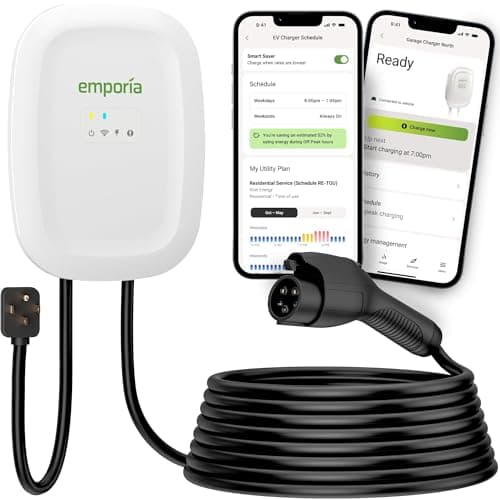
Most people who want the smart features too
Emporia Level 2 (48A)
The smart charger that does not charge a smart-charger premium — 48-amp capability and real energy monitoring for the price of a dumb one.
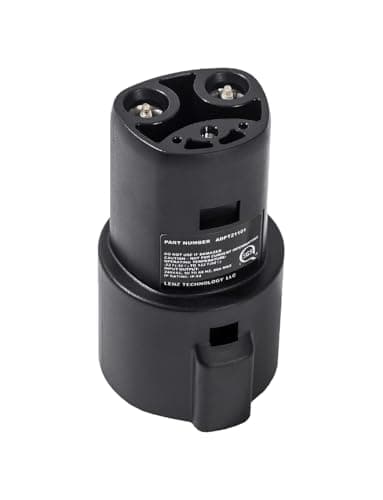
A Tesla / NACS car using J1772 chargers
LENZ J1772 → NACS Adapter
A UL-2251-certified J1772-to-NACS adapter — the one a Tesla or a 2026+ NACS-port EV needs to use the huge installed base of J1772 chargers.
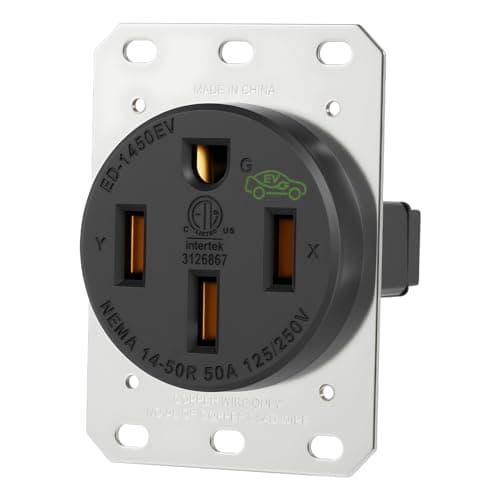
The outlet a plug-in charger needs
Industrial NEMA 14-50 Outlet
The receptacle a plug-in charger actually plugs into — buy the industrial-grade, listed version, because the cheap ones are the part that fails.
#ad · As an Amazon Associate we earn from qualifying purchases.
Questions
Frequently asked
Does the Kia EV9 use J1772 or NACS?
Do I need a special charger for the EV9?
How fast does the EV9 charge at home?
Keep reading
Related
- Charging a Kia EV6 at HomeKia's other EV, same connector transition.
- Best Home EV ChargersThe ranked Level 2 units for a big-battery SUV.
- NACS vs J1772The two standards the EV9 straddles.
- Best J1772-to-Tesla AdaptersFor a NACS-port EV9 on a J1772 charger.
- How Long to Charge an EVOvernight math for a large pack.
Receipts
Sources
We do not run a testing lab, and we do not pretend to. Where a measured number came from someone else's lab, we name them and link them. Where we could not verify something, we say so on the page rather than quietly leaving it out. Read our full method.