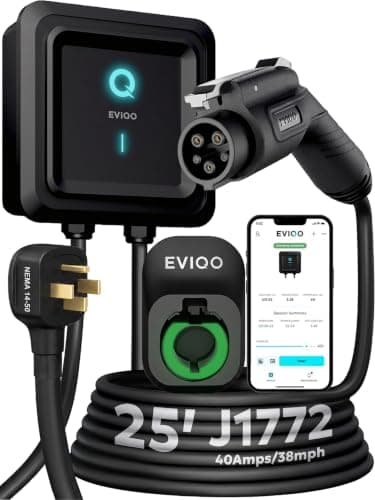
Buy the EVIQO Level 2. A Jeep 4xe's onboard charger accepts about 7.2 kW — roughly 32 amps at 240 volts — and that is a hard ceiling in the car, not a limit of your wiring. The EVIQO is UL- and ETL-listed, weatherproof to IP66, ships 25 feet of cable, and sits near the bottom of the price band: it delivers everything the 4xe can take and nothing it cannot. For the buyer who wants no app at all, the Lectron Level 2 is the simplest version of the same answer. The one charger you should not buy for a 4xe is a 48-amp unit.
This page exists because the Jeep 4xe is the clearest case on the whole site of a car where the expensive charger is the wrong charger. The plug-in hybrid Wrangler and Grand Cherokee 4xe have a small battery and a modest onboard charger, and the published figures make the decision almost arithmetic.
The short version
- EVIQO Level 2 (40A) — best overall for a 4xe. For the owner who wants the cheapest well-certified charger that fully feeds the car. UL and ETL, IP66, 25-foot cable, 40-amp capability you will never need all of. Full review, or see it against the established brand in EVIQO vs ChargePoint.
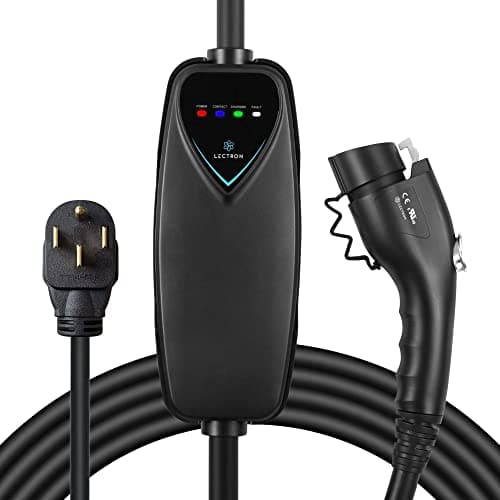
- Lectron Level 2 (40A) — best no-app pick. For the owner who wants a box on the wall and no account to create. ETL listed, plug-in NEMA 14-50, no software in the loop at all.
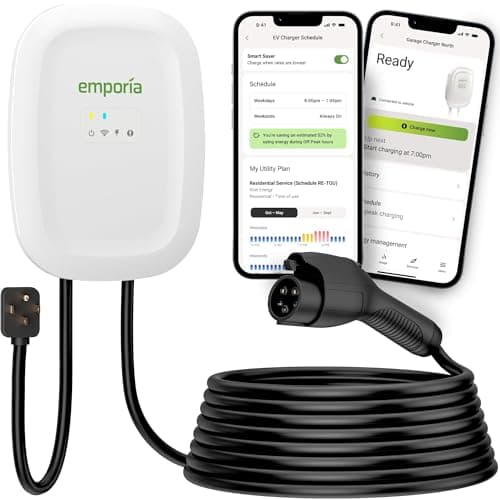
- Emporia Level 2 (48A) — best if you will own a full EV next. For the household whose next car is a battery EV rather than another hybrid. The 48-amp headroom is wasted on the 4xe but not on a Mustang Mach-E or an iX, and the energy monitoring is genuinely good. Full review.
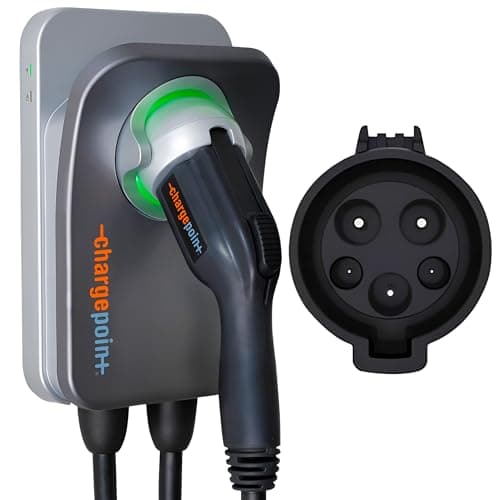
- ChargePoint Home Flex — best adjustable pick. For the owner whose panel can only spare a 40-amp breaker. Selectable 16–50A, so you can set exactly the 32 amps the 4xe uses and stay inside the circuit. Full review.
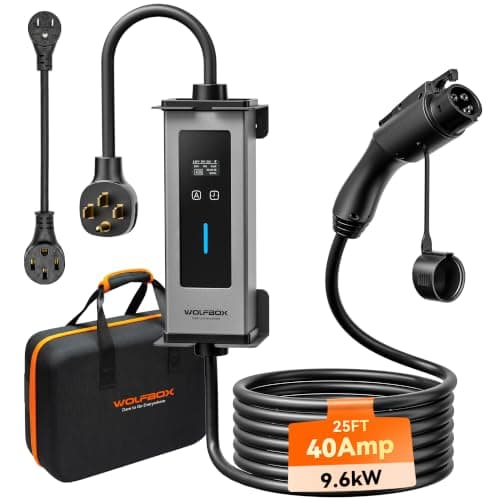
- WOLFBOX Portable — best for a 4xe that travels. For the owner who wants Level 2 at home and a charger in the trunk for the cabin. Adjustable 6–40A, dual-level. Full review.
Why 7.2 kW ends the argument
Every AC charger on earth is a switch and a safety handshake. The thing that converts AC into battery charge lives inside the car, and it has a rating. For the Jeep 4xe that onboard charger accepts up to 7.2 kW; Mopar's own factory Level 2 charger for the Wrangler JL 4xe and Grand Cherokee WL 4xe is specified at 32 amps / 7.7 kW maximum, and Stellantis quotes a full charge in roughly two to two and a half hours on 240 volts. Run that through the numbers:
- 32 amps × 240 volts = 7.7 kW at the wall, about 7.2 kW accepted by the car.
- A full charge in about 2–2.5 hours, which is the figure Jeep publishes for a Level 2 install.
- A 48-amp charger changes none of that. Offer the car 11.5 kW and it will draw 7.2, because that is what its hardware accepts. You would pay for the bigger charger, the heavier wire and the 60-amp breaker, and charge at exactly the same speed.
The one thing worth overbuying for. A future car. If you expect a full battery EV in the same driveway within the life of the charger, buy the 48-amp unit now and have the 60-amp circuit pulled while the electrician is already there — the second visit costs far more than the bigger breaker did. That is the only argument for spending more, and it is an argument about the next car, not this one. Our 48-amp roundup is the page for that case.
What a 4xe owner should actually optimise for
With speed settled, the specs that matter are the boring ones. Cable reach comes first: the 4xe's charge port is on the driver's-side front fender, which is a different reach from a rear-port EV, and a 25-foot cable covers a far wider range of garage layouts than an 18-foot one. Weather ratingcomes second, because a Wrangler is disproportionately likely to be parked outside — the outdoor charger roundup covers that properly. Then certification, then everything else.
One genuine 4xe-specific point: because the pack is small, the car hits full and stops long before morning, which makes scheduling less valuable here than on a battery EV. If your utility has a time-of-use rate the app scheduling is worth something; if it does not, the app is a feature you are paying for and will not use. Our do I need a smart EV charger guide works through that honestly, and EV charging for a plug-in hybrid covers the broader PHEV case.
How the picks compare on paper
Published figures from the live listings, with live prices. Note that every unit here meets or exceeds what the 4xe can accept — so read the cable, the certification and the price columns, not the amperage.
| Charger | Best for | Published specs | Price |
|---|
| EVIQO Level 2 (40A) | Budget-conscious buyers who still want smart features | 40A / 9.6kW · J1772 · 25ft cable · UL & ETL, IP66/NEMA 4 | $449.99 |
| Lectron Level 2 (40A) | A simple, inexpensive plug-in charger | 40A / 9.6kW · J1772 · NEMA 14-50 plug · ETL · 16ft extension | $269.99 |
| Emporia Level 2 (48A) | Most people who want the smart features too | Up to 48A / 11.5kW · J1772 · 25ft cable · Wi-Fi + app | Not verified today |
| ChargePoint Home Flex | Buyers who want the established brand and app | Adjustable to 50A · J1772 · NEMA 14-50 plug · Energy Star | $599.00 |
| WOLFBOX Portable (Level 1/2) | One charger for home and travel | 6–40A · 9.6kW · J1772 · Level 1/2 · NEMA 14-50 + 5-15 · ETL · IP66 · 25ft | $299.99 |
#ad Prices read live from the Amazon Product API as of October 16, 2026, and they move. Specs are the manufacturer's published claims from the live listing — we have not bench-measured them. Where we have no verified price we print none rather than a number that has gone stale.
What to look for in a charger for a Jeep 4xe
At least 32 amps, and no reason to go past 40. Thirty-two amps is what the car accepts. A 40-amp charger on a 50-amp circuit is the common, cheap, well-stocked configuration and gives you a little headroom for a future vehicle without the 60-amp circuit a 48-amp unit demands. Our what amp charger do I need guide has the full decision.
J1772, not NACS. The 4xe charges on the J1772 connector in North America. Do not buy a Tesla-style NACS charger for it and plan to adapter your way back — adapters exist for the other direction. Our NACS vs J1772 explainer covers which plug goes where.
25 feet of cable. The single spec most likely to make the install work or not work. Measure from the proposed charger location to where the fender-mounted port will sit, around obstacles, then add slack. The cable length guide explains how to measure it, and the long-cable roundup ranks on reach alone.
A weather rating if the Jeep lives outside. NEMA 4 or IP66, named on the listing. A charger in an unheated carport in a Michigan winter is doing a harder job than the same charger in a garage.
A plug-in install, usually. A 40-amp charger on a NEMA 14-50 outlet is the install most 4xe owners want: it is cheaper than hardwiring, it moves with you, and at this amperage you give up nothing. Hardwiring earns its keep at 48 amps, which you do not need.