Skip to content
Volt & Cable

HUB 01 · Level 2 Home Chargers

ChargePoint Home Flex NACS vs Emporia NACS

Two native Tesla-plug chargers — the mature, adjustable, network-connected ChargePoint against the value-leading Emporia — separated by flexibility and price.

By Stephen V.Updated How we research
#ad

We earn a commission when you buy through our Amazon links, at no extra cost to you. It never affects our rankings, and we say so when the cheaper product is the better buy. How this works.

The short answer

Quick picks

#ad · Live prices from the Amazon Product API, as of Jul 26, 2026. Where we have no verified live price, we show none — we would rather leave a gap than print a number that has gone stale.

Both are native NACS (Tesla-style) home chargers, so this comes down to brand-and-flexibility versus value. Buy the Emporia NACS— our top NACS pick — for the best value, a plug-in option, and strong energy monitoring. Buy the ChargePoint Home Flex NACS for a mature brand, amperage adjustable up to 50 amps, and one account that also works across the largest public network in North America.

These two anchor the sensible middle-to-upper range for a NACS-port home: the value leader and the establishment pick. We compile published specs, safety listings and owner reports and do the math here rather than bench-testing.

Speed

The ChargePoint edges it on paper: hardwired, it is adjustable up to 50 amps, versus the Emporia's 48-amp ceiling. In practice the difference is tiny, and it only appears if your panel can carry the bigger circuit and your car accepts the current. Both need hardwiring for their top speed; on a plug-in install, only the Emporia offers one, and it caps at 40 amps like any plug-in unit.

Flexibility: plug-in vs hardwired

This is a real split. The Emporia NACS offers a plug-in NEMA 14-50 option(at 40 amps) as well as hardwiring for the full 48 — so a renter or mover can take it with them. The ChargePoint NACS is hardwired only, a permanent fixture. If you might relocate or want an install-free setup, the Emporia is the clear choice; if you want a permanent, adjustable install, the ChargePoint's flexibility is in the amperage instead.

Brand, app and network

The ChargePoint's advantage is maturity: a long track record, responsive support, and a single account that spans your home unit and the largest public charging network in North America — genuinely useful if you also charge away from home. The Emporia counters with stronger built-in energy monitoring (the company started in home energy tracking) at a lower price. One is about the network; the other is about value and data.

Price and value

The Emporia usually costs less and is our value benchmark; the ChargePoint sits higher and you pay for the brand and network. Both are UL/Energy-Star-class listed and well-built. If you will use the public network, the ChargePoint premium buys something real; if you mainly charge at home and want the most for your money, the Emporia wins.

The one-line split: the Emporia NACS is the value pick with a plug-in option and better energy data; the ChargePoint NACS is the established, adjustable, network-connected hardwired unit. Decide whether value-and-flexibility or brand-and-network matters more.

The verdict

For most NACS-port households, the Emporia NACSis the better buy — it is our top NACS pick, costs less, offers a plug-in option, and brings strong energy monitoring. Choose the ChargePoint Home Flex NACS if you specifically want the mature brand, the adjustable 50-amp ceiling, and the unified home-and-public network, and you are hardwiring anyway. Both are excellent; see them against the field in our best NACS home chargers roundup.
In detail

The picks, in full

01
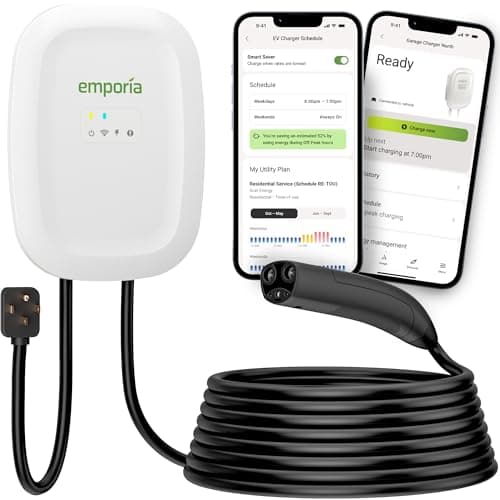
Emporia Emporia Level 2 NACS (48A)

Most NACS-port households

Emporia Level 2 NACS (48A)

48A ratedNACS (J3400)NEMA 14-50 plugUL + Energy Star
8.8/10

The charger we already rate best for most homes, with a Tesla-style plug on the end — UL and Energy Star listed, and no adapter in the loop.

Charge speed
9
Build & weather
8
Smart features
9
Cable & connector
9
Value
9

Pros

  • Native NACS connector — a Tesla or a 2025-onward NACS-port EV plugs straight in with nothing hanging off the handle
  • UL listed and Energy Star certified, which several cheap NACS units on Amazon cannot claim
  • 25-foot cable and the same Emporia energy monitoring and scheduling as the J1772 model we rate best overall

Cons

  • 48 amps is the hardware ceiling, not what the plug delivers — on a NEMA 14-50 the 50-amp circuit caps continuous draw at 40A, so the full 48 needs the hardwired version
  • Wi-Fi and the app are central to the experience, so setup is more involved than a sealed plug-and-go box

Don't buy this if…

you are buying it for the 48-amp number but not hardwiring it. On a 14-50 plug it charges at 40 amps like everything else on a 50-amp circuit — at that point the cheaper Lectron Nexus or EVIQO does the same job for less.

$479.00View on Amazon

Price as of Jul 26, 2026. Prices change — Amazon's is the one that counts.

#ad · we may earn a commission from this link to Emporia Level 2 NACS (48A)

02
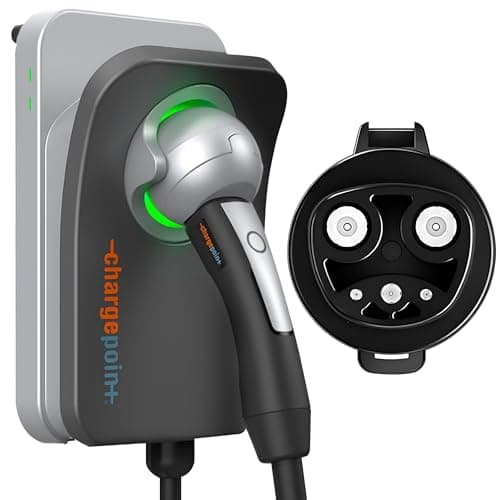
ChargePoint ChargePoint Home Flex NACS (hardwired)

Buyers who want the mature brand and app

ChargePoint Home Flex NACS (hardwired)

16–50A adjustableNACS (J3400)HardwiredNEMA 3R outdoor
8.6/10

The established-brand pick: amperage selectable from 16 all the way to 50, so one unit fits whatever breaker your panel can actually spare.

Charge speed
10
Build & weather
9
Smart features
9
Cable & connector
8
Value
7

Pros

  • Amperage is set in the app — 16, 24, 32, 40, 48 or 50 amps — so the charger adapts to the circuit instead of the other way round
  • Hardwired at up to 50 amps, the fastest configuration in this roundup
  • NEMA 3R outdoor-rated enclosure, and one ChargePoint account covers home charging and the largest public network in North America

Cons

  • Hardwired only — there is no unplugging this one and taking it with you, and the install is licensed work
  • Costs more than equally capable NACS chargers from newer brands

Don't buy this if…

you rent or you might move. A hardwired charger stays with the house — the plug-in Lectron Nexus or the Lectron NACS portable is the one that leaves with you.

$494.00View on Amazon

Price as of Jul 26, 2026. Prices change — Amazon's is the one that counts.

#ad · we may earn a commission from this link to ChargePoint Home Flex NACS (hardwired)

How we picked

We do not run a testing lab

We compiled published specifications from manufacturer manuals and spec sheets, verified the safety listings (UL / ETL), computed the real running and installation costs, checked the wiring math against the NEC continuous-load rule, and read aggregated owner reviews — then scored each product against a published rubric. The scores are judgments from documented research — they are not bench measurements, because we do not have a test lab and we are not going to pretend we do. Every spec and cost figure is cited in Sources.

Questions

Frequently asked

Which is faster, the ChargePoint NACS or the Emporia NACS?

The ChargePoint, marginally — it is adjustable up to 50 amps hardwired, versus the Emporia's 48. The real-world difference is tiny and depends on your circuit and car. Both need hardwiring for top speed; only the Emporia offers a plug-in option, capped at 40 amps.

Which is more flexible to install?

The Emporia NACS — it can be plugged into a NEMA 14-50 outlet (at 40 amps) or hardwired for the full 48, so it suits a renter or mover. The ChargePoint NACS is hardwired only, a permanent fixture.

Which is better value?

The Emporia NACS — it costs less, includes strong energy monitoring, and is our top NACS pick. The ChargePoint costs more for brand maturity and public-network integration, which are worth it only if you will use them.

Do both have a native Tesla-style plug?

Yes — both have a native NACS (J3400) connector, so a Tesla or NACS-port EV plugs straight in with no adapter. A J1772 car would want the J1772 version of either charger instead.

Keep reading

Receipts

Sources

We do not run a testing lab, and we do not pretend to. Where a measured number came from someone else's lab, we name them and link them. Where we could not verify something, we say so on the page rather than quietly leaving it out. Read our full method.