Skip to content
Volt & Cable

HUB 01 · Level 2 Home Chargers

The Best 40-Amp EV Chargers

A 40-amp charger runs on a 50-amp breaker and a NEMA 14-50 outlet — the install most homes can actually do. Ranked on build, smart features and value, with honest cons on every pick.

By Stephen V.Updated How we research
#ad

We earn a commission when you buy through our Amazon links, at no extra cost to you. It never affects our rankings, and we say so when the cheaper product is the better buy. How this works.

The short answer

Quick picks

#ProductBest forScorePrice
01
Grizzl-E Grizzl-E Classic (40A)
Grizzl-E Classic (40A)

A UL-certified metal box that just charges, with none of the app dependence that dates the smart units — the value default.

People who want a charger, not an app
8.0
$299.99Amazon
02
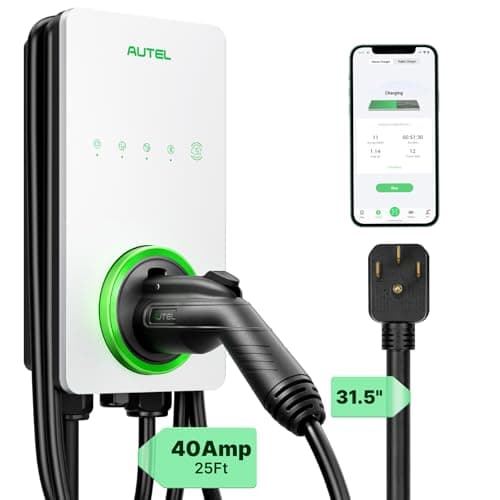
Autel Autel MaxiCharger (40A)
Autel MaxiCharger (40A)

A feature-dense smart unit with Wi-Fi, Bluetooth and a separate holster in the box — strong if you want everything and a clean install.

Feature-maximalists who want a tidy install
8.6
Check priceAmazon
03
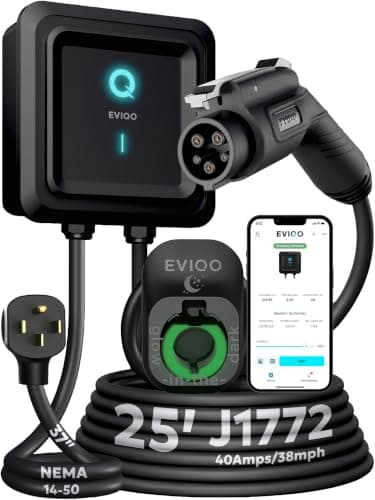
EVIQO EVIQO Level 2 (40A)
EVIQO Level 2 (40A)

A weatherproof, UL-and-ETL-listed smart charger that regularly sits at the bottom of the price band — a lot of charger for the money.

Budget-conscious buyers who still want smart features
8.6
$395.99Amazon
04
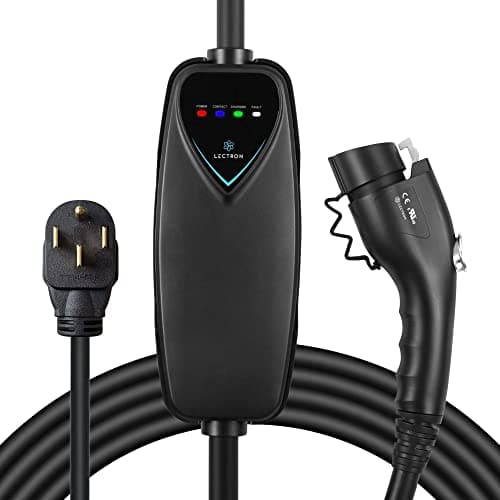
Lectron Lectron V-Box (40A)
Lectron V-Box (40A)

A simple, Energy-Star, ETL-listed plug-in unit — a no-frills alternative to the Grizzl-E for a lower spend.

A simple, inexpensive plug-in charger
7.6
Check priceAmazon
05
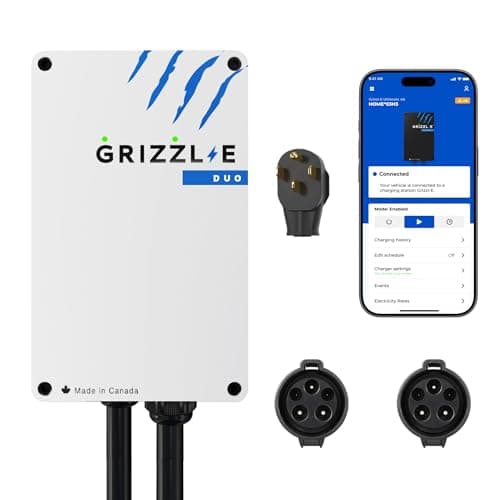
Grizzl-E Grizzl-E Duo (dual 40A)
Grizzl-E Duo (dual 40A)

Two 24-foot cables sharing one circuit — the honest answer for a two-EV household that will not run a second line.

Two EVs on one circuit
7.8
Check priceAmazon

#ad · Live prices from the Amazon Product API, as of Jul 23, 2026. Where we have no verified live price, we show none — we would rather leave a gap than print a number that has gone stale.

If you are plugging your charger into a NEMA 14-50 outlet, you are getting 40 amps no matter what number is printed on the box — so buy a charger that is genuinely good at 40, and do not overpay for a 48-amp ceiling a plug-in install can never reach. Our pick for most people is the Grizzl-E Classic: a sealed, UL-certified 40-amp box that just charges, with none of the app dependence that dates the smart units. If you want scheduling and energy monitoring too, the Autel MaxiCharger and the EVIQO are the smart 40-amp picks.

Forty amps is the amperage most homes should actually buy, and it is worth understanding why before you shop. A 40-amp charger draws 40 amps continuously and delivers 9.6 kW — enough to add roughly 30 miles of range in an hour and to refill 250 to 300 miles overnight, which is more than almost any driver uses in a day. It runs on a 50-amp breaker and 6 AWG copper wire, a circuit most existing panels can spare without a service upgrade. And crucially, 40 amps is the ceiling for any plug-in charger: a NEMA 14-50 receptacle sits on a 50-amp circuit, and the NEC continuous-load rule caps a plug-in unit at 40 amps. Step up to a 48-amp charger and you are committing to a 60-amp circuit, a hardwired install, and often a panel upgrade — for range-per-hour most people will never need. This roundup is for the buyer who has decided 40 amps is enough (or who is going plug-in and has therefore decided it whether they meant to or not) and just wants the best 40-amp unit for the money.

As always, we have not bench-tested these chargers and we do not pretend to. What follows is compiled from published manufacturer specifications, verified safety listings, the NEC wiring math, and aggregated owner reviews, scored against our published rubric. Every spec here traces back to the live retail listing; no dollar figure is written into this page, because prices render live and date-stamped instead.

The short version

  • Grizzl-E Classic — best 40-amp charger overall.A cast-aluminum, UL-certified box with no Wi-Fi to fail — the value default. Full Grizzl-E Classic review.
  • Autel MaxiCharger — best 40-amp smart charger. Wi-Fi and Bluetooth, plus a holster in the box for a tidy install. Full Autel MaxiCharger review.
  • EVIQO Level 2 — best budget 40-amp smart charger. UL and ETL listed with an IP66 weatherproof rating, usually at the bottom of the price band.
  • Lectron V-Box — simplest cheap plug-in. An Energy-Star, ETL-listed plug-in unit for the buyer who wants nothing but a reliable 40-amp charge.
  • Grizzl-E Duo — best 40-amp setup for two EVs.Two cables sharing one 40-amp circuit — the honest answer for a two-car household that will not run a second line.

Why 40 amps is the sweet spot

The number on the box is a ceiling, not a promise: what you can actually use is set by the circuit your panel can support, not by the charger. EV charging is a continuous load, so by code the circuit is sized to 125% of the charger's current. That single rule is what makes 40 amps the practical sweet spot.

  • A 40-amp charger needs a 50-amp breaker(40 × 1.25 = 50) and typically 6 AWG copper — a circuit many panels already have room for.
  • A 48-amp charger needs a 60-amp breaker and a hardwired install, which is where panel upgrades and heavier wiring bills start.

The full breaker-and-wire breakdown, including gauge and long-run derating, is in our wire size and breaker guide; treat those figures as standard NEC continuous-load practice and confirm the specifics with a licensed electrician and your local code before any work happens.

The practical takeaway: at 9.6 kW a 40-amp charger adds roughly 30 miles of range an hour and a full charge overnight. Unless you routinely drain a large battery and need to refill it fast during the day, the extra speed of a 48-amp unit is headroom you pay for in wiring and rarely use.

Plug-in or hardwired — at 40 amps you can do either

One reason 40 amps is so popular is that it is the only speed you can get from a plug-in charger. A plug-in unit ends in a NEMA 14-50 cord and plugs into a 240-volt outlet — the same receptacle an electric range uses — and that outlet caps it at 40 amps. The payoff is flexibility: you can unplug it and take it with you, which is the right call for renters and anyone who might move. If you go this route, the outlet itself matters more than people expect — buy an industrial-grade, listed NEMA 14-50 receptacle, because the cheap ones are the part that overheats under a continuous 40-amp draw. A hardwired40-amp unit is wired straight to the circuit, looks tidier on the wall, and stays with the house. Either way, for what the whole job costs — hardware, labor, permit, and a possible panel upgrade — see our installation cost breakdown. And if portability is the whole point, a dedicated portable 40-amp charger may suit you better than a wall unit.

The picks, in order

1. Grizzl-E Classic — the 40-amp default

The Grizzl-E Classic is the charger we would put on most walls. It is a cast-aluminum, UL-certified enclosure rated for indoor and outdoor use, with no mandatory app or Wi-Fi — it works the day it arrives and keeps working if a company's servers go dark. It tops out at 40 amps and has no scheduling or energy tracking, which is precisely the point: there is nothing to fail and no subscription to pay. Its one honest caveat is that the stock cable is stiff in cold weather, a common owner note, and if you want smart features you will have to look at the next two picks. For a buyer who wants a charger and not a gadget, it is the value default. Full Grizzl-E Classic review.

2. Autel MaxiCharger — the smart 40-amp unit

If you do want the software, the Autel MaxiCharger is the most complete 40-amp smart charger here. It carries both Wi-Fi and Bluetooth, so app control still works when garage Wi-Fi is weak, and it ships with a separate holster in the box for tidy cable management out of the gate. The trade-off is honest: its ceiling is 40 amps, so it is not the fastest option if your panel could support a 48-amp circuit, and the feature set is more than a set-and-forget buyer needs. But for a 40-amp install where you want scheduling, energy monitoring and a clean setup, it is the one to beat. Full Autel MaxiCharger review.

3. EVIQO Level 2 — the budget smart pick

The EVIQO does most of what the Autel does for less. It carries both UL and ETL listings plus an IP66 / NEMA 4 weatherproof rating, runs a Wi-Fi app with scheduling, and comes on a long 25-foot cable, while regularly sitting at the bottom of the price band. The caveats are the ones you would expect from the value pick: it is a newer brand with a shorter track record than ChargePoint or Wallbox, and it shares the 40-amp ceiling of everything on this page. If your priority is the most certified hardware for the least money, it is a lot of charger.

4. Lectron V-Box — the simple plug-in

The Lectron V-Box is the no-frills alternative to the Grizzl-E for a lower spend. It is an Energy-Star, ETL-listed plug-in unit on a NEMA 14-50 cord — no electrician needed if the outlet already exists — and it is straightforward and typically inexpensive. What you give up is smart features: there is no energy monitoring or scheduling, so for similar money the EVIQO or Autel adds real software. Buy the V-Box when simplicity and price are the whole brief.

5. Grizzl-E Duo — two EVs on one 40-amp circuit

If your household has two EVs and you are not going to run a second circuit, the Grizzl-E Duo is the honest answer. It splits a single 40-amp circuit between two 24-foot cables, so both cars can be plugged in overnight and share the available current, in the same rugged enclosure as the Classic. The trade-off is built into the design: plugging in the second car halves the rate to the first, and it is overkill (and more expensive) if you only ever charge one vehicle. For a genuine two-car garage on one circuit, though, nothing else here does the job.

When to step up to 48 amps instead

To be fair to the faster tier: a 48-amp charger is the right buy if your panel can comfortably spare a 60-amp circuit, you are hardwiring anyway, and you regularly deplete a large battery and want to refill it quickly during the day rather than overnight. In that specific case the extra ~20% of speed is real. For everyone else — and especially anyone plugging into a NEMA 14-50 outlet — 40 amps is the honest choice. If you are still weighing the two, our flagship home-charger roundup ranks the best 48-amp units alongside these, and the tethered vs untethered guide covers the cable question that comes next.

What it costs to run

Every charger on this page does the same thing to your energy bill — the amperage decides how fast the kilowatt-hours go in, not how many you pay for. Charging at home is generally well below what a comparable gas car costs to fuel; the exact figure depends on your utility rate and your car's efficiency, and we show the full arithmetic in our cost to charge an EV at home guide. The smart units here (the Autel and EVIQO) let you schedule charging into cheaper off-peak hours automatically; the dumb ones (the Grizzl-E and Lectron) charge just as cheaply if your rate is flat.

In detail

The picks, in full

01
Grizzl-E Grizzl-E Classic (40A)

People who want a charger, not an app

Grizzl-E Classic (40A)

40A / 9.6kWJ1772NEMA 14-50 plugUL certified
8.0/10

A UL-certified metal box that just charges, with none of the app dependence that dates the smart units — the value default.

Charge speed
8
Build & weather
10
Smart features
5
Cable & connector
8
Value
9

Pros

  • Cast-aluminum enclosure rated for indoor and outdoor use — genuinely rugged
  • UL certified, which not every budget charger on Amazon can say
  • No mandatory app or Wi-Fi — it works the day it arrives and keeps working if the servers go dark

Cons

  • No smart scheduling or energy monitoring built in — if you want load balancing, look elsewhere
  • The stock cable is stiff in cold weather, a common owner complaint

Don't buy this if…

you want app scheduling, energy tracking, or load sharing between two cars. The Grizzl-E is deliberately dumb, and if smart features are the point for you, the Emporia or Autel is the better buy.

$299.99View on Amazon

Price as of Jul 23, 2026. Prices change — Amazon's is the one that counts.

#ad · we may earn a commission from this link to Grizzl-E Classic (40A)

02
Autel Autel MaxiCharger (40A)

Feature-maximalists who want a tidy install

Autel MaxiCharger (40A)

40A / 9.6kWJ177225ft cable + holsterWi-Fi + Bluetooth
8.6/10

A feature-dense smart unit with Wi-Fi, Bluetooth and a separate holster in the box — strong if you want everything and a clean install.

Charge speed
8
Build & weather
9
Smart features
9
Cable & connector
9
Value
8

Pros

  • Ships with a separate holster, so you get tidy cable management out of the box
  • Both Wi-Fi and Bluetooth, so app control still works if your garage Wi-Fi is weak
  • Weather-rated enclosure for indoor or outdoor mounting

Cons

  • 40-amp ceiling means it is not the fastest option if your panel could support 48A
  • The feature set is more than a set-and-forget charger buyer needs

Don't buy this if…

your electrical panel can support a 48-amp circuit and you want the fastest home charging. The 48A Emporia will add range quicker; the Autel's strength is features and the in-box holster, not top speed.

Check price on Amazon →

No buyable offer at the last price check (Jul 23, 2026). We show nothing rather than a stale number.

#ad · we may earn a commission from this link to Autel MaxiCharger (40A)

03
EVIQO EVIQO Level 2 (40A)

Budget-conscious buyers who still want smart features

EVIQO Level 2 (40A)

40A / 9.6kWJ177225ft cableUL & ETL, IP66/NEMA 4
8.6/10

A weatherproof, UL-and-ETL-listed smart charger that regularly sits at the bottom of the price band — a lot of charger for the money.

Charge speed
8
Build & weather
9
Smart features
8
Cable & connector
8
Value
10

Pros

  • Carries both UL and ETL listings plus an IP66 / NEMA 4 weatherproof rating
  • Wi-Fi app with scheduling, at a price that undercuts the established brands
  • Long 25-foot cable and a plug-in NEMA 14-50 install

Cons

  • Newer brand with a shorter track record than ChargePoint or Wallbox
  • 40-amp ceiling, so not the fastest if your panel could do more

Don't buy this if…

you want the reassurance of a long-established brand and support network. The hardware is well-certified, but if brand maturity matters to you, the ChargePoint is the safer pick.

$395.99View on Amazon

$469.9916% off

Price as of Jul 23, 2026. Prices change — Amazon's is the one that counts.

#ad · we may earn a commission from this link to EVIQO Level 2 (40A)

04
Lectron Lectron V-Box (40A)

A simple, inexpensive plug-in charger

Lectron V-Box (40A)

40A / 9.6kWJ1772NEMA 14-50 plugETL + Energy Star
7.6/10

A simple, Energy-Star, ETL-listed plug-in unit — a no-frills alternative to the Grizzl-E for a lower spend.

Charge speed
8
Build & weather
8
Smart features
6
Cable & connector
8
Value
8

Pros

  • ETL listed and Energy Star certified
  • Plug-in NEMA 14-50 install — no electrician needed if the outlet exists
  • Straightforward and typically inexpensive

Cons

  • Fewer smart features than the Emporia or Autel at a similar price
  • 40-amp ceiling

Don't buy this if…

you want energy monitoring or scheduling. For similar money the Emporia adds real smart features — the V-Box's appeal is simplicity and price, not capability.

Check price on Amazon →

No buyable offer at the last price check (Jul 23, 2026). We show nothing rather than a stale number.

#ad · we may earn a commission from this link to Lectron V-Box (40A)

05
Grizzl-E Grizzl-E Duo (dual 40A)

Two EVs on one circuit

Grizzl-E Duo (dual 40A)

Dual J1772Up to 40A sharedTwo 24ft cablesNEMA 14-50 plug
7.8/10

Two 24-foot cables sharing one circuit — the honest answer for a two-EV household that will not run a second line.

Charge speed
7
Build & weather
10
Smart features
5
Cable & connector
9
Value
8

Pros

  • Charges two vehicles from a single circuit by splitting the available current
  • Two long 24-foot cables reach both bays of most garages
  • Same rugged Grizzl-E enclosure as the Classic

Cons

  • The two cars share the circuit's amperage — plugging in the second car halves the rate to the first
  • Overkill and more expensive if you only ever charge one vehicle

Don't buy this if…

you only charge one car. You are paying for a second cable you will never use — buy the single-cable Classic and pocket the difference.

Check price on Amazon →

No buyable offer at the last price check (Jul 23, 2026). We show nothing rather than a stale number.

#ad · we may earn a commission from this link to Grizzl-E Duo (dual 40A)

How to choose a 40-amp charger

Once you have settled on 40 amps, the picks separate on four things. Here is how we weighted them.

Plug-in or hardwired

A plug-in unit on a NEMA 14-50 outlet is the flexible, renter-friendly choice and can be a DIY install if a properly rated outlet already exists; a hardwired unit is tidier and permanent but needs an electrician. At 40 amps both deliver the same speed, so this is purely about flexibility versus a clean wall — not performance. The Grizzl-E, Lectron and EVIQO ship as plug-in units; any of them can be hardwired by an electrician if you prefer.

Smart features, or deliberately none

Scheduling and energy monitoring earn their keep on a time-of-use electricity plan, where shifting the charge to off-peak hours saves real money, and they are worth having if you like seeing what a charge cost. The Autel and EVIQO give you both. If you are on a flat rate and charge one car, a sealed unit like the Grizzl-E does the identical job with nothing to fail — the absence of software is a feature, not a gap.

Certification is not optional

A 40-amp charger pushes current continuously for hours, often unattended overnight, so a UL or ETL listing is the one spec we will not compromise on. The Grizzl-E is UL certified; the EVIQO carries both UL and ETL; the Lectron is ETL listed and Energy Star. A charger without a legitimate listing is the wrong place to save money.

Cable length and management

Measure from where the charger will mount to your car's charge port and add slack for parking either direction. A 25-foot cable, which the Autel and EVIQO carry, reaches across a typical two-car garage; a shorter cable is fine only if the mount is close to the port every time. Either way a cable organizer keeps the extra length off the floor and the connector off the ground.

So, which one?

Buy the Grizzl-E Classicunless you have a specific reason not to — it is the rugged, UL-certified 40-amp box that will outlive several app redesigns. Want scheduling and a tidy install? The Autel MaxiCharger. Want most of that for less? The EVIQO. Want nothing but a cheap, reliable plug-in charge? The Lectron V-Box. Charging two EVs on one circuit? The Grizzl-E Duo. Every one is a genuinely good 40-amp charger; the trick is matching it to your house and skipping the speed and features you will not use.
How we picked

We do not run a testing lab

We compiled published specifications from manufacturer manuals and spec sheets, verified the safety listings (UL / ETL), computed the real running and installation costs, checked the wiring math against the NEC continuous-load rule, and read aggregated owner reviews — then scored each product against a published rubric. The scores are judgments from documented research — they are not bench measurements, because we do not have a test lab and we are not going to pretend we do. Every spec and cost figure is cited in Sources.

Questions

Frequently asked

Is a 40-amp EV charger fast enough?

For almost everyone, yes. At 9.6 kW a 40-amp charger adds roughly 30 miles of range an hour and can put back 250 to 300 miles overnight — far more than a typical day of driving. A faster 48-amp charger only helps if you routinely deplete a large battery and need to refill it quickly during the day rather than while you sleep.

What breaker and wire does a 40-amp charger need?

A 50-amp breaker and typically 6 AWG copper wire. EV charging is a continuous load, so the circuit is sized to 125% of the 40-amp draw (40 × 1.25 = 50). See our wire and breaker guide for the full sizing math, and confirm the specifics with a licensed electrician.

40 amp vs 48 amp — which should I buy?

40 amps for most homes: it runs on a 50-amp breaker most panels can spare, and it is the ceiling for any plug-in (NEMA 14-50) install anyway. Choose 48 amps only if you can run a 60-amp hardwired circuit and genuinely need the extra daytime speed. Our flagship roundup ranks the best 48-amp units if you decide to step up.

Can I plug a 40-amp charger into a regular wall outlet?

No. A 40-amp Level 2 charger needs a 240-volt NEMA 14-50 outlet — the kind an electric range uses — not a standard 120-volt household receptacle. Plugging a charger into an ordinary outlet is Level 1 charging only, which adds about 5 miles of range an hour. For a 120-volt backup cord, see our portable charger roundup.

Do I have to hardwire a 40-amp charger?

No — 40 amps is the one speed you can get from a plug-in NEMA 14-50 install, so you can go either way. Hardwiring is tidier and permanent; a plug-in unit is flexible and can be a DIY job if a properly rated outlet already exists. Only 48-amp units must be hardwired, because a plug-in circuit tops out at 40 amps.

Keep reading

Receipts

Sources

We do not run a testing lab, and we do not pretend to. Where a measured number came from someone else's lab, we name them and link them. Where we could not verify something, we say so on the page rather than quietly leaving it out. Read our full method.