HUB 05 · Guides & Buying Advice
Charging a Kia EV6 at Home
The EV6's 800V system makes it a fast-DC star, but home charging is ordinary AC — here's the right Level 2 setup.
We earn a commission when you buy through our Amazon links, at no extra cost to you. It never affects our rankings, and we say so when the cheaper product is the better buy. How this works.
The Kia EV6 is famous for its 800-voltarchitecture and very fast DC charging — but at home it charges over ordinary AC at up to about 11 kW. So the home setup is simpler than the headline specs suggest: a 48-amp Level 2 charger lets the car pull its full AC rate. The one thing to get right is the connector, which changed in 2025.
The 800-volt system is what makes an EV6 add huge range in minutes at a high-power DC station. None of that applies in your garage — AC home charging is capped by the car's onboard charger, roughly 10.9–11 kW, the same ballpark as most rivals.
The connector: CCS1 before 2025, native NACS after
Model year matters here. 2022–2024 EV6s use a CCS1 inlet, which accepts a J1772 Level 2 connector natively at home — any standard J1772 charger works, no adapter. The 2025 and newer EV6 switched to a native NACS port. A NACS-port EV6 can charge at home with a NACS home charger, or with a J1772 charger plus a J1772-to-NACS adapter. Check the shape of your charge inlet before you buy.
What amperage to buy
Because the onboard charger accepts about 11 kW, a 48-amp chargerlets the EV6 draw its full AC speed. That needs a 60-amp circuit — confirm your panel can supply it via the wire size and breaker guide. A 40-amp unit like the Emporia Level 2 still refills the car comfortably overnight if a 60-amp circuit is not practical.
On the road: use the 800V system
The EV6's party trick is DC fast charging, where the 800-volt pack can accept very high power. For trips, a CCS1 EV6 uses CCS stations directly and Tesla Superchargers with a NACS-to-CCS DC adapter; a NACS-port EV6 uses Superchargers natively. Our DC fast charging explainer and road-trip guide cover planning around it.
The gear
Recommended gear for this guide
The products this guide refers to, with prices pulled live from Amazon and dated on each card.
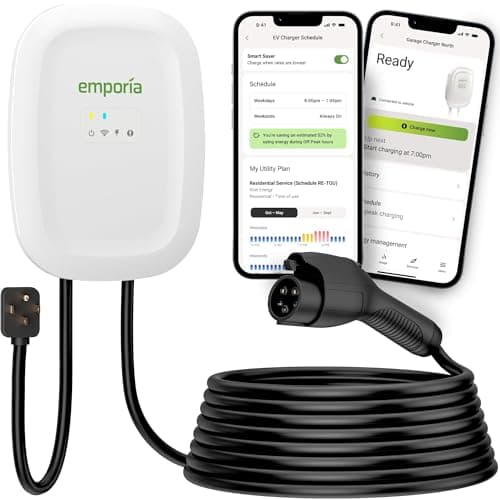
Most people who want the smart features too
Emporia Level 2 (48A)
The smart charger that does not charge a smart-charger premium — 48-amp capability and real energy monitoring for the price of a dumb one.
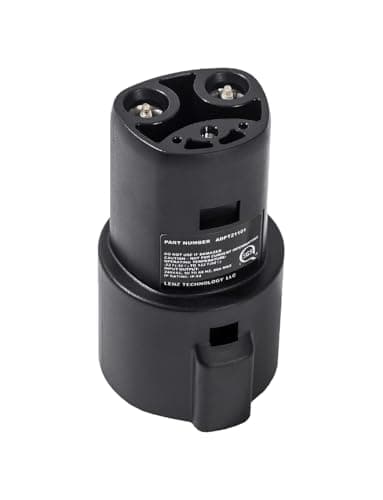
A Tesla / NACS car using J1772 chargers
LENZ J1772 → NACS Adapter
A UL-2251-certified J1772-to-NACS adapter — the one a Tesla or a 2026+ NACS-port EV needs to use the huge installed base of J1772 chargers.
#ad · As an Amazon Associate we earn from qualifying purchases.
Questions
Frequently asked
Does the Kia EV6 charge faster at home because it is 800 volts?
Does my Kia EV6 have a J1772 or NACS port?
What amp charger is best for a Kia EV6?
Can a Kia EV6 use a Tesla Supercharger?
Keep reading
Related
- Best 48-Amp EV ChargersThe charger that reaches the EV6's AC ceiling.
- Best NACS Home ChargersFor a 2025+ EV6 with a native NACS port.
- J1772-to-NACS AdapterUse a J1772 charger with a NACS-port EV6.
- DC Fast Charging ExplainedWhere the 800V system actually helps.
- Wire Size & BreakerThe 60-amp circuit a 48-amp charger needs.
Receipts
Sources
We do not run a testing lab, and we do not pretend to. Where a measured number came from someone else's lab, we name them and link them. Where we could not verify something, we say so on the page rather than quietly leaving it out. Read our full method.