HUB 05 · Guides & Buying Advice
How to Use a Public EV Charging Station
The first time is the only awkward one. Here's the whole workflow — find, plug in, authorize, pay — so the first public charge is a non-event.
We earn a commission when you buy through our Amazon links, at no extra cost to you. It never affects our rankings, and we say so when the cheaper product is the better buy. How this works.
Using a public charger is four steps: find a working station with the right connector, plug in, authorize (app, tap-to-pay card, or the car itself), and let it charge. The only real homework is knowing your car's connector and having one network app set up before you go — do that once and every public charge afterward is routine.
Public charging feels intimidating exactly once. Below is the full workflow so the first time is a non-event, whether you are topping up at a Level 2 destination charger or filling up at a DC fast charger on a trip.
Step 1: Find a station — and check it works
Use a map app (your car's built-in planner, or apps like PlugShare, A Better Routeplanner, or the network's own app) to find chargers near you. Filter by connector and speed, and read the recent check-ins — a station that shows repeated failures is one to skip. For a road trip, plan the DC stops in advance; for daily use, learn the two or three reliable Level 2 spots near where you park. Our networks explainercovers who runs what.
Step 2: Match the connector
Level 2 public chargers hand you a cable with a J1772 (or, increasingly, NACS) connector; DC fast chargers use CCS or NACS. Plug in whatever matches your car's port. If a Level 2 station has the other AC connector, a pocket adaptercan bridge it — but an adapter never bridges AC to DC. Know your connector before you pull in and you will never be stuck at the plug.
Step 3: Authorize and pay
There are three common ways to start a session: the network's app(scan the station's code or tap "start"), a contactless card at stations with a reader, or plug-and-charge, where a supported car authorizes itself the moment you plug in. Set up at least one network app and add a payment method before your first trip so you are not fumbling in a parking lot. Pricing is per kWh or per minute depending on the network and state.
Step 4: Charge, then read the lights
Once a session starts, the station and your car show status. A steady or pulsing light usually means charging; a solid "done" indicator or a notification in the app means it has finished or stopped. DC fast charging slows down as the battery fills — that taper is normal and by design, which is why you unplug around 80% on a road trip rather than waiting for 100%. When you are done, end the session in the app or on the car, unplug, and return the connector to its holster so the next driver finds it ready.
Keep a portable in the trunk. Public infrastructure is improving but still uneven. A portable charger that plugs into a ordinary 240-volt (or even 120-volt) outlet is cheap insurance when a station is down or you find yourself at a house with a spare receptacle.
Etiquette in one line
Move your car promptly when it is done, do not unplug someone else's vehicle, and do not park in a charging spot without charging. There is more in our charging etiquette guide, but that one line covers most of it.
The gear
Recommended gear for this guide
The products this guide refers to, with prices pulled live from Amazon and dated on each card.
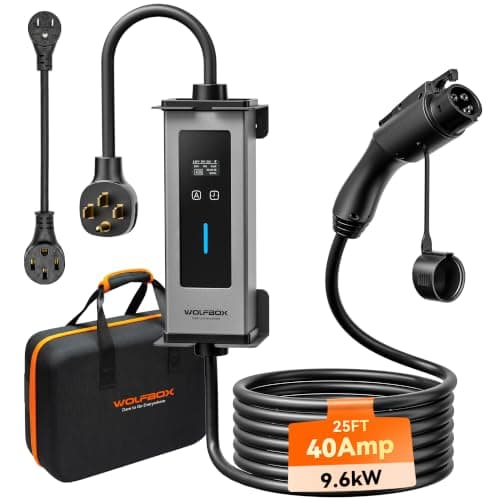
One charger for home and travel
WOLFBOX Portable (Level 1/2)
A dual-level portable that charges on both 120V and 240V, ships with both plug adapters, and adds a delay timer for off-peak charging — a genuine take-anywhere charger.
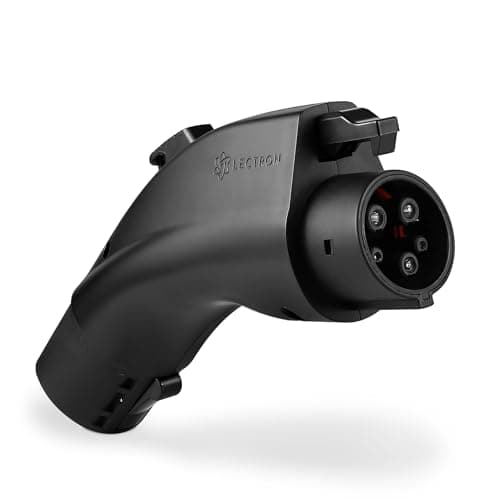
A J1772 car using NACS chargers
Lectron NACS → J1772 Adapter
The default adapter for a J1772 car to use a Tesla-style (NACS) home or destination charger — rated for the full 48 amps.
#ad · As an Amazon Associate we earn from qualifying purchases.
Questions
Frequently asked
How do I pay at a public EV charging station?
What do I need before using a public charger for the first time?
Why does DC fast charging slow down before the battery is full?
Do I need an adapter for public charging?
Keep reading
Related
- EV Charging Networks ExplainedWho runs the stations and which app to get.
- EV Charging EtiquetteThe unwritten rules at a public charger.
- EV Charging on a Road TripPlanning the DC stops for a longer drive.
- Best Portable EV ChargersThe backup to keep in the trunk.
- DC Fast Charging ExplainedWhat's happening at a fast charger.
- How to Pay for EV ChargingApps, RFID, tap-to-pay and Plug-and-Charge.
- How to Find Charging StationsLocate a working charger your car can use.
- How to Use Electrify AmericaA first-timer walkthrough of the network.
- How to Use ChargePointThe common Level 2 network, step by step.
- How to Use EVgoThe app-and-autocharge fast network.
Receipts
Sources
We do not run a testing lab, and we do not pretend to. Where a measured number came from someone else's lab, we name them and link them. Where we could not verify something, we say so on the page rather than quietly leaving it out. Read our full method.