HUB 05 · Guides & Buying Advice
How to Choose an EV Charger
Five decisions, in order, turn a wall of confusing options into one obvious pick. Here's the whole framework.
We earn a commission when you buy through our Amazon links, at no extra cost to you. It never affects our rankings, and we say so when the cheaper product is the better buy. How this works.
Choosing a home EV charger is not one hard decision — it is five easy ones in order: the charging level, the amperage, plug-in vs hardwired, smart vs simple, and the connector. Work through them and the wall of options collapses to a short list. For most people the answer lands on a 40- or 48-amp Level 2 charger, plug-in if you rent and hardwired if you own, and the connector your car uses.
The category looks overwhelming because every charger markets a different spec. But the specs that matter are few, and they sort into a simple sequence. Answer these five in order and you will know exactly what to buy — and, just as usefully, what to ignore.
Decision 1: Which charging level?
For a car you park at home, this is almost always Level 2 (240 volts, ~25 miles of range per hour). Level 1 (a standard outlet, ~5 miles per hour) is enough only for a plug-in hybrid or a very low-mileage driver; DC fast charging is public infrastructure you do not install at home. Unless you drive very little, Level 2 is the answer. The full breakdown is in types of EV chargers.
Decision 2: How many amps?
For most homes, 40 ampsis the sweet spot — it adds range faster than almost anyone drives, runs on a 50-amp breaker many panels have, and is the ceiling for a plug-in install. Step up to 48 amps only if you can run a hardwired 60-amp circuit and genuinely need faster daytime charging. And remember the real limit is the lowest of the charger, your car's onboard charger, and your circuit — the full method is in what amp charger do I need.
Decision 3: Plug-in or hardwired?
A plug-inunit uses a NEMA 14-50 outlet, can be a near-zero install if the outlet exists, and moves with you — the right call for renters and movers, capped at 40 amps. A hardwired unit is tidier and permanent and is required for the fastest 48-amp units. Own your home and want it clean, hardwired; rent or might move, plug-in. The trade-offs are in portable vs hardwired.
Decision 4: Smart or simple?
A smartcharger's app earns its keep on a time-of-use electricity rate or with two cars sharing a circuit; otherwise a simple sealed charger is cheaper with nothing to fail. If you will use scheduling, load sharing, or energy data, buy smart (and lean toward a value smart unit); if not, buy simple. The honest breakdown is in do I need a smart charger.
Decision 5: Which connector?
Match the plug to your car. Most non-Tesla EVs use J1772; Teslas and many 2025-onward cars use NACS. Buying a charger with your car's native connector avoids an adapter at home. If you are unsure, the NACS vs J1772 guide shows the two side by side, and the best NACS home chargers roundup covers native Tesla-plug units.
One rule that overrides all five: whatever you choose, insist on a real UL or ETL listing. It certifies the charger for the continuous high-current load it handles and matters more than any feature or brand.
Putting it together
Five answers give you your charger. For a typical homeowner: Level 2, 40 amps, hardwired or plug-in to taste, simple or value-smart, in your car's connector. For a renter: Level 2, 40 amps, plug-in (or a portable), value-smart or simple, matching connector. From there, the ranked shortlist is our best home EV chargers roundup— and if you want to shop by company first, our EV charger brands guide covers who is good at what.
The gear
Recommended gear for this guide
The products this guide refers to, with prices pulled live from Amazon and dated on each card.
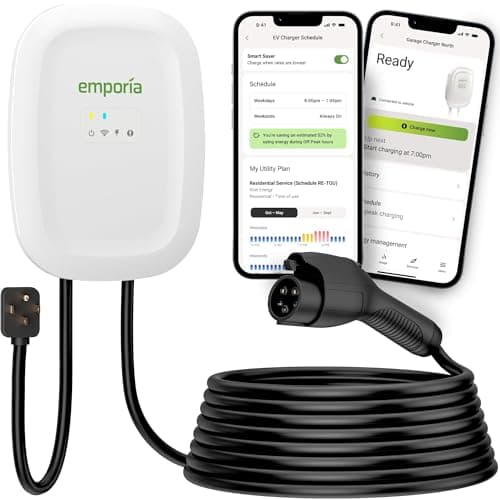
Most people who want the smart features too
Emporia Level 2 (48A)
The smart charger that does not charge a smart-charger premium — 48-amp capability and real energy monitoring for the price of a dumb one.
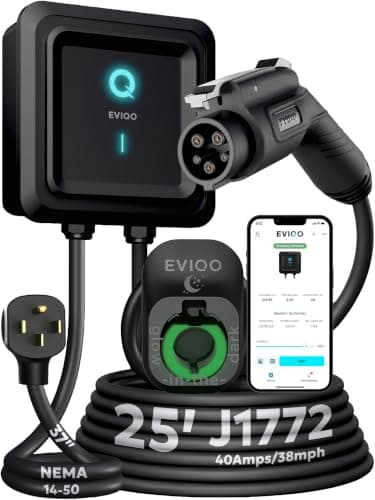
Budget-conscious buyers who still want smart features
EVIQO Level 2 (40A)
A weatherproof, UL-and-ETL-listed smart charger that regularly sits at the bottom of the price band — a lot of charger for the money.
#ad · As an Amazon Associate we earn from qualifying purchases.
Questions
Frequently asked
How do I choose a home EV charger?
What amperage EV charger should I get?
Should I get a plug-in or hardwired charger?
Do I need a smart EV charger?
Keep reading
Related
Receipts
Sources
- US DOE / fueleconomy.gov — EV charging basics
- US DOE Alternative Fuels Data Center — charging at home
We do not run a testing lab, and we do not pretend to. Where a measured number came from someone else's lab, we name them and link them. Where we could not verify something, we say so on the page rather than quietly leaving it out. Read our full method.