Skip to content
Volt & Cable

HUB 02 · Portable & Travel Chargers

The Best 110V EV Chargers

Level 1 chargers that run from an ordinary household socket - ranked on amperage, cable length, plug type and certification.

By Stephen V.Updated How we research
#ad

We earn a commission when you buy through our Amazon links, at no extra cost to you. It never affects our rankings, and we say so when the cheaper product is the better buy. How this works.

The short answer

Quick picks

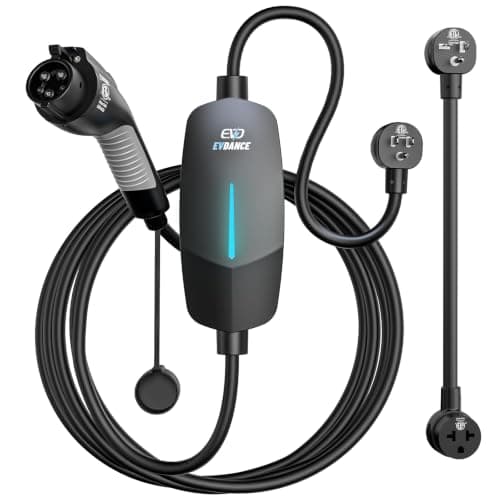
  • EVDANCE EVDANCE Level 1&2 (12A/16A)
    01 EVDANCE Level 1&2 (12A/16A)
    8.2

    A 12-amp 120-volt charger that is ETL listed, runs a 25-foot cable, and switches to 16 amps on 240 volts later — the 110V charger to buy if you are only buying one.

    Best for: Most people buying a 110V charger

    $119.99Amazon
  • EVDANCE EVDANCE NACS Mobile Connector (12A/16A)
    02 EVDANCE NACS Mobile Connector (12A/16A)
    7.6

    The same sensible 12A/120V formula with a Tesla-style NACS plug on the end — the replacement mobile connector for a Tesla or any NACS EV.

    Best for: Tesla and other NACS cars

    $149.99Amazon
  • VEVOR VEVOR Level 1+2 (16A, 28ft)
    03 VEVOR Level 1+2 (16A, 28ft)
    7.4

    The longest cable in this group at 28 feet, for the least money — but it is a 6-20 charger with a 5-15 adapter, not a native 110V unit.

    Best for: Reaching a car parked a long way from the outlet

    $115.97Amazon
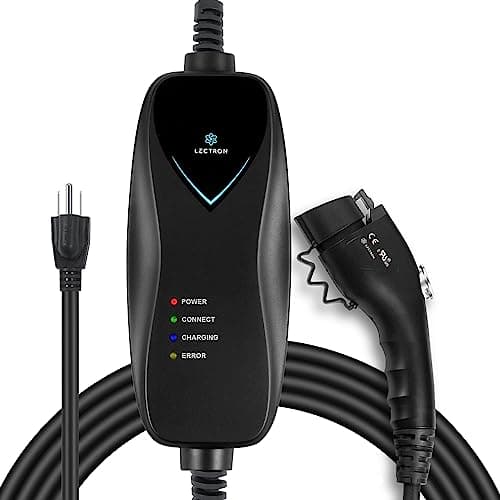
  • Lectron Lectron Level 1 (110V, 15A)
    04 Lectron Level 1 (110V, 15A)
    6.8

    The best-known name in this group and the highest 110V rate on the list, on the shortest cable — worth it only if you have a 20-amp receptacle to use it on.

    Best for: The fastest rate a 110V charger offers

    $159.99Amazon
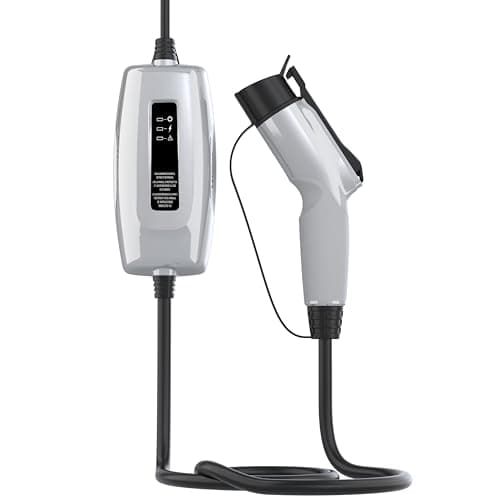
  • Schumacher Electric Schumacher SEV1670 (12A, 120V)
    05 Schumacher SEV1670 (12A, 120V)
    6.6

    A conservatively rated 12-amp Level 1 charger from a long-established automotive electrical brand — the pick if a name you recognize matters more than the spec sheet.

    Best for: Buyers who want an established brand

    $129.99Amazon
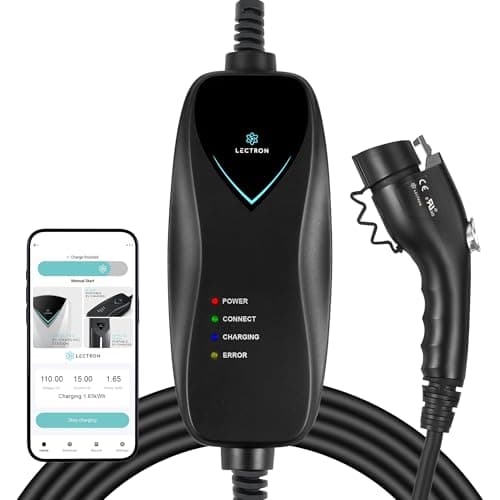
  • Lectron Lectron Level 1 WiFi (120V, 15A)
    06 Lectron Level 1 WiFi (120V, 15A)
    6.4

    The only connected charger here — Wi-Fi scheduling and monitoring bolted onto a 15-amp Level 1 cord, which is a lot of money for software on a slow charger.

    Best for: Scheduling and monitoring on 110V

    $169.99Amazon

#ad · Live prices from the Amazon Product API, as of Sep 1, 2026. Where we have no verified live price, we show none — we would rather leave a gap than print a number that has gone stale.

For most people buying a 110-volt EV charger, the EVDANCE Level 1&2 is the one to get. It draws 12 amps from an ordinary household socket - the most a standard outlet should carry continuously - it is ETL listed, it runs a 25-foot cable, and the same unit steps up to 16 amps if you ever add a 240-volt outlet. It is also the cheapest charger on this page, which is not a coincidence: in this category, the expensive options are mostly selling you amps you should not draw or an app you do not need.

Read this before you buy any 110V charger

A 110-volt charger - the industry calls it Level 1 - is the slowest way to charge an electric car. Plugged into a normal wall socket it adds roughly 3 to 5 miles of range per hour, against about 25 miles per hour for a 240-volt Level 2 unit. Left running overnight for twelve hours, that is something like 40 to 60 miles put back. For a driver covering 30 miles a day it is genuinely enough. For a 60-mile commute it will never catch up, and no amount of shopping fixes that.

So the honest first question is not which 110V charger to buy - it is whether you should be buying one at all. A 110V charger is the right purchase in four situations: you drive short daily distances; you own a plug-in hybrid with a small battery; you rent or park somewhere you cannot install a 240-volt outlet; or you want a spare cord in the trunk. If none of those describe you, the money is better spent on a 240-volt portable charger, and the trade-off is laid out in full in 120V vs 240V charging.

The second thing to know is that most EVs already come with a Level 1 cord in the boot or frunk. Before you buy anything, check - our do EVs come with a charger guide covers who still includes one and who quietly stopped. If yours came with one and it works, a second 110V charger only makes sense as a spare, as a longer cable, or as a replacement for a cord that has died.

How we ranked these

We do not have a test lab and we do not pretend to. These rankings are judgments built from the manufacturers' published specifications on the live listings, third-party safety listings where they exist, and the standard electrical rules that govern what a household circuit can actually deliver - the same method described on how we research. Four criteria decided the order, in this priority:

  • Amperage matched to a real household circuit. A charger that draws more than the socket should supply is a liability, not a faster charger. This is the criterion that reorders the whole category, and it is explained below.
  • A third-party safety listing. UL or ETL, stated on the listing. A device pulling several amps continuously for eight hours a night in an unattended garage is exactly the thing you want an independent lab to have looked at.
  • Cable length. The most under-rated spec in EV charging. A 16-foot cable and a 28-foot cable are different products in practice, because one reaches your charge port and the other does not.
  • The plug in the box, and whether it upgrades. A native NEMA 5-15 plug is what a 110V charger should have. A unit that also carries a 240-volt plug can follow you to a faster outlet later, for roughly the same money.

The shortlist, ranked

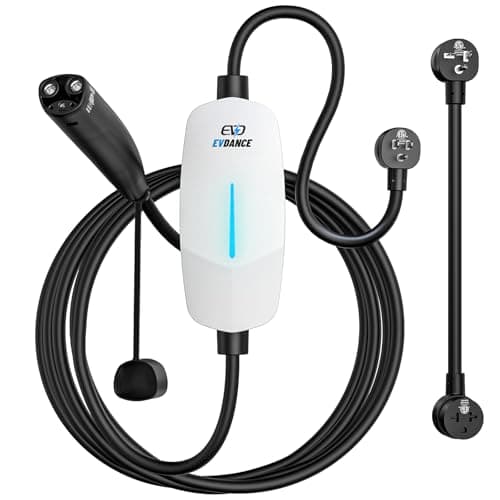
1. EVDANCE Level 1&2 - the right amps, the right cable, the lowest price

The EVDANCE wins on the criterion that matters most and then happens to be the cheapest. It draws 12 amps at 120 volts, which is exactly what a standard 15-amp household circuit is rated to carry continuously, so it can run all night on an ordinary socket without asking anything of that circuit it was not built for. It is ETL listed, which a meaningful share of the sub-$120 cords on Amazon are not. And its cable is 25 feet, long enough to cross a driveway rather than dictate where you park.

The upgrade path is the quiet bonus. It ships with both a NEMA 5-15 plug for household outlets and a NEMA 6-20 plug, so if you later add a 240-volt outlet the same charger steps up to 16 amps and roughly doubles its rate. What you do not get is any kind of display, app or scheduling - it is a cord that charges when plugged in. Given that nearly every modern EV can schedule its own charging from the car, that is a feature we would not pay extra for anyway.

2. EVDANCE NACS Mobile Connector - the same charger for a Tesla

This is the winner with a Tesla-style NACS connector on the end instead of a J1772 one, and it earns second place for exactly the reasons the first pick earns first: 12 amps on 120 volts, a 25-foot cable, and a 6-20 plug in the box for a future 240-volt outlet. If you drive a Model 3, Y, S or X - or any of the newer non-Tesla EVs that have moved to the NACS port - this is the one that plugs straight in with nothing in between.

Two honest caveats. It is NACS only, so a J1772 car needs an adapter, which is one more connection to work loose and one more thing to leave behind. And if the mobile connector that came with your Tesla still works, this is a spare rather than an upgrade - it charges at the same speed. Tesla owners weighing the whole question should start with our portable EV charger for a Tesla guide.

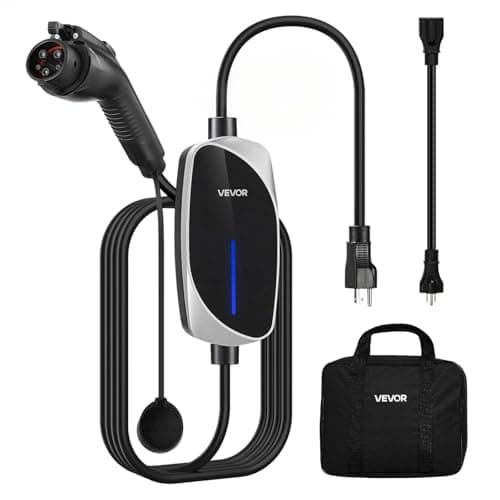
3. VEVOR Level 1+2 - the longest cable, with an asterisk

At 28 feet the VEVOR has the longest cable here by three feet, and it is usually the cheapest dual-voltage unit on the page. If your outlet is in the wrong corner of the garage, that reach is worth more than any other spec on this list.

The asterisk is the plug. Its native plug is a NEMA 6-20 - a 240-volt receptacle - and 120-volt use runs through an included 5-15 adapter rather than a purpose-built plug. That works, but it is an adapter in the chain on a connection carrying a continuous load. Its listing headline also does not state a UL or ETL certification, and its 16-amp rating is above what a standard 15-amp household circuit should supply continuously, so on 120 volts it really wants a dedicated 20-amp receptacle. Buy it for the cable, understand what you are buying.

4. Lectron Level 1 - the fastest 110V rate, from the biggest name here

Lectron is the most established brand in this group - the site's Lectron adapter review and Lectron portable review cover its other kit - and this is the highest 120-volt draw on the page at 15 amps. It is ETL certified and built like the rest of the Lectron range: cased, simple and app-free.

But 15 amps continuous is more than an ordinary 15-amp household circuit should carry, so using the full rate safely means plugging into a dedicated 20-amp receptacle rather than the socket by the garage door. If you have one, the extra 3 amps is a real if modest gain - call it a fifth more energy per hour. If you do not, you are paying a premium for amps you should not draw. The 16-foot cable, the shortest here, is the other real cost, and it decides where you can park.

5. Schumacher SEV1670 - the established-brand pick

Level 1 charging is a category dominated by names that did not exist three years ago. Schumacher Electric is the exception: it has been making automotive battery chargers for decades, sells through mainstream retail, and has an actual warranty department. The SEV1670 draws a conservative and correct 12 amps at 120 volts.

We rank it fifth rather than first for two specific reasons. Its listing headline states the amperage and the voltage and stops there - no cable length, no safety listing - so you are buying with less disclosed than the EVDANCE gives you, and you should read the listing detail before ordering. And it is Level 1 only, with no 240-volt mode, so unlike the dual-voltage picks above it cannot follow you to a faster outlet. It costs more than the value-brand 12-amp chargers for what is, electrically, the same job. If a recognized name is worth that to you, this is a sound purchase.

6. Lectron Level 1 WiFi - the only smart cord here, and the hardest to justify

This is the same 15-amp Lectron hardware with Wi-Fi added, bringing scheduling and session monitoring to a category that is otherwise entirely dumb. If you are on a time-of-use electricity plan and want charging to start after the cheap rate kicks in, that is a genuine use case, and our how to save money charging an EV guide explains how much off-peak shifting is actually worth.

It is last because it is the most expensive charger on the page and the money buys software rather than speed. It inherits both of the non-Wi-Fi model's limitations - a 16-foot cable and a 15-amp draw that wants a 20-amp receptacle - and it adds a dependency on the manufacturer keeping its app and servers running. Most importantly, nearly every EV sold in the last several years schedules its own charging from the car's screen, for free. Check that before you pay for a second timer.

Why the cheapest charger won. Nothing on this page charges meaningfully faster than anything else on it - the physics of a household socket sets the ceiling, not the badge. Once amperage is capped by your circuit, the only things left to buy are certification, cable and a plug that upgrades. The EVDANCE has all three for the least money, so it wins. If a 110V roundup ever ranks the most expensive unit first, ask what it is ranking on.

In detail

The picks, in full

01
EVDANCE EVDANCE Level 1&2 (12A/16A)

Most people buying a 110V charger

EVDANCE Level 1&2 (12A/16A)

12A @ 120V / 16A @ 240VJ1772NEMA 5-15 + 6-20ETL listed · 25ft
8.2/10

A 12-amp 120-volt charger that is ETL listed, runs a 25-foot cable, and switches to 16 amps on 240 volts later — the 110V charger to buy if you are only buying one.

Charge speed
4
Portability
10
Build & weather
8
Cable & connector
9
Value
10

Pros

  • 12 amps at 120 volts is the most a standard household receptacle should carry continuously — this charger is sized to the outlet rather than over it
  • ETL listed, which a surprising number of sub-$120 Level 1 cords on Amazon are not
  • The 25-foot cable reaches a car parked on the far side of a driveway, and the included NEMA 6-20 plug lets the same unit run at 16A/240V if you ever add a 240-volt outlet

Cons

  • 12 amps at 120 volts is roughly 1.4 kilowatts — about 3 to 5 miles of range per hour, no faster than the cord most EVs already ship with
  • No app, no scheduling and no display; you plug it in and it charges

Don't buy this if…

you need to replace a day's driving overnight. No 110V charger can do that — if this is your only charger and you commute, buy a 240-volt Level 2 portable instead and keep a Level 1 cord as the spare.

$119.99View on Amazon

Price as of Sep 1, 2026. Prices change — Amazon's is the one that counts.

#ad · we may earn a commission from this link to EVDANCE Level 1&2 (12A/16A)

02
EVDANCE EVDANCE NACS Mobile Connector (12A/16A)

Tesla and other NACS cars

EVDANCE NACS Mobile Connector (12A/16A)

12A @ 120V / 16A @ 240VNACS (J3400)NEMA 5-15 + 6-2025ft cable
7.6/10

The same sensible 12A/120V formula with a Tesla-style NACS plug on the end — the replacement mobile connector for a Tesla or any NACS EV.

Charge speed
4
Portability
10
Build & weather
7
Cable & connector
9
Value
8

Pros

  • Native NACS connector, so a Tesla Model 3/Y/S/X plugs straight in with no adapter in the chain
  • Same 12-amp 120-volt draw a normal household circuit is rated to carry continuously, and it steps up to 16A on a 240-volt 6-20 outlet
  • 25-foot cable — considerably longer than the mobile connector most cars ship with

Cons

  • NACS only: a J1772 car needs an adapter, which is one more failure point and one more thing to lose
  • Level 1 speed is Level 1 speed — roughly 3 to 5 miles of range per hour, whatever the plug on the end

Don't buy this if…

you already have the mobile connector that came with the car and it works. This is a spare or a replacement, not an upgrade — it does not charge any faster.

$149.99View on Amazon

Price as of Sep 1, 2026. Prices change — Amazon's is the one that counts.

#ad · we may earn a commission from this link to EVDANCE NACS Mobile Connector (12A/16A)

03
VEVOR VEVOR Level 1+2 (16A, 28ft)

Reaching a car parked a long way from the outlet

VEVOR Level 1+2 (16A, 28ft)

16A · 120V or 240VJ1772NEMA 6-20P + 5-15 adapter28ft cable
7.4/10

The longest cable in this group at 28 feet, for the least money — but it is a 6-20 charger with a 5-15 adapter, not a native 110V unit.

Charge speed
5
Portability
9
Build & weather
6
Cable & connector
8
Value
9

Pros

  • 28 feet of cable — the longest here, and the difference between reaching the charge port and moving the car
  • Runs on either 120 or 240 volts, so the same unit covers a household outlet now and a 240-volt 6-20 outlet later
  • Consistently the cheapest way to get this much cable and dual-voltage capability

Cons

  • The native plug is a NEMA 6-20 (240V); 120-volt use runs through the included 5-15 adapter rather than a purpose-built plug
  • The listing headline does not state a UL or ETL certification — if a third-party safety listing is a hard requirement for you, buy the ETL-listed EVDANCE instead
  • 16 amps is above the 12 amps a standard 15-amp household circuit should carry continuously, so on 120 volts it wants a dedicated 20-amp receptacle

Don't buy this if…

your only outlet is an ordinary 15-amp household socket shared with other things. Buy a 12-amp charger sized to that circuit — a bigger number on the box you cannot safely use is not an upgrade.

$115.97View on Amazon

Price as of Sep 1, 2026. Prices change — Amazon's is the one that counts.

#ad · we may earn a commission from this link to VEVOR Level 1+2 (16A, 28ft)

04
Lectron Lectron Level 1 (110V, 15A)

The fastest rate a 110V charger offers

Lectron Level 1 (110V, 15A)

15A @ 110VJ1772NEMA 5-15 plugETL certified · 16ft
6.8/10

The best-known name in this group and the highest 110V rate on the list, on the shortest cable — worth it only if you have a 20-amp receptacle to use it on.

Charge speed
5
Portability
9
Build & weather
8
Cable & connector
6
Value
6

Pros

  • ETL certified, from a brand with a long track record in EV charging rather than a marketplace name that appeared last year
  • 15 amps is the highest 120-volt draw on this list — roughly 25% more energy per hour than the 12-amp units
  • Simple, cased and rugged, with no app or account to set up

Cons

  • 15 amps continuous is more than a standard 15-amp household circuit should carry — to use the full rate safely you need a dedicated 20-amp receptacle, not the socket by the garage door
  • 16-foot cable is the shortest here, which decides where you can park
  • Costs meaningfully more than the 12-amp chargers while delivering, in real terms, a few extra miles overnight

Don't buy this if…

you are plugging into an ordinary shared 15-amp household outlet. The extra amps are the whole reason to pay the premium, and on that circuit you should not be drawing them.

$159.99View on Amazon

Price as of Sep 1, 2026. Prices change — Amazon's is the one that counts.

#ad · we may earn a commission from this link to Lectron Level 1 (110V, 15A)

05
Schumacher Electric Schumacher SEV1670 (12A, 120V)

Buyers who want an established brand

Schumacher SEV1670 (12A, 120V)

Level 1 · 120V12AModel SEV1670
6.6/10

A conservatively rated 12-amp Level 1 charger from a long-established automotive electrical brand — the pick if a name you recognize matters more than the spec sheet.

Charge speed
4
Portability
9
Build & weather
8
Cable & connector
5
Value
7

Pros

  • Schumacher has been making automotive battery chargers for decades — a real company with a real warranty department, which is not the norm in this price band
  • 12 amps is correctly sized to a standard household circuit rather than pushed past it for a bigger number on the box
  • Sold through mainstream retail as well as Amazon, so returns and support are straightforward

Cons

  • The listing headline states only the amperage and voltage — it does not state cable length or a safety listing, so check the listing detail before you buy on those points
  • Level 1 only: there is no 240-volt mode, so it cannot follow you to a faster outlet later
  • Priced above the value-brand 12-amp chargers for what is, electrically, the same job

Don't buy this if…

you might add a 240-volt outlet down the line. A dual-voltage charger costs about the same and keeps that option open; this one is Level 1 forever.

$129.99View on Amazon

$159.9919% off

Price as of Sep 1, 2026. Prices change — Amazon's is the one that counts.

#ad · we may earn a commission from this link to Schumacher SEV1670 (12A, 120V)

06
Lectron Lectron Level 1 WiFi (120V, 15A)

Scheduling and monitoring on 110V

Lectron Level 1 WiFi (120V, 15A)

15A @ 120VJ1772NEMA 5-15 plugWi-Fi · 16ft
6.4/10

The only connected charger here — Wi-Fi scheduling and monitoring bolted onto a 15-amp Level 1 cord, which is a lot of money for software on a slow charger.

Charge speed
5
Portability
9
Build & weather
8
Cable & connector
6
Value
4

Pros

  • Wi-Fi connectivity brings start/stop scheduling and session tracking to a category that is almost entirely dumb cords
  • Useful if you are on a time-of-use electricity plan and want charging to begin after the off-peak rate kicks in without setting an alarm
  • Same Lectron hardware and 15-amp rate as the non-Wi-Fi model above

Cons

  • The most expensive charger on this list, and the extra money buys an app rather than any additional charging speed
  • Carries the same two limitations as its non-Wi-Fi sibling: a 16-foot cable and a 15-amp draw that really wants a 20-amp receptacle
  • A connected charger depends on the manufacturer keeping its servers and app alive — a dumb cord has nothing to stop working

Don't buy this if…

your car already schedules its own charging, which nearly every EV sold in the last several years does. In that case you are paying twice for the same timer.

$169.99View on Amazon

Price as of Sep 1, 2026. Prices change — Amazon's is the one that counts.

#ad · we may earn a commission from this link to Lectron Level 1 WiFi (120V, 15A)

How to choose a 110V EV charger

Level 1 charging is simple enough that the marketing has to work hard to create differences. Here is what actually separates these products, in the order it should matter to you.

The 12-amp rule, and why a bigger number is usually worse

This is the single most useful thing on this page. Electrical code treats EV charging as a continuous load - a draw sustained for three hours or more - and a circuit must be rated for 125% of a continuous load. Run that backwards and a circuit can only supply 80% of its rating continuously. A standard household 15-amp circuit therefore tops out at 12 amps continuous. A 20-amp circuit tops out at 16.

That single rule reorganizes the whole category. A charger advertising 16 amps at 120 volts is not a faster charger for most buyers - it is a charger that needs a 20-amp receptacle you probably do not have by the driveway. Plugged into the ordinary socket it was implicitly sold for, it is asking that circuit for a third more than it should give, all night, unattended. A 12-amp charger is not the compromise version. On a standard outlet it is the correct version, and it is why our top pick draws 12.

Check what your outlet is on before you shop. If the breaker for that socket says 20 and nothing else important shares the circuit, a 16-amp charger is legitimately available to you. If it says 15, or you do not know, buy 12 amps. If you want more than either can offer, the answer is not a bigger Level 1 cord - it is a 240-volt circuit, and our Level 2 installation cost guide covers what that actually runs.

What 110V charging really adds overnight

Twelve amps at 120 volts is about 1.4 kilowatts before losses. Fifteen amps is about 1.8. In range terms that is roughly 3 to 5 miles per hour for a typical EV, so a twelve-hour overnight session puts back something in the region of 40 to 60 miles. Whether that is enough is arithmetic, not opinion: compare it to what you actually drive on a normal day, not to your longest trip of the year. If your daily distance is comfortably under what a night restores, Level 1 works indefinitely, and plenty of owners run this way for years - we walk through it in can you live with only Level 1 charging.

Two things make it worse than the arithmetic suggests. Cold weather costs you real range and diverts some of that trickle into warming the battery, which we cover in EV charging in cold weather. And a plug-in hybrid or a small-battery EV benefits far more from Level 1 than a large-battery truck, simply because the battery is small enough to fill overnight.

Cable length decides where you park

Cable length is the spec buyers regret. The units here run from 16 to 28 feet, and the difference is not academic - it determines whether you can back into the driveway or must nose in, whether the car in the second bay can ever be charged, and whether the cable lies flat or is stretched taut across a walkway. Measure from the outlet to where the charge port sits when the car is parked the way you actually park it, then add slack for the route around the car rather than through it. Buy longer than that measurement.

One thing not to do: solve a short cable with an extension cord. A continuous multi-amp load through an undersized extension lead is a genuine fire risk and is the one shortcut we will not hedge on - extension cords for EV charging explains why in detail. Buy the cable length you need in the charger.

Plugs, connectors and the upgrade path

There are two connectors to keep straight. The wall end is the plug that goes into your building: NEMA 5-15 is the ordinary household socket, NEMA 6-20 is a 240-volt one. The car end is either J1772, used by most non-Tesla EVs, or NACS, used by Tesla and increasingly by everyone else - NACS vs J1772 sorts out which you have.

For the wall end, prefer a charger with a native 5-15 plug over one that gets there through an adapter, as the VEVOR does. For the car end, buy the connector your car actually has rather than a different one plus an adapter. And if there is any chance of a 240-volt outlet in your future, a dual-voltage charger costs about the same today and saves buying twice - our best EV charger for renters guide leans on exactly that logic.

Certification: the one place not to save money

A Level 1 charger sits plugged into a wall socket, unattended, drawing current for eight hours at a stretch, often in an unheated garage. A UL or ETL listing means an independent lab tested the thing against a recognized safety standard. It is stated on the listing when it exists and conspicuously absent when it does not. Between two otherwise similar chargers, take the listed one - and note that on this page the listed one is also the cheapest, so the trade-off does not even arise.

When to stop shopping for 110V and buy Level 2 instead

Buy a 240-volt charger instead if you regularly drive more than a night of Level 1 restores, if you own a large-battery EV or truck, or if you already have a 240-volt outlet in the garage - in that last case a Level 1 cord is leaving most of your charging speed unused. The best portable EV chargers roundup covers the plug-in 240-volt options, and best home EV chargers covers the mounted ones. Keep a 110V cord in the trunk regardless. It is the cheapest insurance in EV ownership, and one day it will be the only outlet available.
How we picked

We do not run a testing lab

We compiled published specifications from manufacturer manuals and spec sheets, verified the safety listings (UL / ETL), computed the real running and installation costs, checked the wiring math against the NEC continuous-load rule, and read aggregated owner reviews — then scored each product against a published rubric. The scores are judgments from documented research — they are not bench measurements, because we do not have a test lab and we are not going to pretend we do. Every spec and cost figure is cited in Sources.

Questions

Frequently asked

What is the best 110V EV charger?

For most buyers, the EVDANCE Level 1&2. It draws 12 amps at 120 volts - the most a standard household circuit should carry continuously - it is ETL listed, its cable is 25 feet, and it includes a 240-volt plug so the same unit can be upgraded later. It is also the least expensive charger on this page, because in Level 1 charging the extra money usually buys amps you should not draw or an app your car already replicates.

How many miles per hour does a 110V charger add?

Roughly 3 to 5 miles of range per hour for a typical EV, so an overnight session of twelve hours puts back somewhere around 40 to 60 miles. A 240-volt Level 2 charger adds about 25 miles per hour by comparison. The number varies with the car's efficiency, the temperature and how much of the power the battery's thermal management takes.

Is 16 amps better than 12 amps on a 110V charger?

Only if you have a 20-amp receptacle to plug it into. Electrical code treats EV charging as a continuous load, which limits a circuit to 80% of its rating - 12 amps on a standard 15-amp circuit, 16 amps on a 20-amp one. On an ordinary household socket a 16-amp charger is not faster, it is over-drawing. Check the breaker for that outlet before you pay for the higher rating.

Can I use a 110V charger as my only EV charger?

Yes, if your daily driving is short enough that a night of charging replaces it - many owners of plug-in hybrids and small-battery EVs do exactly this. Compare a realistic 40 to 60 miles restored overnight against what you actually drive on a normal day. If your commute regularly exceeds that, Level 1 will fall further behind every week and you need a 240-volt option.

Do I need an electrician to use a 110V charger?

No. That is the entire appeal - it plugs into an existing household socket with no installation. It is worth confirming the outlet is in sound condition and, ideally, that the charger is not sharing a circuit with a heavy appliance. If the socket is old, warm to the touch in use, or loose, have it looked at before you run hours of continuous load through it.

Doesn't my EV already come with a 110V charger?

Many do, but not all - several manufacturers dropped the included cord as a cost saving. Check the boot or frunk before buying. If yours came with one, a second 110V charger still makes sense as a trunk spare, as a longer cable, or as a replacement, but it will not charge any faster than the one you have.

Keep reading

Receipts

Sources

We do not run a testing lab, and we do not pretend to. Where a measured number came from someone else's lab, we name them and link them. Where we could not verify something, we say so on the page rather than quietly leaving it out. Read our full method.