HUB 05 · Guides & Buying Advice
How Long Do EV Chargers Last?
The connector is rated for 10,000 plug-ins — about 27 years at once a day. So why do chargers fail sooner? Almost always the cable, the enclosure or the Wi-Fi, in that order.
We earn a commission when you buy through our Amazon links, at no extra cost to you. It never affects our rankings, and we say so when the cheaper product is the better buy. How this works.
Expect a decade or more from a well-chosen home charger, and judge candidates by the warranty rather than by any service-life claim. The electrical hardware is rarely the limit: the SAE J1772 connector standard specifies 10,000 mating cycles, which at one plug-in a day is over 27 years. Chargers die early for three mundane reasons — a damaged cable, water in the enclosure, or a manufacturer that stops supporting the app.
This question usually sits underneath a different one: is it worth paying more for a better charger? The useful way to answer it is to look at what each part of the unit is actually rated for, then at which of those parts realistically fails. The answer reorders the priorities most buying guides give you.
What each part is rated for
- The connector: 10,000 mating cycles. That is the J1772 specification — a connect and a disconnect counted as one cycle. Once a day puts you past 27 years. Validation testing for these connectors deliberately goes harsher than real use, including dust and saltwater exposure.
- The electronics: the warranty is your best proxy. Manufacturers in this category typically warrant residential units for three to five years. A warranty is a commercial statement about expected failure rates, which makes it the most honest service-life signal available — far better than any "lasts 15 years" claim in a listing.
- The enclosure: whatever its rating says, and no more. A NEMA 4 or IP66 unit is built to be hosed down; a NEMA 3R unit is built to shed rain. Outdoor service life tracks this rating more tightly than any other spec.
- The cable: the actual weak point. Nothing about a cable is rated for being driven over, yanked, or left coiled in a freeze. This is where most real-world failures start.
What actually fails, in order
1. The cable and connector, mechanically. Not worn out from use — damaged. A cable left on the floor and driven over, a connector dropped on concrete repeatedly, a jacket cracked from being coiled tight at 10°F. This is the single most common way a charger's life ends early, and it is almost entirely preventable with a holster and a hook. A charger with a replaceable cable has a real advantage here; most do not.
2. Water, in an enclosure that was not rated for where it went. An indoor unit mounted on an exterior wall under a porch roof survives until the wind blows rain sideways. If the charger lives outside, start from the outdoor roundup and treat the enclosure rating as a hard requirement. Our outdoor setup guide covers mounting and weather protection, and charging in the rain covers the safety side.
3. Software and cloud support, not hardware. This is the modern failure mode and the one buyers underrate. A charger whose scheduling lives in a vendor app is dependent on that vendor maintaining the app, the servers and the account system. When support lapses, the charger may still deliver power but the features you paid extra for stop working. A unit that works fully offline cannot fail this way — which is the real durability argument for a charger without an app, and worth weighing in do I need a smart charger.
4. The electronics themselves. Genuine internal failure happens, usually within the warranty period if it is going to happen at all. Heat is the enemy: a unit in direct afternoon sun on a south wall works harder than the same unit in a shaded garage.
Obsolescence is a more likely end than failure. The connector transition is a real consideration for a ten-year horizon: a J1772 charger bought today will still work in a decade, but the car in the driveway may have a NACS port and need an adapter on the handle. That is an inconvenience, not a failure, and a listed adapter costs a fraction of a charger. Still, it is the reason not to overspend on a unit whose value is mostly in its connector.
How the picks compare on what matters for longevity
Published specifications from the live listings. For service life, read the enclosure rating and the safety listing columns — those are the two that predict how a unit ages outdoors.
| Charger | Best for | Enclosure / listing (manufacturer) | Price |
|---|---|---|---|
| Grizzl-E Classic (40A) | People who want a charger, not an app | 40A / 9.6kW · J1772 · NEMA 14-50 plug · UL certified | Not verified today |
| Emporia Level 2 (48A) | Most people who want the smart features too | Up to 48A / 11.5kW · J1772 · 25ft cable · Wi-Fi + app | Not verified today |
| EVIQO Level 2 (40A) | Budget-conscious buyers who still want smart features | 40A / 9.6kW · J1772 · 25ft cable · UL & ETL, IP66/NEMA 4 | $449.99 |
#ad Prices read live from the Amazon Product API as of October 16, 2026, and they move. Specs are the manufacturer's published claims from the live listing — we have not bench-measured them. Where we have no verified price we print none rather than a number that has gone stale.
What to look for if you want it to last — and how to help it
Buy the enclosure rating for where it will actually live. This is the highest-leverage longevity decision. NEMA 4 or IP66 for anything outdoors or in an open carport; anything less belongs in a closed garage. A charger protected from weather routinely outlives one that is not, regardless of brand.
Compare warranties, not service-life claims. Three to five years is the normal range for residential units. A longer warranty is a manufacturer putting money behind its own failure-rate estimate; a vague durability claim in a bullet point is not.
Prefer a metal enclosure if the charger will be handled roughly. A cast-aluminum body like the Grizzl-E's tolerates knocks, cold and general garage life in a way a plastic shell does not. In a shared driveway or a rental, that matters more than any app feature.
Buy the holster at the same time as the charger. It is the cheapest item in the project and it protects the most failure-prone part. Dock the connector every time; never leave the cable on the floor where a tire can find it. Loop the cable loosely on a hook rather than winding it tight, and in cold weather be gentle — a stiff cable cracks.
Weigh app dependence against the time horizon. If you expect to keep this charger for a decade, a unit that works fully without a cloud service has a durability advantage that does not show up on any spec sheet. If you want the smart features, buy from a brand likely to still be supporting them.
Keep the amperage honest. Running a charger permanently at its absolute ceiling on a marginal circuit is harder on everything than running it one step down. If your panel is tight, setting a lower current is better for the hardware as well as the code — see how to set it.
The gear
Recommended gear for this guide
The products this guide refers to, with prices pulled live from Amazon and dated on each card.
- Grizzl-E
People who want a charger, not an app
Grizzl-E Classic (40A)
A UL-certified metal box that just charges, with none of the app dependence that dates the smart units — the value default.
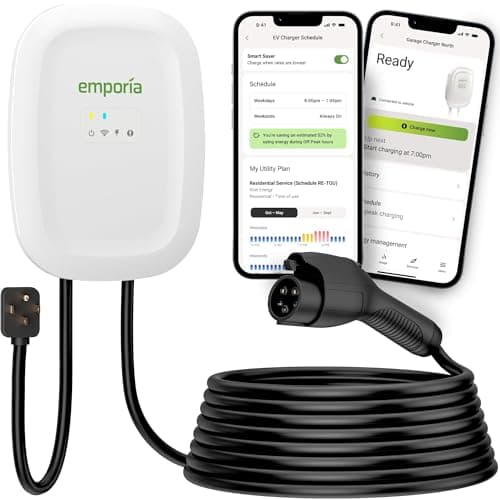
Most people who want the smart features too
Emporia Level 2 (48A)
The smart charger that does not charge a smart-charger premium — 48-amp capability and real energy monitoring for the price of a dumb one.
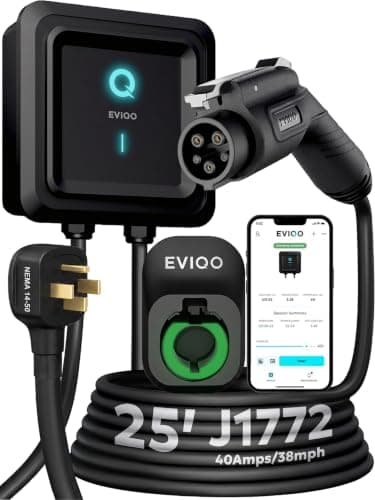
Budget-conscious buyers who still want smart features
EVIQO Level 2 (40A)
A weatherproof, UL-and-ETL-listed smart charger that regularly sits at the bottom of the price band — a lot of charger for the money.
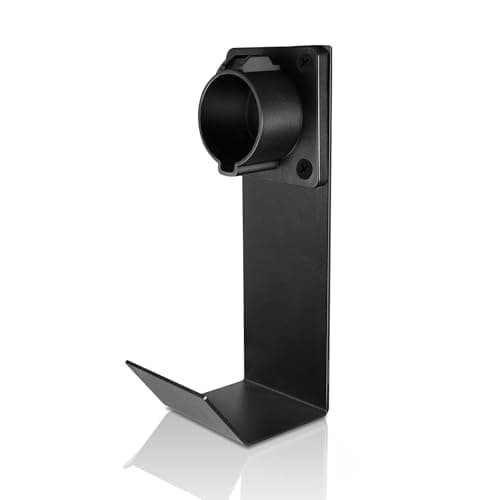
Docking a J1772 connector
Lectron J1772 Holster + J-Hook
A connector dock and cable hook in one — the tidiest, cheapest fix for a J1772 plug that otherwise sits on the floor.
#ad · As an Amazon Associate we earn from qualifying purchases.
Questions
Frequently asked
How many years does a home EV charger last?
Do EV charging cables wear out?
Is it bad to leave an EV charger plugged in all the time?
Will my J1772 charger be obsolete when everything moves to NACS?
Keep reading
Related
- Best Cable OrganizersThe cheap accessory that prevents the most common failure.
- Best Outdoor EV ChargersEnclosure ratings, the strongest predictor of outdoor service life.
- Best Chargers Without an AppWhy offline operation is a durability feature.
- EV Charger Surge ProtectionThe other thing that kills charger electronics early.
- Charging in Cold WeatherWhy a stiff cable is a cable about to crack.
- EV Charger TroubleshootingDiagnosing a charger that has stopped working before replacing it.
Receipts
Sources
- Amphenol Industrial — ER Series SAE J1772 connector (10,000 mating cycles)
- Amphenol — Type 1 AC charging coupler specification
- US DOE AFDC — EV charging infrastructure basics
We do not run a testing lab, and we do not pretend to. Where a measured number came from someone else's lab, we name them and link them. Where we could not verify something, we say so on the page rather than quietly leaving it out. Read our full method.