HUB 04 · Cable Management & Accessories
NEMA 10-30 vs 14-50 for EV Charging
An old dryer outlet and a modern EV outlet look similar but are not — and the difference is a safety one you need to understand.
We earn a commission when you buy through our Amazon links, at no extra cost to you. It never affects our rankings, and we say so when the cheaper product is the better buy. How this works.
A NEMA 10-30 is an older three-prong dryer outlet rated for 30 amps and, crucially, without a dedicated ground. A NEMA 14-50 is the modern four-prong, 50-amp outlet with a proper ground that EV charging is built around. They are not interchangeable, and the grounding difference is the whole point.
The grounding difference that matters
The 10-30 dates from an era when the neutral doubled as the ground. Modern wiring separates them, which is why the 14-50 has four prongs (two hots, neutral, ground). EV charging equipment expects that dedicated ground for its safety systems to work. Using a 10-30 for charging means an adapter and careful attention to grounding, and many electricians will steer you to install a proper 14-50 instead. See our EV outlet types guide for the full family.
Amperage and speed
A 10-30 is a 30-amp circuit, so continuous EV charging is limited to about 24 amps (the NEC 80% continuous-load rule) — roughly 5.7 kW. A 14-50 on a 50-amp circuit supports up to 40 amps continuous, around 9.6 kW. The 14-50 charges noticeably faster. Compare it with the other common options in 14-30 vs 14-50 and 6-50 vs 14-50.
The honest recommendation
If you are installing something new, install a proper NEMA 14-50on its own circuit — it is the modern standard, faster, and grounded correctly. Only consider a 10-30 if it already exists and an electrician confirms it is safe to use with the right equipment. Do not improvise a dryer-outlet adapter; our dryer-outlet guide is blunt about the risks.
The gear
Recommended gear for this guide
The products this guide refers to, with prices pulled live from Amazon and dated on each card.
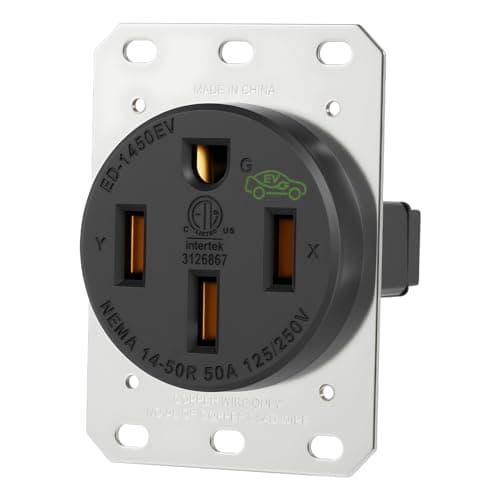
The outlet a plug-in charger needs
Industrial NEMA 14-50 Outlet
The receptacle a plug-in charger actually plugs into — buy the industrial-grade, listed version, because the cheap ones are the part that fails.
#ad · As an Amazon Associate we earn from qualifying purchases.
Questions
Frequently asked
Can I charge my EV from a NEMA 10-30 dryer outlet?
What is the difference between a 10-30 and a 14-50?
Which is safer for EV charging?
Keep reading
Related
- NEMA 14-50 OutletsThe modern standard to install.
- 14-30 vs 14-50The four-prong 30-amp cousin.
- EV Outlet Types ExplainedThe whole outlet family.
- Can I Use a Dryer Outlet?The risks of improvising.
- Do I Need a GFCI Breaker?The continuous-load and protection rules.
- Best EV Charger Outlet AdaptersIf you must adapt a 10-30, the ETL-listed option and its limits.
Receipts
Sources
We do not run a testing lab, and we do not pretend to. Where a measured number came from someone else's lab, we name them and link them. Where we could not verify something, we say so on the page rather than quietly leaving it out. Read our full method.