Charging outdoors is normal — most home chargers sold in North America are rated for it. What separates them is the enclosure rating, and the two you will see are not equivalent: NEMA Type 4 is sealed against windblown dust and hose-directed water, while NEMA Type 3R only promises protection from falling rain, sleet and snow. For an exposed wall we would buy the EVIQO Level 2, which pairs an IP66 / NEMA 4 shell with both UL and ETL listings and a published operating range down to −22°F. And the part that actually fails outdoors is usually not the charger at all — it is the outlet behind it.
This roundup is for the driveway, the carport, the detached garage and the side of the house. We compile published manufacturer specs and safety listings, read the live retail listings, and do the wiring and exposure math; we have not stood these units in a storm, and we do not claim to have. Where a maker does not publish a figure — a temperature range, an IP number — we say so rather than fill it in. Before the picks, the four things that decide whether a charger survives outside.
Rule 1: NEMA 3R and NEMA 4 are not the same promise
Both ratings are "outdoor", and manufacturers use the word interchangeably in marketing copy. They are not interchangeable in the standard. A Type 3Renclosure protects against falling dirt, rain, sleet and snow and must survive external ice formation — but it is not described as watertight, and the requirement is essentially that water entering the enclosure must not pool where it can reach live parts. A Type 4 enclosure adds windblown dust, splashing water and hose-directed water to that list. In other words, 3R is rated for water falling on it under gravity; 4 is rated for water being driven at it under pressure.
For a sheltered wall under an eave, 3R is genuinely fine. For a charger on an exposed gable end that takes horizontal rain off a field, or one that will be within range of a pressure washer or a sprinkler, Type 4 is the rating to insist on. IP66, which several units also carry, is the international equivalent of the same idea: dust-tight, and protected against powerful water jets.
Rule 2: read the published temperature range, not the marketing
"All-weather" is not a specification. An operating range is. EVIQO publishes −22°F to 122°F for its Level 2 units; ChargePoint's Home Flex datasheet gives an ambient range of −30°C to 50°C, which is the same −22°F to 122°F. Those are comfortable numbers for most of the United States and marginal for an unheated site in the northern Plains or interior Canada during a cold snap. If you live somewhere that regularly sees −25°F, check the specific figure on the specific model before you buy, and read our cold-weather charging guide— the battery, not the charger, is usually what slows down first.
Rule 3: outdoors, the receptacle is the weak point
This is the part buyers skip. A plug-in charger is only as weatherproof as the NEMA 14-50 outlet it lives on, and a 50-amp receptacle in a wet location needs an enclosure that stays weatherproof with the plug sitting in it — not a bare indoor receptacle with a charger plug hanging out of it. Cheap residential-grade 14-50 receptacles are already the most common failure point in a plug-in EV install indoors; outdoors, with moisture and thermal cycling added, they are the thing that browns, arcs and melts. Our NEMA 14-50 outlet guide covers the industrial-grade receptacle to specify, and the outdoor charger setup guidecovers the weatherproof cover, mounting height and cable storage that go with it. Confirm the specifics with a licensed electrician and your local code — requirements vary by jurisdiction and by whether the equipment is left unattended while charging.
The clean way around all of it is to hardwire. A hardwired charger has no plug and no receptacle, which deletes the weakest component from an outdoor install entirely and, on most units, unlocks 48 amps instead of 40. If you are paying an electrician to run a new circuit outside anyway, hardwiring usually costs the same labor — see the best hardwired chargers roundup.
Rule 4: cable stiffness is the daily annoyance
Enclosure ratings decide whether a charger survives. Cable behavior decides whether you enjoy it. A charging cable that is supple at 70°F can be a stiff hoop at 10°F, and wrestling one onto a charge port in the dark, in sleet, is the single most-cited complaint from owners with outdoor installs. The mitigations are unglamorous: buy enough cable length that it is never stretched, mount the unit at roughly chest height so the cable is not dragging through standing water and grit, and dock the connector in a holster rather than leaving it face-up on the ground where it collects ice. Cable and docking hardware is in our cable organizer roundup.
The honest takeaway: almost any UL- or ETL-listed home charger will survive an ordinary outdoor wall. If your site is exposed, buy Type 4 / IP66 rather than 3R; if you can hardwire, do, because it removes the receptacle that fails first. Spending more on the charger while leaving a cheap indoor-grade outlet behind it is the wrong way round.
The picks, in order
1. EVIQO Level 2 (40A) — the best outdoor rating for the money
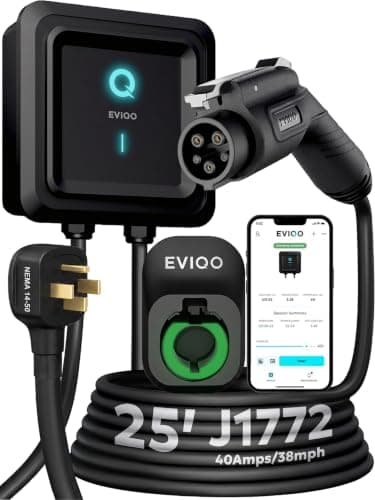
The EVIQO is the unit we would put on an exposed wall. Its listing and EVIQO's own specification both give an IP66 / NEMA 4enclosure — the higher of the two outdoor tiers, sealed against windblown dust and hose-directed water — along with both UL and ETL listings and a published operating range of −22°F to 122°F. It runs 40 amps on a NEMA 14-50 plug with a 25-foot cable, which is long enough to reach a car parked across a driveway, and it has a Wi-Fi app for scheduling and consumption tracking. Nothing here is exotic; it is simply the strongest weather spec in this roundup at the lowest price of the units that carry it.
The honest caveats: EVIQO is a newer brand without the decade of support history ChargePoint has, the Wi-Fi radio is 2.4 GHz only (a nuisance on mesh routers that hide the 2.4 GHz band), and 40 amps is the plug-in ceiling — if your panel could carry a 60-amp circuit, a hardwired 48-amp unit charges faster. And being a plug-in charger, it inherits the receptacle problem from Rule 3: the IP66 rating protects the charger, not the outlet it is plugged into. Our full EVIQO review goes deeper.
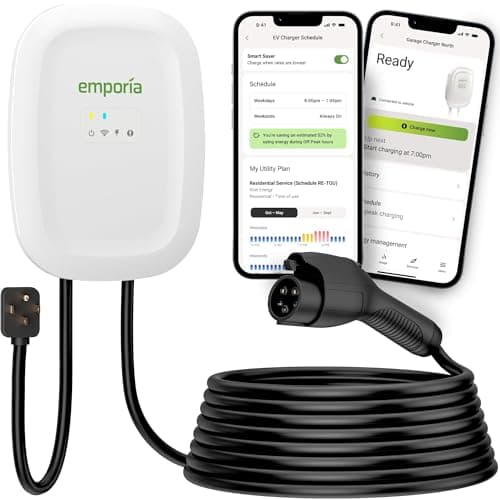
2. Emporia Level 2 (48A) — the one to hardwire outside
If you are running a new circuit outdoors anyway, this is the pick. Emporia builds the Classic Level 2 into a watertight NEMA Type 4enclosure rated for indoor or outdoor installation, and it is certified to UL 2594 — the standard written specifically for EV supply equipment — as well as Energy Star. Hardwired it runs the full 48 amps on a 60-amp circuit; on a NEMA 14-50 plug it is capped at 40 like everything else. Hardwiring is what makes it interesting outdoors: no plug, no receptacle, no weatherproof cover to specify, and one fewer connection to corrode. The 25-foot cable and the energy monitoring are the same ones that make it our overall best home charger.
Against it: the app and Wi-Fi are central to the experience rather than optional, so setup is more involved than a sealed plug-and-go box; it costs more than the EVIQO; and the 48-amp figure is only real if you hardwire onto a 60-amp circuit, which many panels cannot spare. Buy it plug-in and you have paid for headroom you will not use.
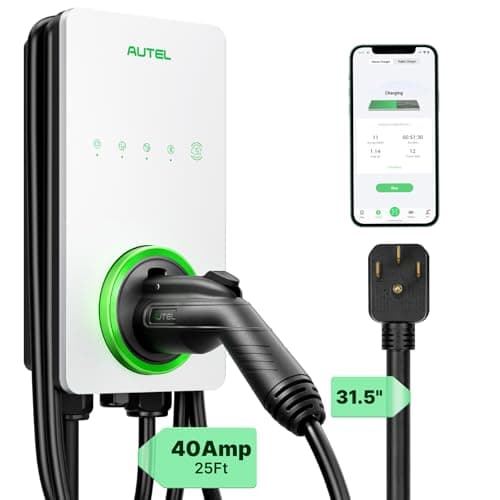
3. Autel MaxiCharger (40A) — the tidiest complete outdoor install
Autel rates the MaxiCharger AC Home 40A enclosure at NEMA 4, and the retail listing describes it as an indoor/outdoor unit. What earns it a place here specifically is what is in the box: a holster for the connector, which on an outdoor install is not a cosmetic accessory. A J1772 handle left lying on a driveway fills with water, grit and ice; docked in a holster at height it stays clean and dry. Add a 25-foot cable, adjustable current, and both Wi-Fi and Bluetooth — the Bluetooth genuinely matters when the charger is on a detached garage at the edge of your Wi-Fi coverage.
The caveats are the ones that apply to it anywhere: 40 amps is its ceiling, so it is not the fastest option if your panel could support 48, and the feature set is more than a set-and-forget buyer needs. There is also more surface area of app and account here than on a simple charger, which is a preference question rather than a fault.
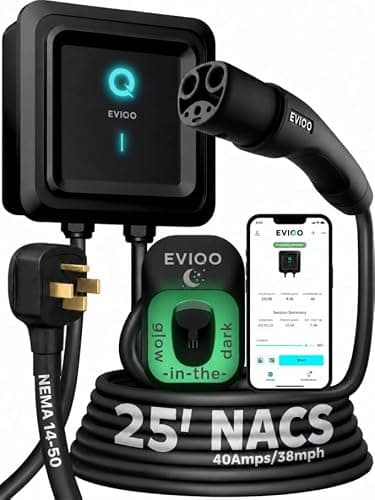
4. EVIQO NACS (40A) — the outdoor pick for a Tesla or NACS car
Same shell, same rating, different plug. The NACS version of the EVIQO carries the same IP66 / NEMA 4weatherproof enclosure with UL and ETL listings, on a 25-foot cable and a NEMA 14-50 plug, with a native NACS (J3400) connector on the end. If your car came with a Tesla-style port, this removes an adapter from the chain — and outdoors that matters more than it does in a garage, because an adapter is one more junction sitting in the weather and one more thing to drop in the snow. The wider native-plug field is in our best NACS home chargers roundup.
Against it: it is NACS only, so a J1772 car needs an adapter pointing the other way; it carries the same 2.4 GHz-only Wi-Fi and newer-brand caveats as its J1772 sibling; and it typically costs slightly more than the J1772 version for identical hardware.
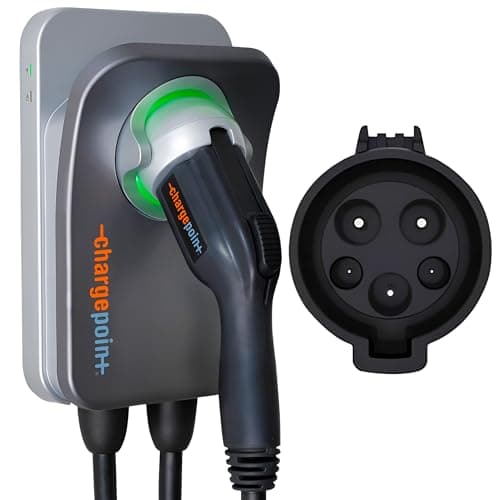
5. ChargePoint Home Flex — the established brand, with the weaker enclosure
The Home Flex is the mature option: a decade of support history, the largest public-charging app in North America, and amperage selectable in the app so one unit fits whatever breaker your panel can spare, up to 50. ChargePoint's datasheet rates the enclosure Type 3Rper UL 50E, with an ambient operating range of −30°C to 50°C. That is a legitimate outdoor rating and it is fine under an eave — but it is the weakest enclosure spec in this roundup, and we are not going to pretend otherwise on a page about weather. ChargePoint itself is explicit that an outdoor plug-in install wants a weatherproof NEMA receptacle.
So: buy it for the brand, the app and the amperage flexibility, and buy it hardwired or with a properly specified weatherproof outlet if the site is exposed. It also costs meaningfully more than equally capable chargers from newer brands, and the experience leans hard on a ChargePoint account. If the wall takes driven rain, the EVIQO's Type 4 shell is the better-matched buy.
6. WOLFBOX Portable (Level 1/2) — when you cannot mount anything
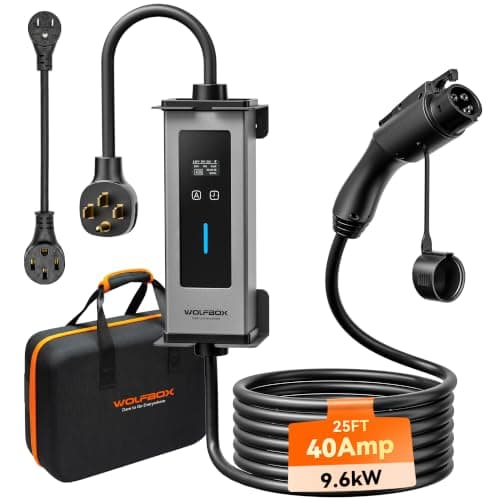
Renters, apartment carports and anyone whose parking spot has an outlet but no wall they are allowed to drill into. The WOLFBOX PE40 is a portable dual-level unit whose listing states ETL certification and an IP66 indoor/outdoor rating, with a 25-foot cable, adjustable current up to 40 amps, and both NEMA 5-15 and 14-50 plug adapters in the box, so it covers a household outlet and a 240-volt one. There is also a built-in delay timer for off-peak rates that needs no app.
Be clear-eyed about what it is, though: a portable brick is not a permanent outdoor fixture. The IP66 rating covers the unit, not the improvised arrangement of the plug hanging out of a receptacle, and it is a good deal easier to steal than a bolted-on wall charger. Drawing the full 40 amps also needs a properly rated 14-50 receptacle — do not run it flat out on a worn outdoor outlet. Our guide on leaving a portable charger outside is the honest version of that discussion.
What we left out, and why
Two units we rate highly elsewhere are missing on purpose. The Grizzl-Eline — cast-metal, NEMA 4, made in Canada — is arguably the toughest hardware in the category, but its Amazon availability has been erratic through 2026 and the model that was our long-standing no-app pick was discontinued outright; we would rather not build an outdoor roundup on a listing that may be gone next month. The Wallbox Pulsar Plusis an excellent compact 48-amp hardwired unit, but its stock on Amazon is currently thin, and a roundup pick that is out of stock is not a recommendation. Both remain worth reading about — we just will not rank a charger here that you may not be able to buy.
How to choose an outdoor EV charger
Work through these in order. The first question does most of the work; the rest are refinements.
Match the rating to the actual exposure
Walk out and look at the wall. Is it under an eave, on a sheltered side, protected from prevailing wind? Type 3R is enough, and you can shop on brand, app and price. Is it a gable end that takes horizontal rain, a post in an open carport, or somewhere within reach of a sprinkler or a pressure washer? Buy Type 4 / IP66 and do not negotiate on it. The difference between the two ratings is water under pressure, and no amount of brand reputation substitutes for it.
Hardwire if the budget stretches to it
On an outdoor install this is the single highest-value decision. Hardwiring removes the receptacle, which is the component most likely to fail, and it removes the weatherproof-cover question with it. It also unlocks 48 amps on units that are capped at 40 when plugged in. The labor is broadly the same as running a circuit to an outdoor outlet; the trade-off is that the charger becomes a fixture that stays with the house, which is the wrong call if you rent or expect to move. Costs are broken down in our installation cost guide, and the circuit sizing is in the wire and breaker guide.
If you are plugging in, specify the outlet properly
A plug-in outdoor charger needs an industrial-grade NEMA 14-50 receptacle in an enclosure that stays weatherproof with the charger plugged into it, on a correctly sized circuit, with the GFCI protection your local code requires. That is a licensed-electrician conversation, not a hardware-store impulse buy. Start with our outlet guide, and read the GFCI breaker guidebefore you book the work — nuisance tripping outdoors is common and mostly preventable.
Buy more cable than you think, and mount it at height
Outdoors you rarely park in exactly the same place twice, and a cable that is stretched to reach is a cable that gets yanked out of its strain relief. Twenty-five feet is the practical default; measure the worst-case park before you commit. Mount the charger around chest height so the cable is not lying in standing water, and dock the connector in a holster rather than resting it on the ground.
Do not skip the safety listing
A UL or ETL listing is the minimum on any charger, and doubly so on one that lives in the weather. Every pick above carries one. Treat an uncertified marketplace unit promising an impressive IP number as an unverified claim, because that is exactly what it is.
So, which one?
For an exposed outdoor wall, buy the EVIQO Level 2— IP66 / NEMA 4, UL and ETL, the best weather spec here at the lowest price that carries it. If you are hardwiring and want 48 amps, buy the Emporia Level 2. If your car has a NACS port, buy the EVIQO NACS and skip the adapter. If the site is sheltered and you want the mature brand and app, the ChargePoint Home Flex is a fair buy at a 3R rating. And if you cannot mount anything at all, the WOLFBOX Portabledoes the job with the compromises spelled out above. Whichever you choose, spend as much attention on the outlet and the mounting as on the box — that is where outdoor installs actually go wrong. Start from the full home charger roundup if you are not sure the site is really outdoors at all.