HUB 02 · Portable & Travel Chargers
Can You Leave a Portable EV Charger Outside?
Most portables are built to charge in the rain — but the outlet it plugs into is the real weak point. Here's how to leave one outdoors safely.
We earn a commission when you buy through our Amazon links, at no extra cost to you. It never affects our rankings, and we say so when the cheaper product is the better buy. How this works.
Most portable EV chargers are weather-rated to charge outdoors, including in the rain — the units are designed for it. The real weak points are the outlet it plugs into and the plug connection, which need to be the right outdoor type and kept out of standing water. Do that, and leaving a portable outside is fine.
EV charging equipment is engineered around wet conditions because most charging happens outside. So the question is less "can the charger take it" and more "is the whole setup around it built for outdoors."
What the ratings mean
Manufacturers state a weather rating for the charger's enclosure — often a NEMA enclosure type or an IP code. A higher rating means better protection against dust and water. Portables such as the WOLFBOX Portable and Mustartare built to charge in the rain, but check the product's own stated rating rather than assuming — and never modify or open a unit, which voids that protection.
The outlet is the weak point
A charger is only as weatherproof as the receptacle it plugs into. An outdoor NEMA 14-50 outlet needs a proper weatherproof, in-use (bubble) coverand correct GFCI protection, installed by an electrician — the NEMA 14-50 outlet guide and outdoor charger setup guide cover the details. The plug-to-outlet junction is where water causes trouble, so keep it off the ground and shielded.
How to do it safely
- Use an outdoor-rated outlet with an in-use weatherproof cover and GFCI protection.
- Keep the plug connection elevated and out of puddles; do not let it sit in standing water.
- Loop the cable so water drips off rather than running into the connector.
- Do not use an extension cordto reach an outdoor spot — run a proper circuit instead.
- Store the unit out of the weather when practical to extend its life, even if it is rated for it.
For the broader wet-weather question — is it safe to charge in the rain at all — see can I charge my EV in the rain. The short version: yes, the system is designed for it, as long as the outlet and connection are done right.
The gear
Recommended gear for this guide
The products this guide refers to, with prices pulled live from Amazon and dated on each card.
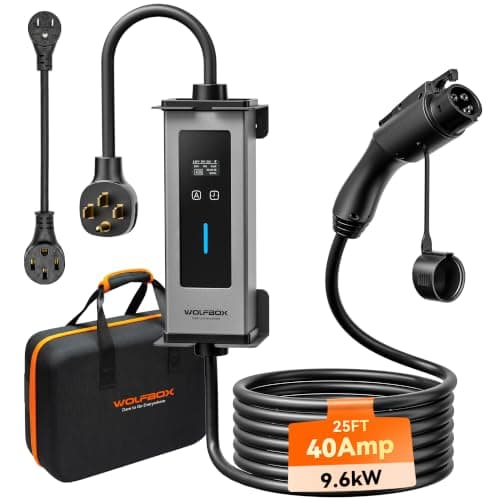
One charger for home and travel
WOLFBOX Portable (Level 1/2)
A dual-level portable that charges on both 120V and 240V, ships with both plug adapters, and adds a delay timer for off-peak charging — a genuine take-anywhere charger.
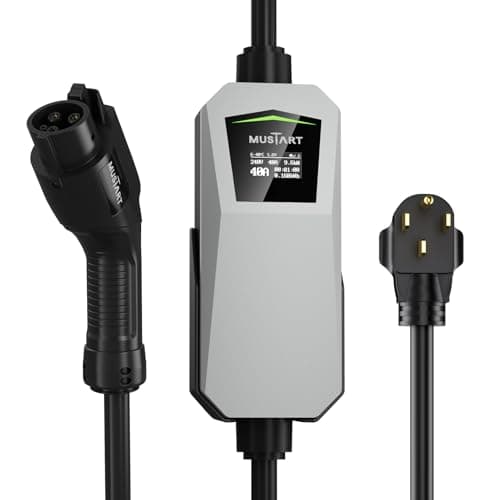
The cheapest capable portable
MUSTART 40A Portable
A budget 40-amp portable with an LCD readout — the value pick when you just need 240V charging that moves.
#ad · As an Amazon Associate we earn from qualifying purchases.
Questions
Frequently asked
Is it safe to leave a portable EV charger outside in the rain?
What NEMA or IP rating do I need for outdoor charging?
Can I use an extension cord to reach an outdoor outlet?
Keep reading
Related
- Can I Charge My EV in the Rain?The broader wet-weather safety question.
- Outdoor EV Charger SetupDoing the whole outdoor install right.
- NEMA 14-50 OutletsThe weatherproof outlet a portable needs outside.
- Extension Cords for EV ChargingWhy you cannot use one to reach outside.
- Mustart Portable ReviewA rugged portable built for outdoor use.
Receipts
Sources
We do not run a testing lab, and we do not pretend to. Where a measured number came from someone else's lab, we name them and link them. Where we could not verify something, we say so on the page rather than quietly leaving it out. Read our full method.