Skip to content
Volt & Cable

HUB 01 · Level 2 Home Chargers

The Best Budget EV Chargers

Cheap does not have to mean unsafe. These are the lowest-cost Level 2 (and one Level 1) chargers we would actually put on a wall — every one properly listed, with honest cons on each.

By Stephen V.Updated How we research
#ad

We earn a commission when you buy through our Amazon links, at no extra cost to you. It never affects our rankings, and we say so when the cheaper product is the better buy. How this works.

The short answer

Quick picks

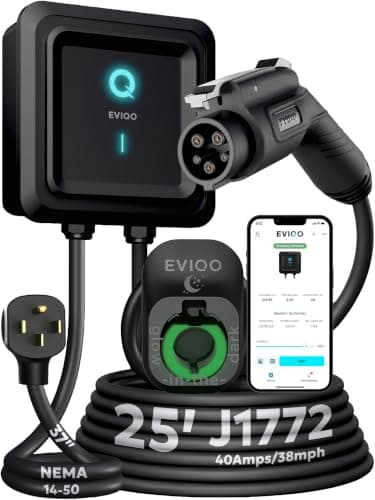
  • EVIQO EVIQO Level 2 (40A)
    01 EVIQO Level 2 (40A)
    8.6

    A weatherproof, UL-and-ETL-listed smart charger that regularly sits at the bottom of the price band — a lot of charger for the money.

    Best for: Budget-conscious buyers who still want smart features

    $395.99Amazon
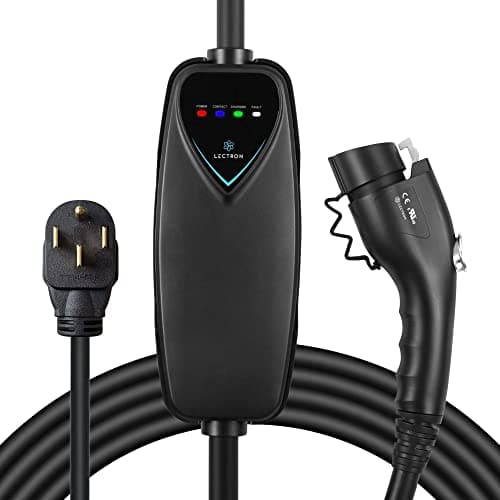
  • Lectron Lectron V-Box (40A)
    02 Lectron V-Box (40A)
    7.6

    A simple, Energy-Star, ETL-listed plug-in unit — a no-frills alternative to the Grizzl-E for a lower spend.

    Best for: A simple, inexpensive plug-in charger

    Check priceAmazon
  • Grizzl-E Grizzl-E Classic (40A)
    03 Grizzl-E Classic (40A)
    8.0

    A UL-certified metal box that just charges, with none of the app dependence that dates the smart units — the value default.

    Best for: People who want a charger, not an app

    Check priceAmazon
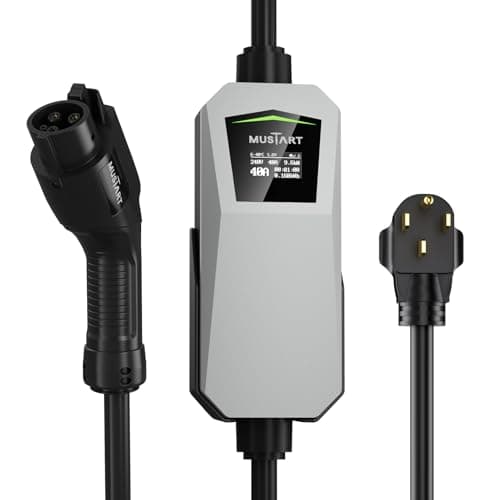
  • MUSTART MUSTART 40A Portable
    04 MUSTART 40A Portable
    8.2

    A budget 40-amp portable with an LCD readout — the value pick when you just need 240V charging that moves.

    Best for: The cheapest capable portable

    $159.99Amazon
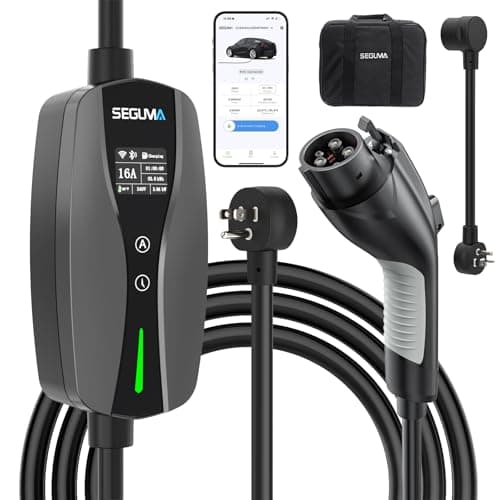
  • MEGEAR MEGEAR Skysword II (Level 1)
    05 MEGEAR Skysword II (Level 1)
    7.2

    A cheap 120-volt Level 1 backup that lives in the trunk — slow, but it plugs into any wall outlet in an emergency.

    Best for: A 120V emergency backup cord

    $112.90Amazon

#ad · Live prices from the Amazon Product API, as of Jul 26, 2026. Where we have no verified live price, we show none — we would rather leave a gap than print a number that has gone stale.

You do not need to spend big to charge an EV well. The one rule that separates a bargain from a mistake is the safety listing: a charger pushes 30 to 40 amps for hours unattended, so a real UL or ETL listing is non-negotiable no matter how low the price goes. Our budget pick for most people is the EVIQO Level 2— a UL-and-ETL-listed smart charger that regularly sits at the bottom of the price band. If you want the absolute cheapest way to get 240-volt charging, a value portable does it for less again.

"Budget" in EV charging does not mean stripped-out or sketchy. The hardware inside a $350 charger and a $700 one is more alike than the price gap suggests — both hand the same AC to your car's onboard charger, which does the real work. What you give up at the low end is smart-app polish, brand track record, and sometimes cable length, not safety or speed. The trick is knowing which corners are fine to cut and which one will get you burned. This roundup is built around that line.

As with every page here, we have not bench-tested these units and do not pretend to. What follows is compiled from published manufacturer specifications, the safety listings on the live retail listings, the NEC wiring math, and aggregated owner reviews, scored against our published rubric. No dollar figure is written into this page — prices render live and date-stamped instead, so a number is never stale.

The short version

  • EVIQO Level 2 — best budget charger overall. UL and ETL listed with an IP66 / NEMA 4 weather rating and a Wi-Fi app, usually at the bottom of the price band. The most charger for the least money.
  • Lectron V-Box — simplest cheap plug-in. An Energy-Star, ETL-listed plug-in unit for the buyer who wants a reliable 40-amp charge and nothing else.
  • Grizzl-E Classic — cheapest rugged no-app box. A cast-aluminum, UL-certified charger with nothing in the cloud to fail. Full Grizzl-E Classic review.
  • MUSTART 40A Portable — cheapest true Level 2.One of the least expensive genuine 40-amp portables on Amazon — the lowest-cost way into 240-volt charging.
  • MEGEAR Skysword II — cheapest of all, but Level 1. A 120-volt backup cord for a few dollars. Buy it as insurance, never as your only charger if you drive daily.

What "budget" should and should not cost you

Before the picks, the one non-negotiable. EV charging is a continuous load— the charger draws its full current for hours without a break — and that is exactly the duty cycle that finds a weak connection and turns it into heat. A legitimate UL or ETL listing is the certification that the unit was tested for that job. Every charger on this page carries one; a no-name charger with no stated listing, however cheap, is the one place your budget should never stretch to.

The other thing a low price should notcost you is a proper outlet. If you buy a plug-in unit, the receptacle it plugs into is a real safety part — a cheap NEMA 14-50 is the component that overheats under a continuous 40-amp draw. Budget for an industrial-grade, listed NEMA 14-50 outlet and a licensed electrician to install it. Saving twenty dollars on the outlet is the classic false economy in this category.

Where the money actually goes.Above the safety floor, price buys smart-app refinement, a longer or more flexible cable, a hardier enclosure, and brand support history — nice-to-haves, not need-to-haves. None of them makes the electricity cheaper or the charge faster at a given amperage.

The picks, in order

1. EVIQO Level 2 — the best budget charger

The EVIQO is the rare value unit that skimps on nothing that matters. It carries both UL and ETL listings plus an IP66 / NEMA 4 weatherproof rating — a stronger enclosure spec than several pricier chargers — runs a Wi-Fi app with scheduling, and comes on a long 25-foot cable, all while regularly sitting at the bottom of the price band. The honest caveats are the ones you expect from the value pick: it is a newer brand with a shorter support history than ChargePoint or Wallbox, and it tops out at 40 amps. Neither is a real problem for the buyer who wants the most certified hardware for the least money, which is exactly who this is for.

2. Lectron V-Box — the simple cheap plug-in

If you do not care about an app at all, the Lectron V-Box strips the price down further. It is an Energy-Star, ETL-listed plug-in unit on a NEMA 14-50 cord — no electrician needed if a properly rated outlet already exists — and it is about as straightforward as a Level 2 charger gets. What you give up versus the EVIQO is the smart features: there is no energy monitoring or scheduling here. For similar money the EVIQO adds real software, so buy the V-Box specifically when simplicity and the lowest wall-unit price are the whole brief.

3. Grizzl-E Classic — the cheap unit that outlives the smart ones

The Grizzl-E Classic earns its budget spot on durability rather than features. It is a cast-aluminum, UL-certified box rated for indoor and outdoor use, with no mandatory app or Wi-Fi — nothing in the cloud to lose support, nothing to troubleshoot on a bad-signal day. It runs at 40 amps and offers no scheduling or energy tracking, and its stock cable is stiff in the cold, a common owner note. But for a buyer who wants a charger that will still be working after several app redesigns have come and gone, it is the value default. Full Grizzl-E Classic review, and it also tops our 40-amp roundup.

4. MUSTART 40A Portable — the cheapest true Level 2

If the lowest possible entry to 240-volt charging is the goal, a portable beats a wall unit on price, and the MUSTART is one of the least expensive genuine 40-amp portables on Amazon. It has an outdoor-rated connector, an LCD readout for status and faults, and it plugs into the same NEMA 14-50 outlet a wall unit uses — then unplugs and comes with you, which is a real advantage for renters. The trade-offs are a shorter 21-foot cable and value-brand fit and finish. For the buyer who wants Level 2 speed for the least money and does not need a mounted look, it is the cheapest honest answer.

5. MEGEAR Skysword II — the cheapest of all, with an asterisk

The MEGEAR is the least expensive charger here by a wide margin, and it is the one to be careful about. It is a Level 1unit: it plugs into an ordinary 120-volt household outlet and adds only about 3 to 5 miles of range per hour, versus the ~25 of the Level 2 units above. That makes it a superb trunk backup and a fine primary charger for a plug-in hybrid or a very low-mileage driver — and a poor choice for anyone with a real daily commute, who will watch it fall behind. Buy it as cheap insurance, not as a way to dodge the cost of Level 2 if you actually need Level 2.

What a budget charger costs to run

Nothing on this page changes your energy bill relative to a pricier charger: a kilowatt-hour costs the same whoever delivers it, and the amperage sets how fast the energy goes in, not how much you pay for it. Charging at home is generally well below what a comparable gas car costs to fuel; the exact figure depends on your utility rate and your car's efficiency, and the full arithmetic is in our cost to charge an EV at home guide. A cheaper charger, in other words, is cheaper once — at the checkout — and then runs identically to the expensive one.

In detail

The picks, in full

01
EVIQO EVIQO Level 2 (40A)

Budget-conscious buyers who still want smart features

EVIQO Level 2 (40A)

40A / 9.6kWJ177225ft cableUL & ETL, IP66/NEMA 4
8.6/10

A weatherproof, UL-and-ETL-listed smart charger that regularly sits at the bottom of the price band — a lot of charger for the money.

Charge speed
8
Build & weather
9
Smart features
8
Cable & connector
8
Value
10

Pros

  • Carries both UL and ETL listings plus an IP66 / NEMA 4 weatherproof rating
  • Wi-Fi app with scheduling, at a price that undercuts the established brands
  • Long 25-foot cable and a plug-in NEMA 14-50 install

Cons

  • Newer brand with a shorter track record than ChargePoint or Wallbox
  • 40-amp ceiling, so not the fastest if your panel could do more

Don't buy this if…

you want the reassurance of a long-established brand and support network. The hardware is well-certified, but if brand maturity matters to you, the ChargePoint is the safer pick.

$395.99View on Amazon

$469.9916% off

Price as of Jul 26, 2026. Prices change — Amazon's is the one that counts.

#ad · we may earn a commission from this link to EVIQO Level 2 (40A)

02
Lectron Lectron V-Box (40A)

A simple, inexpensive plug-in charger

Lectron V-Box (40A)

40A / 9.6kWJ1772NEMA 14-50 plugETL + Energy Star
7.6/10

A simple, Energy-Star, ETL-listed plug-in unit — a no-frills alternative to the Grizzl-E for a lower spend.

Charge speed
8
Build & weather
8
Smart features
6
Cable & connector
8
Value
8

Pros

  • ETL listed and Energy Star certified
  • Plug-in NEMA 14-50 install — no electrician needed if the outlet exists
  • Straightforward and typically inexpensive

Cons

  • Fewer smart features than the Emporia or Autel at a similar price
  • 40-amp ceiling

Don't buy this if…

you want energy monitoring or scheduling. For similar money the Emporia adds real smart features — the V-Box's appeal is simplicity and price, not capability.

Check price on Amazon →

No buyable offer at the last price check (Jul 26, 2026). We show nothing rather than a stale number.

#ad · we may earn a commission from this link to Lectron V-Box (40A)

03
Grizzl-E Grizzl-E Classic (40A)

People who want a charger, not an app

Grizzl-E Classic (40A)

40A / 9.6kWJ1772NEMA 14-50 plugUL certified
8.0/10

A UL-certified metal box that just charges, with none of the app dependence that dates the smart units — the value default.

Charge speed
8
Build & weather
10
Smart features
5
Cable & connector
8
Value
9

Pros

  • Cast-aluminum enclosure rated for indoor and outdoor use — genuinely rugged
  • UL certified, which not every budget charger on Amazon can say
  • No mandatory app or Wi-Fi — it works the day it arrives and keeps working if the servers go dark

Cons

  • No smart scheduling or energy monitoring built in — if you want load balancing, look elsewhere
  • The stock cable is stiff in cold weather, a common owner complaint

Don't buy this if…

you want app scheduling, energy tracking, or load sharing between two cars. The Grizzl-E is deliberately dumb, and if smart features are the point for you, the Emporia or Autel is the better buy.

Check price on Amazon →

No buyable offer at the last price check (Jul 26, 2026). We show nothing rather than a stale number.

#ad · we may earn a commission from this link to Grizzl-E Classic (40A)

04
MUSTART MUSTART 40A Portable

The cheapest capable portable

MUSTART 40A Portable

40A / 9.6kWJ1772NEMA 14-50 plug21ft cable, LCD
8.2/10

A budget 40-amp portable with an LCD readout — the value pick when you just need 240V charging that moves.

Charge speed
8
Portability
9
Build & weather
7
Cable & connector
7
Value
10

Pros

  • One of the least expensive true 40-amp portables on Amazon
  • LCD display shows charging status and faults at a glance
  • Outdoor-rated connector and enclosure

Cons

  • Shorter 21-foot cable than some rivals
  • Value brand — fit and finish are functional rather than premium

Don't buy this if…

you need the longer reach of a 25-foot cable, or you want a 120V plug in the box too. The Lectron portable is more flexible; the MUSTART's whole pitch is the low price.

$159.99View on Amazon

$169.005% off

Price as of Jul 26, 2026. Prices change — Amazon's is the one that counts.

#ad · we may earn a commission from this link to MUSTART 40A Portable

05
MEGEAR MEGEAR Skysword II (Level 1)

A 120V emergency backup cord

MEGEAR Skysword II (Level 1)

Level 1 · 120V16ANEMA 5-15 plug25ft cable
7.2/10

A cheap 120-volt Level 1 backup that lives in the trunk — slow, but it plugs into any wall outlet in an emergency.

Charge speed
3
Portability
10
Build & weather
7
Cable & connector
8
Value
8

Pros

  • Plugs into any ordinary household outlet — no special circuit needed
  • Inexpensive insurance to keep in the trunk
  • Long 25-foot cable

Cons

  • Level 1 only — it adds roughly 3–5 miles of range per hour, not the ~25 of Level 2
  • Not a primary home charger for anyone with a daily commute

Don't buy this if…

this is meant to be your only charger and you drive daily. Level 1 is too slow to keep up with real use — buy a Level 2 portable and keep this as a backup, if at all.

$112.90View on Amazon

Price as of Jul 26, 2026. Prices change — Amazon's is the one that counts.

#ad · we may earn a commission from this link to MEGEAR Skysword II (Level 1)

How to buy cheap without buying twice

A budget charger is a good decision right up until it is not certified. Work through these four checks and you will spend less without spending it again.

Confirm the listing first

Before price, before brand, before features: look for an explicit UL or ETL listing on the charger. It is the single spec that certifies the unit for a continuous high-current load. Every pick here has one. A charger without a stated listing is not a bargain at any price.

Decide if you need the app

Scheduling and energy monitoring earn their keep on a time-of-use electricity plan; on a flat rate they are a convenience. The EVIQO gives you the app cheaply; the Lectron V-Box and Grizzl-E skip it and cost less. Do not pay for software you will not open.

Match the format to your living situation

Own your home and want it tidy? A plug-in or hardwired wall unit. Rent, or might move? A portable comes with you and needs no install if a proper outlet exists. Only have a 120-volt outlet and drive modestly? The Level 1 MEGEAR is enough. The cheapest right charger depends on where you park.

Budget the outlet, not just the box

If you go plug-in, the NEMA 14-50 receptacle and its install are part of the real cost, and the outlet is a safety part you should not cheap out on. A cable organizer keeps the cord off the floor for a few dollars more.

So, which one? The EVIQO for the best cheap smart charger, the Lectron V-Box for the simplest, the Grizzl-E for the toughest, the MUSTART for the cheapest true Level 2, and the MEGEARonly as a 120-volt backup. Every one is properly listed — which is the whole point.
How we picked

We do not run a testing lab

We compiled published specifications from manufacturer manuals and spec sheets, verified the safety listings (UL / ETL), computed the real running and installation costs, checked the wiring math against the NEC continuous-load rule, and read aggregated owner reviews — then scored each product against a published rubric. The scores are judgments from documented research — they are not bench measurements, because we do not have a test lab and we are not going to pretend we do. Every spec and cost figure is cited in Sources.

Questions

Frequently asked

Are cheap EV chargers safe?

A cheap charger is safe if it carries a legitimate UL or ETL listing — that certification is what matters far more than the price. Every pick here has one. The genuine risk is an uncertified no-name unit, because EV charging is a continuous high-current load that finds any weak connection. Buy cheap, but never buy unlisted.

What is the cheapest way to charge an EV at home?

The lowest hardware cost is a Level 1 cord in a 120-volt outlet, but it only adds ~3–5 miles of range per hour — fine as a backup, too slow for daily driving. The cheapest practical Level 2 option is a value 40-amp portable like the MUSTART plugged into a NEMA 14-50 outlet, which charges at the same ~25–30 miles per hour as a pricey wall unit.

Do budget chargers charge slower than expensive ones?

No — speed is set by amperage and your car's onboard charger, not by price. A budget 40-amp charger delivers the same 9.6 kW as an expensive 40-amp charger. You pay more for smart features, cable quality, brand support and build, not for a faster charge at the same amperage.

Is it worth paying more than a budget charger costs?

Only for things you will use: a polished app on a time-of-use rate, a longer or more flexible cable, a hardier enclosure for a harsh outdoor mount, or an established brand's support history. If none of those apply to you, a well-listed budget unit like the EVIQO does the identical core job.

What should I not cut corners on with a cheap charger?

Two things: the charger's UL/ETL listing, and — if you go plug-in — the NEMA 14-50 outlet. The outlet is the most common failure point in a plug-in setup, so buy an industrial-grade, listed receptacle and have a licensed electrician install it on a properly sized circuit. See our outlet guide.

Keep reading

Receipts

Sources

We do not run a testing lab, and we do not pretend to. Where a measured number came from someone else's lab, we name them and link them. Where we could not verify something, we say so on the page rather than quietly leaving it out. Read our full method.