HUB 05 · Guides & Buying Advice
Should I Charge My EV to 100 Percent?
The common advice is 80% for daily driving, 100% before a trip — but it depends on your battery chemistry. Here's how to decide and how to set it.
We earn a commission when you buy through our Amazon links, at no extra cost to you. It never affects our rankings, and we say so when the cheaper product is the better buy. How this works.
For most EVs, the widely recommended habit is to charge to about 80% for daily driving and save 100% for the days you need the full range, such as a road trip — it is gentler on a typical lithium-ion battery over the years. The main exception is a car with an LFP battery, which manufacturers often say to charge to 100% regularly. The real rule is simple: follow your manufacturer's guidance for your specific car.
This question causes more anxiety than it should, partly because the answer is not one-size-fits-all. The good news is that the guidance is easy to follow once you know your battery type, and EVs make it a set-and-forget setting. Here is what is actually going on.
Why daily 80% is the common advice
Most EVs use a lithium-ion chemistry (often called NMC) that experiences a little more long-term wear when it is regularly held at a very high state of charge. Charging to around 80% for everyday use, rather than 100%, eases that stress and is a small habit that can help the pack age more gracefully. It also happens to be convenient: you leave a buffer, and regenerative braking has room to work on a downhill start. This is why so many automakers and owners settle on an 80% daily target.
When to charge to 100%
Charging to 100% is not harmful occasionally — it is what the full range is for. Do it when you actually need the miles: before a long trip, a day of heavy driving, or whenever range matters more than a marginal longevity benefit. The advice against 100% is specifically about routinely sitting at full charge for long periods, not about ever using the top of the battery. A good practice is to time a 100% charge to finish near your departure, so the pack does not sit full for hours.
The LFP exception.Many newer EVs use an LFP (lithium iron phosphate) battery, and manufacturers frequently recommend charging those to 100% regularly — both because LFP tolerates it well and because it helps the car estimate range accurately. If your car has an LFP pack, follow that guidance rather than the 80% rule. Your manual or the maker's app will tell you which chemistry you have.
How to set a charge limit
You do not have to babysit the charger — you set a limit once and forget it. There are two easy ways:
- In the car.Most EVs let you set a charge limit (say 80%) in the vehicle settings or the maker's app. The car simply stops there every time. This is free and works with any charger.
- In a smart charger. A Wi-Fi charger like the Emporiacan also schedule and cap charging, which is handy if your car does not offer a limit or you want to combine it with off-peak timing. A simple charger has no limit setting — you rely on the car for that.
Other habits that are gentler on the battery
A few low-effort practices, none of which require special hardware:
- Avoid sitting at 0% or 100% for long. The extremes are where a battery is least happy; leaving it near the middle when parked for a while is kinder than either end.
- Prefer Level 2 over frequent DC fast charging.Gentle overnight AC charging is easier on the pack than repeated fast charging — another reason home charging is the daily default. See types of EV chargers.
- Precondition in extreme temperatures.Warming or cooling the battery while plugged in is easier on it — see cold-weather charging.
Bottom line
Should you charge to 100%? For a typical lithium-ion EV, charge to about 80% for daily use and 100% when you need the range — a simple, set-once habit. For an LFP battery, follow the manufacturer's advice, which is often to charge to 100% regularly. The single reliable rule is to check your own car's guidance; the setting takes ten seconds and then takes care of itself. None of this changes what a charge costs— only how the battery ages.
The gear
Recommended gear for this guide
The products this guide refers to, with prices pulled live from Amazon and dated on each card.
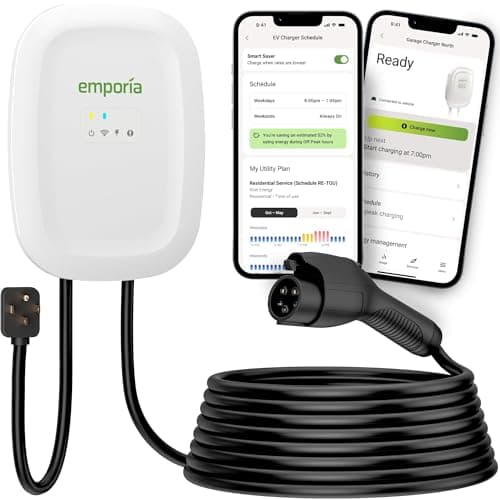
Most people who want the smart features too
Emporia Level 2 (48A)
The smart charger that does not charge a smart-charger premium — 48-amp capability and real energy monitoring for the price of a dumb one.
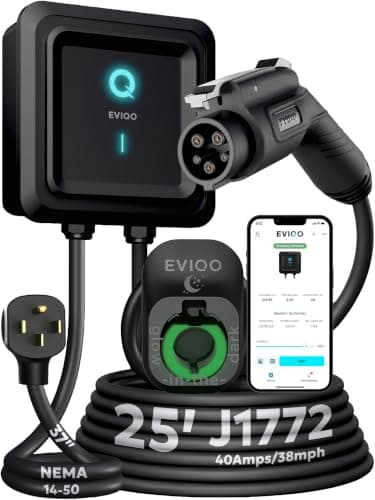
Budget-conscious buyers who still want smart features
EVIQO Level 2 (40A)
A weatherproof, UL-and-ETL-listed smart charger that regularly sits at the bottom of the price band — a lot of charger for the money.
#ad · As an Amazon Associate we earn from qualifying purchases.
Questions
Frequently asked
Should I charge my EV to 100% every day?
Is it bad to charge an EV to 100% before a road trip?
How do I limit my EV charge to 80%?
Does charging to 100% hurt an LFP battery?
Keep reading
Related
Receipts
Sources
- US DOE / fueleconomy.gov — EV charging basics
- US DOE Alternative Fuels Data Center — charging at home
We do not run a testing lab, and we do not pretend to. Where a measured number came from someone else's lab, we name them and link them. Where we could not verify something, we say so on the page rather than quietly leaving it out. Read our full method.