HUB 05 · Guides & Buying Advice
What Is a CT Clamp on an EV Charger?
It is the component that turns a charger from something that reports its own usage into something that can respond to your whole house — and the reason load management needs an electrician.
We earn a commission when you buy through our Amazon links, at no extra cost to you. It never affects our rankings, and we say so when the cheaper product is the better buy. How this works.
A CT clamp — a current transformer clamp — is a sensor that snaps around an electrical conductor and measures the current flowing through it without making electrical contact. On an EV charging setup it goes around your main service conductors inside the panel, and it is what lets the charger know what the rest of your house is drawing. That is the whole basis of load management: without a CT clamp a charger can only report its own consumption, and a charger that cannot see the panel cannot protect it. If a charger advertises dynamic load management, it ships CT clamps; if it does not ship CT clamps, it is not doing load management, whatever the listing says.
This matters commercially because CT clamps are the dividing line between two tiers of "smart" charger that look similar on a product page and solve completely different problems.
How it works, in one paragraph
Current flowing through a wire creates a magnetic field around it. A current transformer is a coil wound around a split ferrite core; clamp that core around the wire and the field induces a small, proportional current in the coil. Measure that and you know the current in the conductor — with no connection to it, no break in the circuit, and no exposure to the full service current. That non-contact property is exactly why CTs are the standard way to meter a live service: you are reading a magnetic field, not tapping a 200-amp conductor.
Two consequences follow, and both show up in product listings:
- CTs are directional and need correct orientation. Most have an arrow printed on the housing that must face the load. Fitted backwards, the reading inverts — which is why a freshly installed energy monitor sometimes reports the house generating power it is actually consuming.
- They have a rated range. A 200-amp CT on a 200-amp service is correct; a CT rated far above your service loses resolution at the low end, which matters when the system is trying to notice a 2-amp change.
What the clamp buys you on an EV charger
Three distinct capabilities, in increasing order of value:
- Whole-home energy monitoring. You see the house, not just the car. That is how you find out the charger is the third-largest load in your home rather than the first.
- Solar and export visibility. CTs on the mains see power flowing in both directions, so a system with them can tell generation from consumption — the basis for charging on surplus. See best EV chargers for a solar home.
- Dynamic load management. The capability that can replace a service upgrade. The charger reads total service draw through the CTs and reduces its own current when the house approaches the service limit. Emporia's PowerSmart is the example in our registry: the Pro ships with a Vue energy monitor and two 200-amp mains CT sensors, and the charger throttles against what they read.
Why this is the feature that changes the code answer. NEC 625.42(A) allows the maximum load on a service to be the maximum an energy management system under Article 750.30 permits, and the 2023 NEC's 220.70 lets the service calculation use that setpoint instead of the charger's nameplate. But a system can only hold a setpoint it can measure — so the CT clamps are not a convenience feature. They are the mechanism the code provision rests on. Our load-management roundup ranks the products.
Installation: this is not a DIY accessory
CT clamps for service monitoring go inside the electrical panel, around the main conductors, which are live upstream of every breaker you could switch off. There is no homeowner version of this job. Practical implications:
- Schedule it with the charger install. The electrician is already in the panel pulling your charger circuit. Fitting the CTs then costs a fraction of a separate visit.
- Panel space matters. Older or crowded panels sometimes have no room to route CT leads cleanly. Ask during the site visit, not after the hardware arrives.
- The monitor needs power and a signal path. A panel-mounted monitor needs its own supply and usually Wi-Fi, and electrical panels are frequently in exactly the part of the house with the worst signal. See charger Wi-Fi connection problems — a load-management system that cannot reach the network is a load-management system that is not working.
"Wireless CT clamp" — what that actually means
Nothing about the sensing is wireless. The CT still clamps a conductor and still has leads; what is wireless is the link between the monitorand the charger or the network. It is a real convenience — no data cable from the panel to the charger — and it is also a dependency: the throttling only works while that link is up. Ask what happens when it is not. A compliant energy management system must cease current flow on failure under NEC 750.30(C)(2), which is the behaviour you want and should confirm.
The hardware that uses them
Published specs on the registry products that depend on CT sensing, plus the circuit-sharing alternative that needs no sensors at all, with live prices.
| Product | Best for | Published mechanism / specs | Price |
|---|---|---|---|
| Emporia Pro (48A, PowerSmart) | A 100-amp service you would rather not upgrade | Up to 48A hardwired · J1772 · PowerSmart + Vue monitor · UL · ENERGY STAR · NEMA 4 | $599.00 |
| Emporia Pro NACS (48A, PowerSmart) | Homes with a tight electrical panel | 48A / 11.5kW · NACS (J3400) · PowerSmart load mgmt · 25ft cable | Not verified today |
| Splitvolt Splitter Switch (14-30/14-50) | A full panel with a dryer outlet in it | Shares a 30A dryer circuit · 24A max for charging · 14-30 in · dryer + EV out · cETLus certified | $410.00 |
#ad Prices read live from the Amazon Product API as of October 16, 2026, and they move. Specs are the manufacturer's published claims from the live listing — we have not bench-measured them. Where we have no verified price we print none rather than a number that has gone stale.
What to look for in a CT-based charging system
CTs rated for your service, included in the box. Two mains sensors sized for a 200-amp service is the normal home configuration. A charger that claims load management but sells the sensors separately is one where the real cost is higher than the listing price.
Documented failure behaviour. Ask what the charger does when it loses the monitor. "Keeps charging at full rate" is the wrong answer and is not what a compliant EMS does.
A setpoint you can see and set. The whole value is that the system holds a number your inspector approved. If you cannot read the configured setpoint in the app, you cannot demonstrate compliance and you cannot verify it later.
An electrician who has fitted one before. CT orientation, lead routing and monitor powering are all simple and all easy to get subtly wrong. Ask the question when you get the quote.
Whether you need it at all. If your panel has room for the circuit you want, CT-based load management solves a problem you do not have, and the plain Emporia Level 2charges at the same rate for less. Run the load calculation first — the 100-amp panel roundup is the page for that.
The gear
Recommended gear for this guide
The products this guide refers to, with prices pulled live from Amazon and dated on each card.
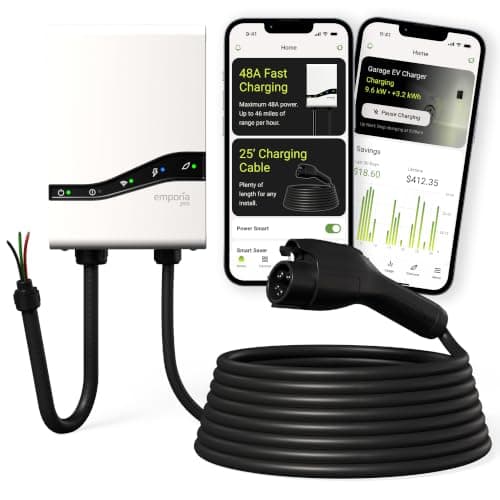
A 100-amp service you would rather not upgrade
Emporia Pro (48A, PowerSmart)
The one charger that changes the electrical answer rather than working around it — it watches the whole panel and backs off instead of tripping the main.
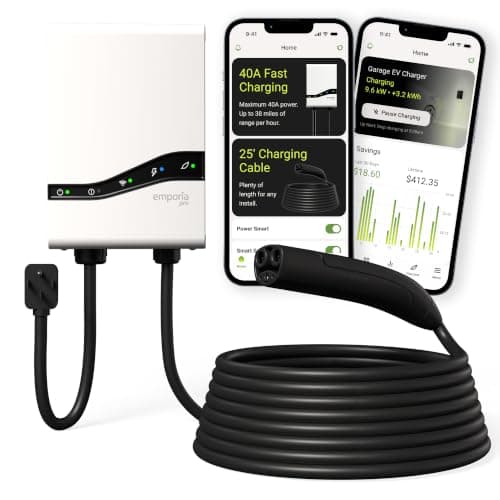
Homes with a tight electrical panel
Emporia Pro NACS (48A, PowerSmart)
The one to buy when the panel, not the budget, is the constraint — PowerSmart load management lets it back off instead of forcing a service upgrade.
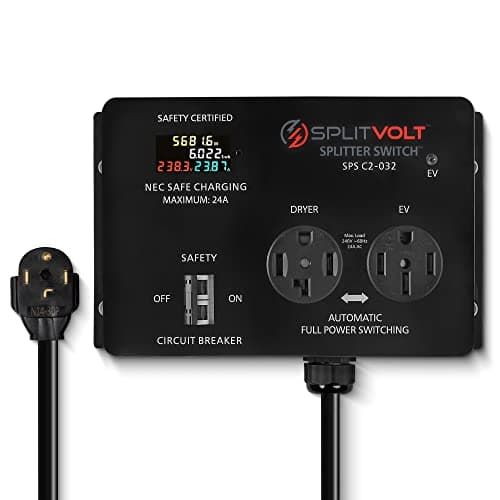
A full panel with a dryer outlet in it
Splitvolt Splitter Switch (14-30/14-50)
Shares the dryer circuit you already have instead of adding one — the only pick here that needs no electrician and no spare breaker space.
#ad · As an Amazon Associate we earn from qualifying purchases.
Questions
Frequently asked
Does every smart EV charger have a CT clamp?
Can I install a CT clamp myself?
What happens if the CT clamp is fitted backwards?
Is a CT clamp the same thing as a smart meter?
Keep reading
Related
- Best Chargers With Load ManagementThe products that ship CT clamps, ranked by what each one fixes.
- Best Chargers for a 100-Amp PanelWhether you need load management at all, decided by your service size.
- Emporia Pro NACS vs Emporia NACSWhat the CT-based PowerSmart premium does and does not buy.
- Charger Wi-Fi Connection ProblemsWhy a panel-mounted monitor is the hardest thing in the house to keep online.
- Best EV Chargers for a Solar HomeThe other job panel-wide current sensing does.
Receipts
Sources
- Emporia — What is load management? (Vue monitor and mains CT sensors)
- ExpertCE — How 2023 NEC changes affect EVSE load calculations and adjustable settings
- EC&M — NEC Article 625, Electric Vehicle Charging Systems
We do not run a testing lab, and we do not pretend to. Where a measured number came from someone else's lab, we name them and link them. Where we could not verify something, we say so on the page rather than quietly leaving it out. Read our full method.