HUB 04 · Cable Management & Accessories
Do I Need a GFCI Breaker for EV Charging?
It depends on plug-in vs hardwired — and it's the single biggest cause of an EV charger that keeps tripping. Here's the honest breakdown.
We earn a commission when you buy through our Amazon links, at no extra cost to you. It never affects our rankings, and we say so when the cheaper product is the better buy. How this works.
Whether you need a GFCI breaker depends on how the charger connects. A plug-in charger on a NEMA 14-50 outlet generally does require GFCI protection under recent electrical code; a hardwired charger generally does not, because the unit provides its own ground-fault protection. This single distinction explains most "my charger keeps tripping" complaints. Codes and enforcement vary — your licensed electrician and local inspector have the final say.
This is genuinely confusing because two different kinds of ground-fault protection are involved, and the rules changed across recent code cycles. Here is the honest picture — not electrical advice, but enough to have an informed conversation with your electrician.
Plug-in (receptacle) chargers: usually yes
Under the 2020 National Electrical Code, a receptacle installed outdoors on a dwelling for a 50-amp or smaller circuit must have GFCI protection (section 210.8(F)); the 2023 code expanded that to include many garages and accessory buildings. Because a plug-in EV charger uses a receptacle — typically a NEMA 14-50 — a GFCI breaker is commonly required for it. Your electrician and local inspector determine what applies to your specific install.
Hardwired chargers: often no
A hardwired charger is not a receptacle, so the receptacle GFCI rule generally does not apply, and EV charging equipment already includes its own internal ground-fault protection (a CCID that trips on leakage). That is one reason many people prefer hardwiring: it usually avoids a separate GFCI breaker and the nuisance tripping that can come with it. Some manufacturers or local rules may still call for one, so confirm.
Why GFCI + plug-in causes nuisance tripping
Here is the practical catch. The charger's built-in protection (a CCID, tripping around 20 mA) and a GFCI breaker (tripping at 4–6 mA) are two separate devices watching the same circuit. Stack them and the sensitive GFCI breaker can trip on harmless transients — especially outdoors or in damp conditions — even though nothing is wrong. That is the classic breaker-tripping scenario. It does not mean the GFCI is pointless; it means the install details matter.
How to avoid trouble
Use a proper GFCI breaker rated for the circuit (not a standard breaker where code requires GFCI), install a quality industrial-grade receptacle so a poor connection is not the trigger, keep the outdoor outlet weatherproof (see our outdoor charger setup guide), and if nuisance trips persist, discuss hardwiringwith your electrician as the cleaner long-term fix. Above all, do not defeat ground-fault protection to stop the tripping — that removes a real safety layer.
The gear
Recommended gear for this guide
The products this guide refers to, with prices pulled live from Amazon and dated on each card.
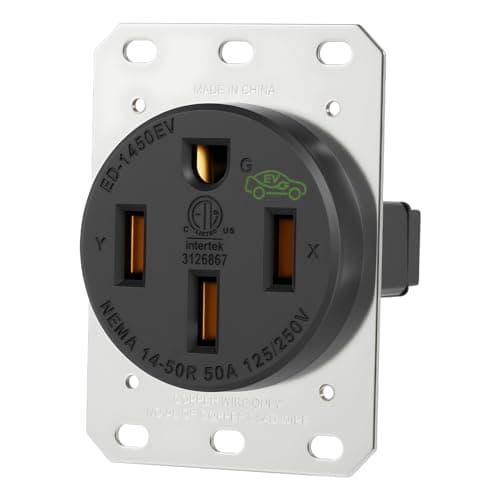
The outlet a plug-in charger needs
Industrial NEMA 14-50 Outlet
The receptacle a plug-in charger actually plugs into — buy the industrial-grade, listed version, because the cheap ones are the part that fails.
#ad · As an Amazon Associate we earn from qualifying purchases.
Questions
Frequently asked
Do I need a GFCI breaker for a plug-in EV charger?
Does a hardwired EV charger need a GFCI breaker?
Why does my EV charger trip the GFCI breaker?
Can I just use a regular breaker to avoid nuisance tripping?
Keep reading
Related
- Charger Tripping the BreakerThe nuisance-trip problem in depth.
- NEMA 14-50 OutletsThe quality receptacle a plug-in charger needs.
- Outdoor Charger SetupWeatherproofing that prevents damp-related trips.
- Installation CostWhere the breaker and GFCI choice fits the budget.
- Wire Size & BreakerSizing the circuit correctly.
Receipts
Sources
- Qmerit — NEMA 14-50, hardwired and GFCI code requirements
- US DOE / fueleconomy.gov — EV charging basics
We do not run a testing lab, and we do not pretend to. Where a measured number came from someone else's lab, we name them and link them. Where we could not verify something, we say so on the page rather than quietly leaving it out. Read our full method.