HUB 05 · Guides & Buying Advice
Charging an EV in a Parking Garage
Apartment and condo parking is the hardest place to charge — here are the realistic options, from shared stations to a portable on a standard outlet.
We earn a commission when you buy through our Amazon links, at no extra cost to you. It never affects our rankings, and we say so when the cheaper product is the better buy. How this works.
A shared parking garage is the toughest place to charge an EV — but it is rarely hopeless. The realistic options are a shared building charger, a dedicated outlet you arrange with the building, a portable charger on a standard outlet where one exists, or leaning on public charging nearby. Which works depends on your building and your daily mileage.
The mistake is assuming you need a fast wall charger in your own space. Most apartment dwellers get by on far less, because even slow charging over many hours adds up when the car sits parked all night.
Start with what the building already has
Ask management whether there are shared EV chargers, a waitlist for them, or any existing 120V outlets near parking. Shared Level 2 stations are increasingly common in newer garages; an ordinary outlet you are permitted to use turns an overnight into a usable Level 1 charge. Our apartment charging guide and condo and HOA guide cover the conversation to have with a landlord or board.
Use a portable where an outlet exists
If there is a standard 120V outlet you may use, a Level 1/Level 2 portable chargerplugged in overnight quietly adds range while you sleep — a Level 1 unit is the compact, backup-friendly option. Never run a portable off an extension cord or a shared outlet without permission; our extension-cord guide is blunt about why. If a 240V outlet is ever an option, the range-per-hour jumps dramatically.
Lean on public and workplace charging
Many garage dwellers treat home as a top-up and do the real charging elsewhere: a nearby public station, workplace charging, or free destination chargers. It takes a little planning but works, especially for lower-mileage drivers. The no-driveway guide pulls the whole playbook together.
Know your right to charge
A growing number of states have "right to charge" laws that limit how much a landlord or HOA can obstruct a reasonable charging request at your own cost. It is not a guarantee of a charger, but it is leverage worth knowing — the condo and HOA guide explains how to use it.
The gear
Recommended gear for this guide
The products this guide refers to, with prices pulled live from Amazon and dated on each card.
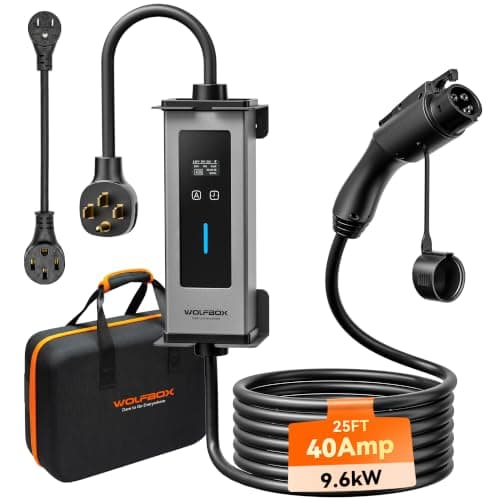
One charger for home and travel
WOLFBOX Portable (Level 1/2)
A dual-level portable that charges on both 120V and 240V, ships with both plug adapters, and adds a delay timer for off-peak charging — a genuine take-anywhere charger.
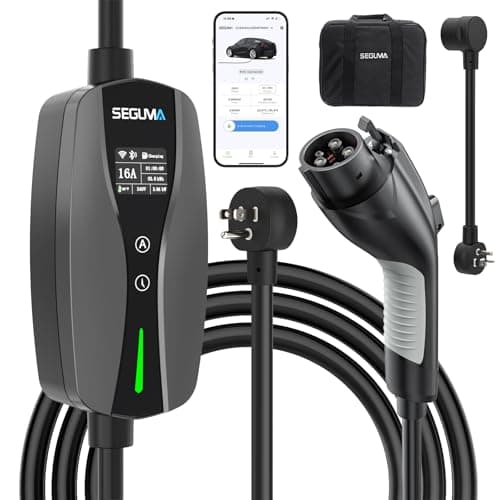
A 120V backup that is not dumb
SEGUMA Wi-Fi Level 1/2 (12A/16A)
A 120-volt cord that plugs into any household outlet and lives in the trunk — with app scheduling, a live display, and 16 amps on 240 volts if you have the outlet.
#ad · As an Amazon Associate we earn from qualifying purchases.
Questions
Frequently asked
Can I charge an EV in an apartment parking garage?
Is slow charging in a garage enough?
Can my landlord stop me from charging?
Keep reading
Related
- Charging an EV in an ApartmentThe full renter's playbook.
- EV Charging for Condos and HOAsWorking with a board, and right-to-charge.
- Living With Only Level 1 ChargingWhy a standard outlet is often enough.
- Best EV Charger for RentersPortable-first picks for shared parking.
- EV Charging Without a DrivewayThe whole no-home-charger strategy.
Receipts
Sources
We do not run a testing lab, and we do not pretend to. Where a measured number came from someone else's lab, we name them and link them. Where we could not verify something, we say so on the page rather than quietly leaving it out. Read our full method.