HUB 05 · Guides & Buying Advice
EV Charging on a Road Trip: How It Actually Works
Long trips run on DC fast chargers and a bit of planning — plus two cheap items in the trunk that turn any outlet into a backup.
We earn a commission when you buy through our Amazon links, at no extra cost to you. It never affects our rankings, and we say so when the cheaper product is the better buy. How this works.
Road-tripping an EV runs on DC fast chargers— the public stations that add 100 to 200+ miles in about half an hour — strung along your route with a little planning. Home-style Level 2 charging is the backup, not the main event, on a long trip. Pack a portable charger and, if your car uses a Tesla-style port, the right adapter, and almost any outlet or station becomes a fallback.
The daily EV experience — plug in at home, wake up full — does not describe a road trip, and that surprises new owners. On a long drive you are back to visiting stations, except the stations are chargers and the fill takes longer than gas. It is very manageable once you understand the two kinds of charging you will actually use and do a few minutes of planning. Here is the whole picture.
DC fast charging is the road-trip tool
On the highway, you use DC fast charging(also called Level 3): public stations that bypass your car's onboard charger and feed the battery directly, adding roughly 100 to 200+ miles in about 30 minutes. This is the charging you plan a trip around — not the Level 2 you use at home. The practical rhythm is to drive, stop for 20 to 40 minutes to fast-charge (often while you eat), and go, rather than charging to 100% each time; the last 20% is the slowest and usually not worth the wait mid-trip. For the full explainer on the levels, see types of EV chargers.
Plan the route around chargers
The one habit that makes EV road trips painless is planning your stops before you leave. Most EVs and several apps will route you through compatible fast chargers automatically, factoring in your battery and the terrain. A few things worth checking:
- Connector compatibility.Make sure the stations on your route match your car's port, or that you carry the adapter that bridges them (below). The NACS vs J1772 guide explains the standards.
- A backup at each stop. Chargers can be busy or out of service, so note a second option near each planned stop rather than relying on a single station.
- Buffer for the weather.Cold weather slows charging and cuts range, so pad your plan in winter — see EV charging in cold weather.
What to keep in the trunk
Two inexpensive items turn a nervous trip into a relaxed one, because they give you a fallback when the fast chargers are not cooperating:
- A portable Level 2 charger.If you stop somewhere with a 240-volt outlet — a host's garage, a campground, an RV hookup — a portable turns it into a proper overnight charge at ~25 miles of range per hour. A dual-level unit that also does 120 volts covers a standard outlet in a pinch. The ranked field is our portable charger roundup.
- The right adapter, if your car is NACS. A Tesla or NACS-port car with a J1772-to-NACS adaptercan use the enormous installed base of J1772 Level 2 stations, not just NACS ones — a big expansion of your options on the road. Our adapters hub covers the directions and listings.
One safety line: never run a portable charger through a household extension cord. EV charging is a continuous high-current load; plug the charger directly into a properly rated outlet, and if a Level 1 (120-volt) trickle is all that is available overnight, accept the slow rate rather than improvising.
Set expectations on time and cost
Two honest truths keep a first EV road trip from frustrating you. First, fast charging is slower than a gas fill and that is fine— build the stops into the schedule as meal and stretch breaks and they cost you little real time. Second, public fast charging costs more per mile than home charging, sometimes a lot more, and some networks bill by the minute; it is convenience pricing for speed, and it is why the running-cost math in our cost to charge guideassumes home charging. A trip will cost more per mile than your driveway does — still typically reasonable, just not the rock-bottom home rate.
Before you leave: a short checklist
- Plan charging stops with a buffer, and note a backup at each.
- Start the trip with a full battery from home.
- Pack the portable charger and, if NACS, the J1772 adapter.
- Charge to ~80% at fast stops mid-trip; save the slow top-up for overnight.
- In winter, pad time and range for the cold.
The gear
Recommended gear for this guide
The products this guide refers to, with prices pulled live from Amazon and dated on each card.
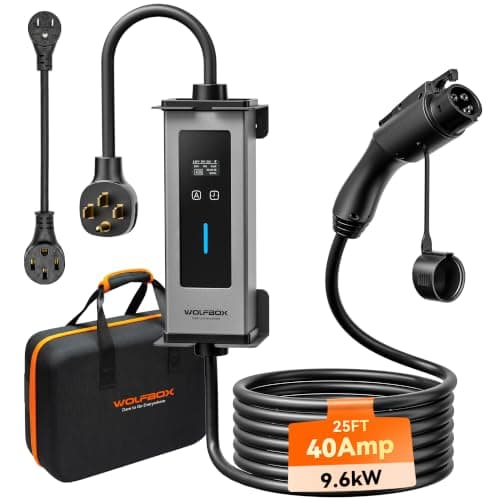
One charger for home and travel
WOLFBOX Portable (Level 1/2)
A dual-level portable that charges on both 120V and 240V, ships with both plug adapters, and adds a delay timer for off-peak charging — a genuine take-anywhere charger.
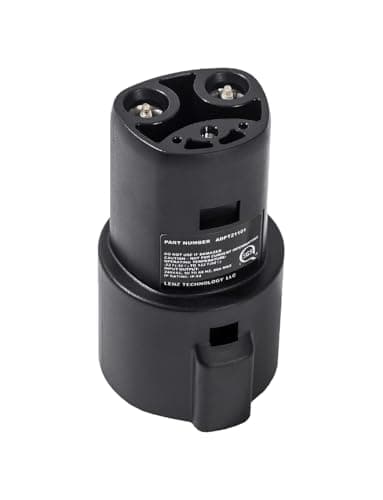
A Tesla / NACS car using J1772 chargers
LENZ J1772 → NACS Adapter
A UL-2251-certified J1772-to-NACS adapter — the one a Tesla or a 2026+ NACS-port EV needs to use the huge installed base of J1772 chargers.
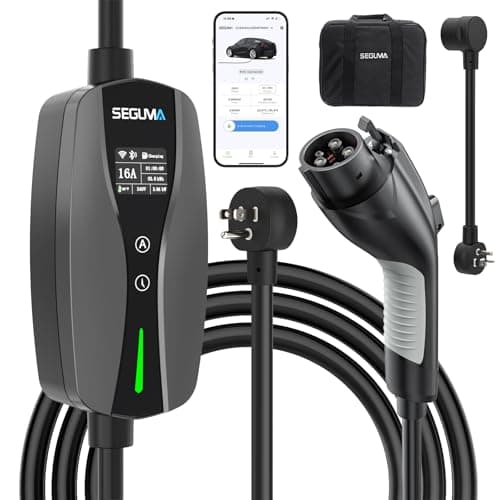
A 120V backup that is not dumb
SEGUMA Wi-Fi Level 1/2 (12A/16A)
A 120-volt cord that plugs into any household outlet and lives in the trunk — with app scheduling, a live display, and 16 amps on 240 volts if you have the outlet.
#ad · As an Amazon Associate we earn from qualifying purchases.
Questions
Frequently asked
How do you charge an EV on a long road trip?
Do I need a portable charger for a road trip?
Is it more expensive to charge on a road trip than at home?
Can any EV use any fast charger on a road trip?
Keep reading
Related
- Best Portable EV ChargersThe trunk backup that charges from any 240V outlet.
- EV Charging AdaptersBridge your connector to more stations on the road.
- Types of EV ChargersWhy DC fast charging is the road-trip tool.
- EV Charging in Cold WeatherPad your plan when it is cold.
- How to Use a Public ChargerThe step-by-step for your first public session.
- EV Charging Networks ExplainedWhich app you need for the road ahead.
- DC Fast Charging ExplainedHow fast charging works and the 80% rule.
- EV Charging EtiquetteThe courtesies that keep road-trip chargers civil.
- Supercharger Access for Non-TeslasWhether you can plug into the biggest network.
- How to Pay for EV ChargingEvery payment method, and why to carry a backup.
- Best EV Charging AppsPlugShare and ABRP for finding and planning.
- DC Fast Charging CostThe road-trip charging math.
- How to Beat Range AnxietyThe habits that make long trips routine.
Receipts
Sources
- US DOE / fueleconomy.gov — EV charging basics
- US DOE Alternative Fuels Data Center — EV charging infrastructure
We do not run a testing lab, and we do not pretend to. Where a measured number came from someone else's lab, we name them and link them. Where we could not verify something, we say so on the page rather than quietly leaving it out. Read our full method.