HUB 05 · Guides & Buying Advice
Charging a Tesla Cybertruck at Home
The Cybertruck charges like other Teslas at home — a native NACS plug, up to 11.5 kW on AC, and a simple adapter to use the huge installed base of J1772 chargers.
We earn a commission when you buy through our Amazon links, at no extra cost to you. It never affects our rankings, and we say so when the cheaper product is the better buy. How this works.
The Cybertruck charges at home exactly like other modern Teslas: a native NACS plug, up to 11.5 kW on a 240-volt Level 2 circuit, and a small J1772-to-NACS adapterwhen you want to use the enormous installed base of J1772 chargers. The battery is big, so a full 48-amp charger is worth it — but nothing about the process is exotic.
Because the Cybertruck ships with the connector Tesla now calls NACS (the SAE J3400 standard), a Tesla-style home charger plugs straight in with no adapter. Everything below assumes the US version; if you are cross-shopping the plug itself, our NACS vs J1772 explainer lays out the two standards.
What connector it uses
The Cybertruck's inlet is NACS for both home (AC) and DC fast charging. That means a NACS home charger or the Tesla / NACS wall unit connects natively. To charge on one of the millions of existing J1772 Level 2 chargers, you add a J1772-to-NACS adapter— Tesla includes one, and third-party UL-listed options exist. Confirm the adapter carries a real safety listing before you trust it with 40-plus amps; our adapter safety guide explains what to check.
How fast it charges at home
The onboard AC charger tops out around 11.5 kW, which is roughly 40–44 miles of range per hour on a 48-amp circuit — enough to refill even the Cybertruck's large pack overnight. Installing anything faster than a 48-amp unit does nothing, because the car itself is the limit on AC. Work out what your panel can actually supply with our wire size and breaker guide, then check the running cost with the cost-to-charge calculator.
The best home setup
Two clean paths: a native NACS wall unit (no adapter, tidiest), or a standard J1772 charger plus a good adapter if you want the wider hardware choice. Either way, budget for a proper NEMA 14-50 outlet if you go plug-in, since a cheap receptacle is the part that overheats under a continuous load. If you rent or move often, a portable charger that travels with you is a smart alternative.
On the road
DC fast charging is where the Cybertruck shines: it fast-charges on Tesla Superchargers natively and, with the right DC adapter, on CCS networks too — see DC fast charging explained and our road-trip charging guide. For everyday driving, though, home charging covers almost everything.
The gear
Recommended gear for this guide
The products this guide refers to, with prices pulled live from Amazon and dated on each card.
- Tesla
Mixed Tesla + non-Tesla households
Tesla Universal Wall Connector
The only wall unit with both a built-in NACS plug and a J1772 adapter — future-proof if your household mixes a Tesla and a non-Tesla EV.
Most NACS-port households
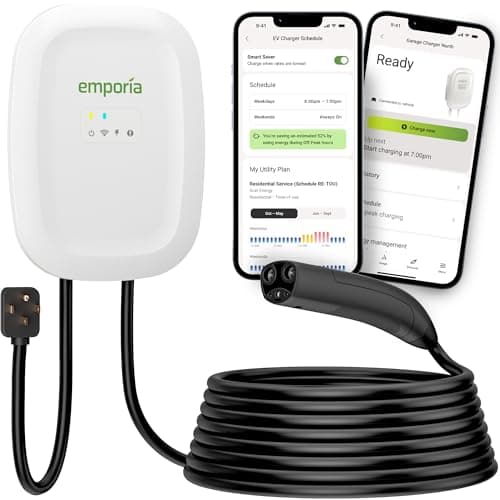
Emporia Level 2 NACS (48A)
The charger we already rate best for most homes, with a Tesla-style plug on the end — UL and Energy Star listed, and no adapter in the loop.
A Tesla / NACS car using J1772 chargers
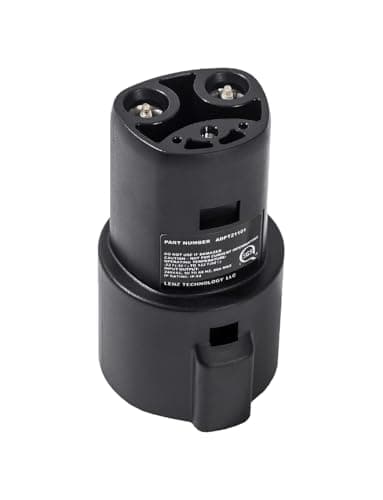
LENZ J1772 → NACS Adapter
A UL-2251-certified J1772-to-NACS adapter — the one a Tesla or a 2026+ NACS-port EV needs to use the huge installed base of J1772 chargers.
#ad · As an Amazon Associate we earn from qualifying purchases.
Questions
Frequently asked
Do I need an adapter to charge a Cybertruck at home?
How fast does a Cybertruck charge on Level 2?
Can I use a normal EV charger, or does it have to be a Tesla one?
Keep reading
Related
- Charging a Tesla at HomeThe wider Tesla home-charging playbook.
- Best NACS Home ChargersNative-plug units, no adapter needed.
- Best J1772-to-Tesla AdaptersFor using J1772 chargers with a NACS car.
- Portable Charger for a TeslaA travel-and-move option that comes with you.
- DC Fast Charging ExplainedHow the Supercharger side works.
Receipts
Sources
We do not run a testing lab, and we do not pretend to. Where a measured number came from someone else's lab, we name them and link them. Where we could not verify something, we say so on the page rather than quietly leaving it out. Read our full method.