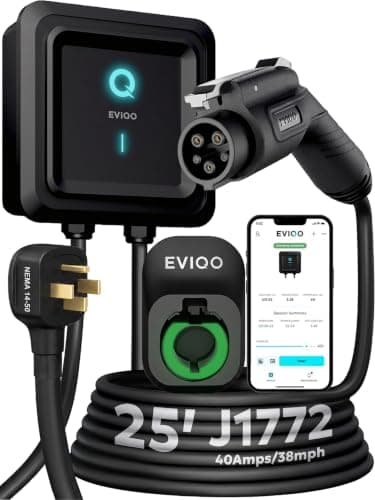
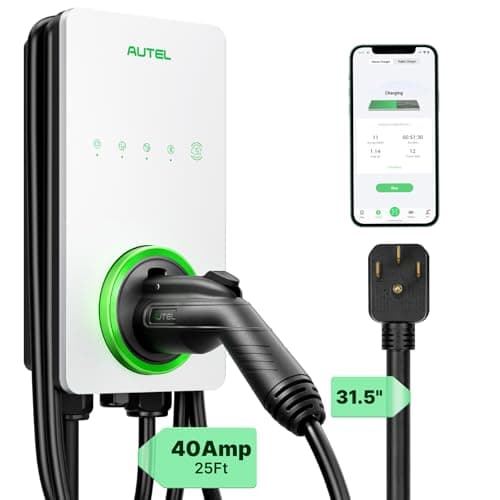
If the charger will spend January outdoors, the widest published operating range in this group belongs to the Autel MaxiCharger— Autel states −40°F to 131°F and a NEMA 4 enclosure, with a 25-foot cable and a holster in the box. For most cold-climate buyers the better value is the EVIQO Level 2, which publishes −22°F to 122°F, an IP66/NEMA 4 enclosure and a deliberately flexible 25-foot cable, for considerably less money.
"Weatherproof" is a marketing word. The specification that tells you whether a charger survives a Minnesota winter is the operating temperature range in the manual, and the one that tells you whether it survives the melt is the enclosure type rating under UL 50E. Both are published figures, both are easy to check, and a surprising number of Amazon listings print neither. This page ranks the chargers that do.
This is a hardware page. If what you want is the driving and charging side of winter — why range drops, why DC fast charging is slow when the pack is cold, what preconditioning does — that is EV charging in cold weather, and it is the page to read first. Come back here when you are choosing the box on the wall.
The short version
- Autel MaxiCharger (40A) — best published temperature range. −40°F to 131°F and NEMA 4, per Autel's own specification, with a 25-foot J1772 cable and a separate holster included. Full review.
- EVIQO Level 2 (40A) — best value in the cold. −22°F to 122°F, IP66/NEMA 4, UL and ETL listed, and a cable EVIQO specifically sells on its flexibility — the thing you notice most at 10°F. Full review.
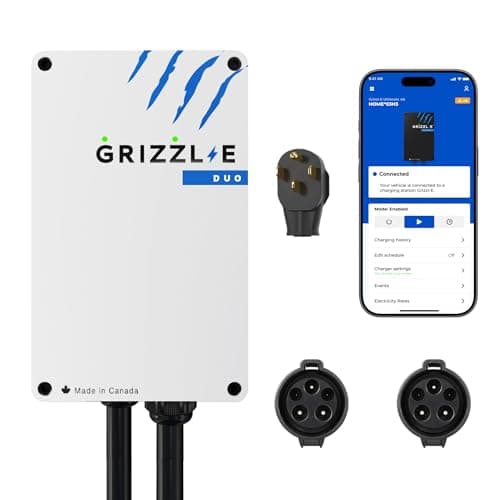
- Grizzl-E Duo Connect (dual 40A) — best built for abuse. A cast-aluminum NEMA 4 enclosure rated −22°F to 122°F, with two cables for two cars in one cold garage. Grizzl-E is also candid that its cable is stiff in the cold. Full review.
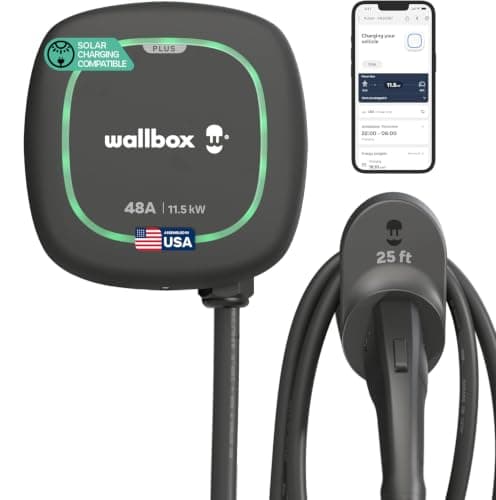
- Wallbox Pulsar Plus (48A) — best fast cold-climate unit. 48 amps, NEMA Type 4 per UL 50E, and −22°F at the bottom — but note that the North American datasheet puts the topof the range at only 104°F, which is the trade-off. Full review.
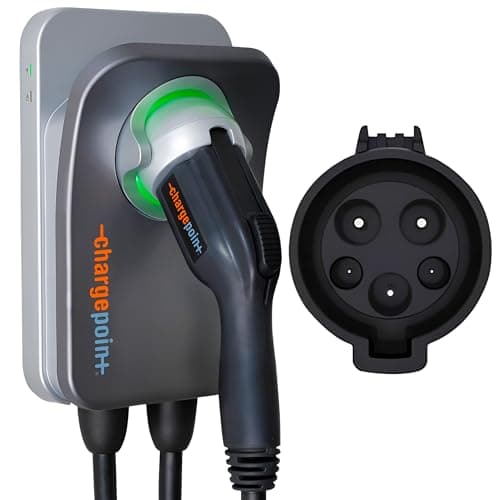
- ChargePoint Home Flex — best scheduling for a cold morning. −22°F to 122°F, adjustable to 50 amps, and the best app here for finishing a charge just before you leave. Its enclosure is Type 3R, not Type 4 — the weakest weather rating in this group. Full review.
What actually breaks in the cold
Not usually the electronics. In our reading of manufacturer documentation and owner reports, winter failures in home charging cluster into four places, and only one of them is the charger's internals:
- The cable goes rigid. This is the complaint that dominates. A charging cable is a thick bundle of copper in a polymer jacket, and below about 10°F a cheap jacket stiffens into something closer to plumbing than cable. It still conducts perfectly — it simply will not coil, will not reach around the car, and fights you every evening. It is also how cables get damaged: a stiff cable forced into a tight bend is a cable with a cracked jacket by March.
- Water gets in, then freezes. Snow melts against a warm enclosure and runs into seams; the same water freezes overnight and jacks them apart. This is what the enclosure rating is for, and it is why Type 4 (hose-directed water) is a materially better bet outdoors than Type 3R (falling rain). It is also why a connector left on the ground is a bad habit — see why a charger will not unplug, which is very often ice in the latch.
- The plug-in connection works loose. A NEMA 14-50 receptacle on an outdoor wall goes through a daily thermal cycle in winter. Contacts that are merely adequate start to heat, and a hot receptacle is the most common precursor to a melted plug. If the install is outdoors and cold, hardwiring removes the failure point altogether — the hardwired roundup covers that route, and why a breaker gets hot to touch covers the warning signs.
- The car charges more slowly, and the charger gets blamed. A cold lithium pack limits how much current it will accept, and on Level 2 the effect is usually small but real. If your charge rate drops in winter, the battery is the likely cause, not the EVSE. We work through that in why charging amperage keeps dropping.
The cheapest cold-weather upgrade is not a charger. It is a wall hook and a holster, so the cable hangs in a wide loop instead of lying in the slush and the connector is never face-up collecting water. That is a small spend against any charger here — see the best EV charger cable organizers and whether you need a holster.
Reading the two numbers that matter
Operating temperature range. This is the ambient range within which the manufacturer warrants the unit to work. Below the floor, behavior is undefined — a charger may refuse to start, may derate, or may simply be out of specification. Of the chargers here, Autel publishes the widest window at −40°F to 131°F; the EVIQO, Grizzl-E Duo and ChargePoint Home Flex all publish −22°F to 122°F (−30°C to 50°C); Wallbox's North American sheet gives −22°F to 104°F. Note what that last one implies: the Pulsar Plus is a cold-climate charger with a comparatively low heat ceiling, which is the opposite trade to the one most buyers expect.
Enclosure type rating. UL 50E Type 3R means protection against falling rain and sleet. Type 4 adds windblown dust and hose-directed water. For a unit mounted inside a garage the distinction is academic; for one on an exposed wall where a snowbank can drift against it and a plow can throw slush at it, Type 4 is the one to want. The Autel, EVIQO, Grizzl-E Duo and Wallbox picks publish Type 4 or IP66; the ChargePoint Home Flex publishes Type 3R per UL 50E, which is why it ranks last here despite an identical temperature range.
What is usually not published: the cable's own cold-bend rating. Almost nobody prints it. The practical proxies are the jacket material where it is stated, the cable's diameter, and whether the manufacturer markets flexibility at all — EVIQO does, Grizzl-E candidly does not. Where we have no published figure we say so rather than inventing one.
How the picks compare on paper
Manufacturer figures from the sources cited at the foot of this page, with the live price alongside. We have not put any of these in a freezer; these are published claims, and we treat them as claims.
| Charger | Best for | Published specs (manufacturer) | Price |
|---|
| Autel MaxiCharger (40A) | Feature-maximalists who want a tidy install | 40A / 9.6kW · J1772 · 25ft cable + holster · Wi-Fi + Bluetooth | $375.99 |
| EVIQO Level 2 (40A) | Budget-conscious buyers who still want smart features | 40A / 9.6kW · J1772 · 25ft cable · UL & ETL, IP66/NEMA 4 | $449.99 |
| Grizzl-E Duo Connect (dual 40A) | Two EVs on one circuit | Dual J1772 · Up to 40A shared · Two 25ft cables · NEMA 14-50 plug | $899.99 |
| Wallbox Pulsar Plus (48A) | A compact, fast, hardwired install | Hardwired 48A / 11.5kW · J1772 · 25ft cable · Energy Star + UL | $699.00 |
| ChargePoint Home Flex | Buyers who want the established brand and app | Adjustable to 50A · J1772 · NEMA 14-50 plug · Energy Star | $599.00 |
#ad Prices read live from the Amazon Product API as of October 16, 2026, and they move. Specs are the manufacturer's published claims from the live listing — we have not bench-measured them. Where we have no verified price we print none rather than a number that has gone stale.
Published operating limits, side by side
| Charger | Published operating temperature | Enclosure |
|---|
| Autel MaxiCharger (40A) | −40°F to 131°F (−40°C to 55°C) | NEMA 4 |
| EVIQO Level 2 (40A) | −22°F to 122°F | IP66 / NEMA 4 |
| Grizzl-E Duo Connect (dual 40A) | −22°F to 122°F (−30°C to 50°C) | NEMA 4, cast aluminum |
| Wallbox Pulsar Plus (48A) | −22°F to 104°F (North American datasheet) | NEMA Type 4 per UL 50E |
| ChargePoint Home Flex | −22°F to 122°F (−30°C to 50°C) | Type 3R per UL 50E |
Figures as published by each manufacturer in the documents linked under Sources. They are the manufacturers' claims, not our measurements — we do not operate a cold chamber.
What to look for in a cold-climate charger
A stated low-temperature limit, in the manual. Not "all-weather" on the box. If a listing will not tell you the number, assume the number is unflattering. Every pick on this page publishes one, which is most of why it is on the page.
Type 4 or IP66, if it mounts outdoors. Falling-rain protection is not the same as resisting slush thrown sideways at the enclosure. If the charger goes on an exposed wall, pay for the better rating; if it lives in a closed garage, spend the money on cable length instead.
The longest cable you can justify, with somewhere to hang it. Cold cable is short cable in practice, because the last few feet are the ones you fight for. Buying 25 feet instead of 18 gives you slack to work with when the jacket stiffens. Pair it with a hook so it hangs in a wide loop rather than being coiled tight — tight coils in a rigid jacket are how jackets crack.
Hardwired, if the install is outdoors. A hardwired charger has no 240-volt plug-and-socket interface to thermally cycle, corrode or work loose. Where a plug-in unit on an outdoor receptacle is the kind of install that eventually needs attention, a hardwired one usually is not. That is the single biggest reliability decision on this page and it costs nothing extra in hardware — see portable vs hardwired.
Scheduling that can finish, not just start. In winter the useful behavior is a charge that endsshortly before you leave, so the pack is warm and the car can precondition on wall power rather than on the battery. Chargers that only support "start at 11pm" cannot do that. Departure-time scheduling in the car is usually the better tool — battery preconditioning explains why.
Do not buy a heater. There is no consumer EVSE that warms your battery, and no charger that makes a cold pack accept more current. Anything marketed as improving cold-weather charging speedis either describing the car's preconditioning or overclaiming. The charger's job in winter is to keep working and stay flexible.
And if the charger is portable, bring it inside. A portable unit stored in a cold trunk is a stiff cable and a cold control box at the moment you need it. We cover the limits of that in can you leave a portable EV charger outside.