HUB 05 · Guides & Buying Advice
The EV Charger Tax Credit, as of 2026
The federal credit for home charging equipment ended on June 30, 2026. If your charger went in before that date you may still have a claim — and either way, the state and utility programs are now where the money is.
We earn a commission when you buy through our Amazon links, at no extra cost to you. It never affects our rankings, and we say so when the cheaper product is the better buy. How this works.
The federal EV charger tax credit is gone. Section 30C — the Alternative Fuel Vehicle Refueling Property Credit — applied to eligible property placed in service through June 30, 2026, and it has not been extended. If your charger was installed and in use on or before that date, and the install address sits in a qualifying census tract, you may still be able to claim 30% of the cost up to $1,000 per charging port on Form 8911 for that tax year. If your charger went in after June 30, 2026, there is no federal credit to claim, and any site telling you otherwise has not updated.
This is one of the few pages on this site about money rather than hardware, so everything below is stated against a citation and nothing is rounded for effect. It is also, bluntly, not tax advice: it is a plain-language summary of what the IRS publishes, and the person who should confirm it for your return is whoever prepares your return.
What changed, and when
Section 30C has been around since the 2005 Energy Policy Act. The Inflation Reduction Act extended it through the end of 2032 and attached a location test to it. Then the One Big Beautiful Bill Act (P.L. 119-21)moved the termination date forward — from December 31, 2032 to June 30, 2026. The IRS's own page now describes the credit as applying to "eligible property placed in service beginning January 1, 2023, through June 30, 2026."
The operative words are placed in service, not purchased. A charger bought in May 2026 and still in a box in July 2026 was not placed in service before the deadline. A charger bought earlier and energised in June was.
What the credit was worth while it lasted
- Individuals: 30% of the cost of the qualifying property, capped at $1,000 per charging port. Eligible cost generally includes the equipment and the installation labor, which for most home installs is the larger of the two numbers.
- Businesses and tax-exempt entities: 6% of the property cost, up to $100,000 per item, with a higher rate available where prevailing-wage and apprenticeship requirements were met.
- The location test:post-IRA, the property had to be installed in a low-income community census tract or a non-urban census tract. Property placed in service before January 1, 2025 is tested against 2015 census tract identifiers; property placed in service after that date against 2020 identifiers. You verify your address's GEOID against the appropriate appendix list — it is not a judgment call, it is a lookup.
- The form: Form 8911, filed with the return for the year the property was placed in service.
The part that surprised people even before it expired. The census-tract test disqualified a large share of suburban installs. Plenty of owners who assumed they had a $1,000 credit coming found their address outside both the low-income and the non-urban definitions. If you placed a charger in service before the cutoff and never checked the tract, that lookup is the first thing to do — it decides the whole question.
If your charger went in before June 30, 2026
You are filing for a prior or current tax year on property that was eligible when it was placed in service, which is normal practice. Keep: the dated invoice for the equipment, the electrician's itemised install invoice, the permit and inspection record, and your census-tract verification. The credit is non-refundable for individuals, so it offsets tax owed rather than generating a payment — which is why two households with identical chargers can get very different results from it.
If you are unsure whether the install date qualifies, the documents that settle it are the inspection sign-off and the first charging session, not the purchase receipt.
What is still available
The federal credit was never the biggest number for most people anyway. The programs that remain are local, and they are often more generous:
- Utility rebates. Many electric utilities offer a rebate on the charger, the install, or both — sometimes several hundred dollars — usually conditioned on enrolling in an off-peak charging program or installing a charger the utility can communicate with. This is the single most overlooked source of money in home charging, and it is specific to your utility, not your state.
- State programs. Several states run their own charger or EV incentives independent of the federal credit. The US Department of Energy's Alternative Fuels Data Center maintains the authoritative state-by-state list.
- Time-of-use rates. Not a rebate, but frequently worth more over the life of the car than any one-off credit. Moving charging into an off-peak window can cut the per-mile cost substantially — see how to save money charging an EV and cost to charge an EV at home.
Two practical notes on utility rebates. First, many require pre-approval — apply before the electrician starts, not after. Second, some require a charger that can be enrolled in a managed-charging program, which in practice means a networked unit rather than a dumb charger. Check the eligible-equipment list before you buy, because a $500 rebate changes which charger is cheapest.
How this changes what you should buy
With the federal credit gone, the install cost is no longer partly subsidised, which shifts the arithmetic in two concrete ways. The first: a plug-in install on an existing or new NEMA 14-50 outlet gets relatively more attractive versus hardwiring, because the labor saving is now entirely yours. The second: the gap between a budget charger and a premium one is no longer softened by a credit that covered 30% of either. Our installation cost guide has the full breakdown of where the money actually goes, and best budget EV chargers is the page for the cheaper end.
What to look for if a rebate is part of your budget
An eligible-equipment list, read first. Utility programs almost always publish one. Buying a charger that is not on it is the most expensive mistake in this process, and it is entirely avoidable. If your utility's program requires managed charging, you need a networked charger — the smart charger roundup is the place to start.
A UL or ETL listing, named on the listing page. Every rebate program we have seen requires a recognised safety listing, and it is the right requirement regardless of money. Our how to choose guide covers the certifications that count.
An itemised install invoice. Both the former federal credit and most utility rebates want equipment and labor separated. Ask the electrician for that split before they leave; reconstructing it later is painful.
A permit and an inspection. Rebate programs ask for them, insurers ask for them after an incident, and buyers ask for them when you sell the house. See do I need a permit for an EV charger.
Energy reporting, if you are chasing a time-of-use rate. You cannot verify you are charging off-peak without a record of when and how much. A charger that reports kWh by session pays for the feature here.
The gear
Recommended gear for this guide
The products this guide refers to, with prices pulled live from Amazon and dated on each card.
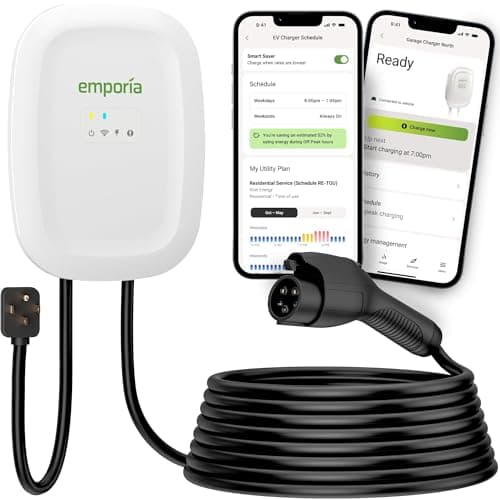
Most people who want the smart features too
Emporia Level 2 (48A)
The smart charger that does not charge a smart-charger premium — 48-amp capability and real energy monitoring for the price of a dumb one.
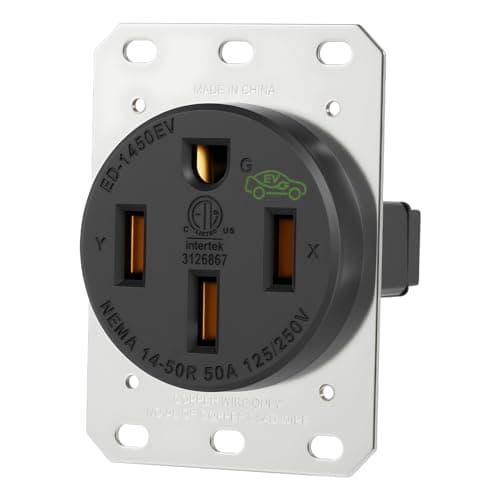
The outlet a plug-in charger needs
Industrial NEMA 14-50 Outlet
The receptacle a plug-in charger actually plugs into — buy the industrial-grade, listed version, because the cheap ones are the part that fails.
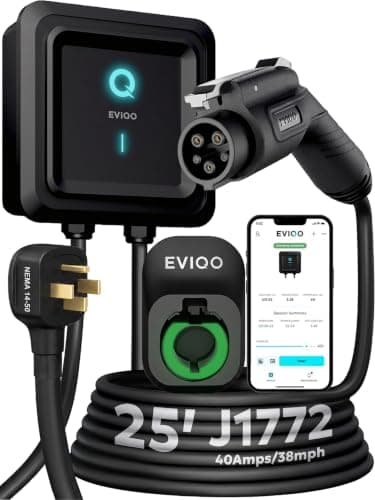
Budget-conscious buyers who still want smart features
EVIQO Level 2 (40A)
A weatherproof, UL-and-ETL-listed smart charger that regularly sits at the bottom of the price band — a lot of charger for the money.
#ad · As an Amazon Associate we earn from qualifying purchases.
Questions
Frequently asked
Is there still a federal tax credit for installing an EV charger in 2026?
How much was the 30C credit worth for a home charger?
Does the install labor count toward the credit, or only the charger?
Can I still get money back on a charger install?
Is this tax advice?
Keep reading
Related
- Level 2 Charger Installation CostWhere the money actually goes now that the credit does not cover 30% of it.
- How to Save Money Charging an EVThe tariff decisions worth more than any one-off credit.
- Do I Need a Permit?The paperwork every rebate program asks to see.
- Best Smart EV ChargersWhat to buy when a utility rebate requires managed charging.
- EV Charger Buying MistakesBuying before checking the rebate's equipment list is on the list.
Receipts
Sources
- IRS — Alternative Fuel Vehicle Refueling Property Credit for Individuals
- IRS — Instructions for Form 8911 (Rev. December 2025)
- Electrification Coalition — EV and charging tax credits after the One Big Beautiful Bill Act
- US DOE AFDC — Electricity laws and incentives by state
We do not run a testing lab, and we do not pretend to. Where a measured number came from someone else's lab, we name them and link them. Where we could not verify something, we say so on the page rather than quietly leaving it out. Read our full method.