HUB 05 · Guides & Buying Advice
EV Charging for a Plug-In Hybrid
A PHEV's battery is small enough that the free cord in the trunk often keeps up. Here's when Level 1 is genuinely enough, and when Level 2 is worth it.
We earn a commission when you buy through our Amazon links, at no extra cost to you. It never affects our rankings, and we say so when the cheaper product is the better buy. How this works.
If you drive a plug-in hybrid, you very likely do notneed a Level 2 charger. A PHEV's battery is small — often 8 to 20 kWh — so the free 120-volt Level 1 cord that came with the car can usually refill it overnight from a standard outlet. Level 2 is worth adding only if you want to top up quickly during the day, or your electric-only range is on the larger side and you drive it hard. For most PHEV owners, the cord in the trunk is enough.
Plug-in hybrid owners get pushed the same charging hardware as full-EV owners, and it is usually overkill. Because a PHEV runs on gas once the battery is empty, and because that battery is small, the charging math is genuinely different. Here is how to think about it without overspending.
Why Level 1 is usually enough for a PHEV
Level 1 charging — the 120-volt cord in a standard household outlet — adds roughly 3 to 5 miles of electric range per hour. That sounds slow, and for a full EV it is. But a PHEV's battery is small: an overnight Level 1 charge adds 40 to 50 miles of range, which is more than most PHEVs' total electric range in the first place. So you plug in when you get home, and the battery is full by morning — the exact experience Level 2 gives a full EV, achieved with the free cord. For a great many PHEV owners, that is the whole story: no charger to buy, no install, nothing.
The quick test.Is your PHEV's electric-only range less than what an overnight Level 1 charge adds (roughly 40–50 miles)? If yes — which covers most plug-in hybrids — Level 1 overnight keeps you running on electricity every day, and you do not need Level 2.
When a PHEV owner should consider Level 2
There are real cases where Level 2 earns its place for a plug-in hybrid:
- You want to top up during the day.If you get home, drive the battery down on errands, and want it full again before an evening trip, Level 2's faster rate makes a midday top-up practical where Level 1 cannot.
- Your electric range is on the larger side. Some newer PHEVs have 40+ miles of electric range and bigger batteries; if you routinely deplete that and want to refill quickly, Level 2 helps.
- You have no convenient 120-volt outlet but do have 240-volt. Occasionally the practical outlet you can reach is a 240-volt one, in which case a Level 2 portable is simply what fits.
- You will switch to a full EV soon. If a full EV is in your near future, buying Level 2 now is reasonable future-proofing.
Note that most PHEVs have a modest onboard charger (often 3.3 to 6.6 kW), so they cannot use the full speed of a big Level 2 unit anyway — another reason not to overbuy. See what amp charger you need.
What to buy, if anything
For most PHEV owners, the answer is: use the included cord, and maybe buy a cheap spare. If you want a dedicated backup or a slightly nicer Level 1 unit, an inexpensive one like the SEGUMA lives in the trunk for pennies. If you have decided Level 2 is genuinely useful for your situation, a dual-level portable like the WOLFBOXcovers both 120-volt and 240-volt outlets and is the flexible choice — and it comes with you if you move or upgrade to a full EV. The full field is in our portable roundup.
The cost angle
Charging a PHEV on electricity is cheap, and every electric mile is one you did not buy gas for — so the habit worth building is simply plugging in every night, whatever the charging level. What that electricity costs is the same math as for a full EV, just with a smaller battery; the arithmetic is in our cost to charge guide. The main thing is to actually plug in — a PHEV that never charges is just a heavier, thirstier hybrid.
Bottom line
For most plug-in hybrids, skip the Level 2 charger and its install — the free Level 1 cord refills the small battery overnight, which is all you need. Add Level 2 only for a specific reason: midday top-ups, a larger electric range you drive hard, a 240-volt-only outlet, or a full EV on the horizon. And whatever you use, plug in every night — that is where the savings and the electric miles come from.
The gear
Recommended gear for this guide
The products this guide refers to, with prices pulled live from Amazon and dated on each card.
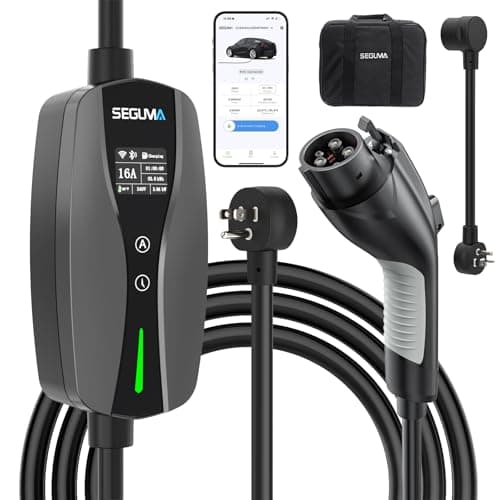
A 120V backup that is not dumb
SEGUMA Wi-Fi Level 1/2 (12A/16A)
A 120-volt cord that plugs into any household outlet and lives in the trunk — with app scheduling, a live display, and 16 amps on 240 volts if you have the outlet.
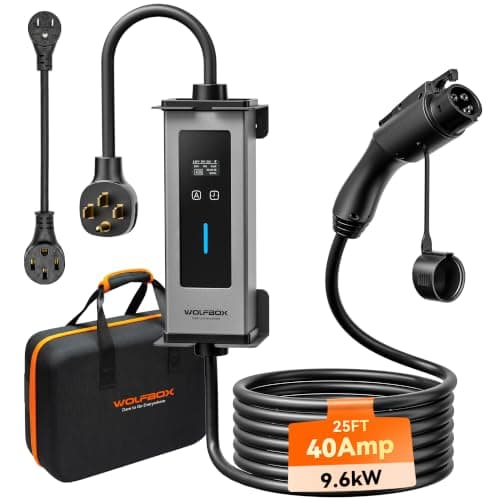
One charger for home and travel
WOLFBOX Portable (Level 1/2)
A dual-level portable that charges on both 120V and 240V, ships with both plug adapters, and adds a delay timer for off-peak charging — a genuine take-anywhere charger.
#ad · As an Amazon Associate we earn from qualifying purchases.
Questions
Frequently asked
Do I need a Level 2 charger for a plug-in hybrid?
How long does it take to charge a PHEV on a normal outlet?
Can a plug-in hybrid use a fast (Level 2) charger?
What is the cheapest way to charge a plug-in hybrid?
Keep reading
Related
Receipts
Sources
- US DOE / fueleconomy.gov — EV charging basics
- US DOE Alternative Fuels Data Center — charging at home
We do not run a testing lab, and we do not pretend to. Where a measured number came from someone else's lab, we name them and link them. Where we could not verify something, we say so on the page rather than quietly leaving it out. Read our full method.