HUB 05 · Guides & Buying Advice
EV Charging with Solar Panels
Solar plus an EV is a natural fit — charge on your own sunshine and your per-mile cost approaches zero. Here's how to actually capture it.
We earn a commission when you buy through our Amazon links, at no extra cost to you. It never affects our rankings, and we say so when the cheaper product is the better buy. How this works.
Home solar and an EV are a natural pairing: charge the car while your panels are producing and your driving runs on sunshine you already paid for, pushing your per-mile cost toward zero. The catch is timing — the sun is up midday, but most people charge at night. Bridging that gap is the whole game, and a scheduling chargeror your car's timer is the tool that does it.
We are a charging site, not a solar installer, so this is the charging side of the equation: how to actually capture solar for your EV once the panels are on the roof. The economics depend on your utility's rules, which we will flag rather than fake.
Why solar and EVs fit together
An EV is a large, flexible electrical load, and solar produces power you would otherwise sell back to the grid — often for less than you would pay to buy it later. Charging the car with that midday production instead of exporting it means you are "spending" your cheapest electricity on your driving. For a household with both, home charging can be the single biggest way to use your own solar, and it can make the marginal cost of EV miles very low.
The timing problem — and the fix
Solar produces during the day; the default charging habit is overnight. If you plug in at night, you are charging from the grid, not the sun. Three ways to fix that:
- Charge midday when you can.If the car is home during the day — remote work, a second car, weekends — simply plug in while the panels produce.
- Schedule charging for daylight hours. A smart charger like the Emporia or the ChargePoint Home Flex, or your car's built-in scheduler, can start the charge during peak sun even when you are not there to plug in at that moment.
- Match the charge rate to your array where possible.Chargers with adjustable amperage let you dial the draw closer to your panels' output, so more of the energy comes from solar rather than the grid — a rough approach, but it helps.
The honest caveat on economics.Whether daytime solar charging beats overnight grid charging depends on your utility's net-metering and time-of-use rules, which vary widely and change. If your utility pays full retail for exports (1:1 net metering), the timing matters less; if it pays a low export rate, charging on your own solar is clearly better. Check your specific plan — we will not quote a number that could be wrong for you.
Do you need a special "solar" charger?
Usually not. Some high-end systems actively track your solar production and modulate charging to match, which is elegant if you want it. But for most people, a standard scheduling smart charger(or the car's timer) set to daylight hours captures most of the benefit for far less money. Do not let "solar charging" marketing push you into an expensive niche unit when a good value smart charger and a schedule do the job. Our smart charger guide helps you decide how much software you actually need.
Bottom line
If you have solar, aim to charge your EV when the sun is up — midday if the car is home, or on a schedule if it is not — and your driving runs on your own cheapest power. A standard scheduling charger or your car's timer is all most people need to capture it; a dedicated solar-tracking system is a nice-to-have, not a requirement. Confirm your utility's net-metering rules to know exactly how much you save, and see the running-cost baseline in our cost to charge guide.
The gear
Recommended gear for this guide
The products this guide refers to, with prices pulled live from Amazon and dated on each card.
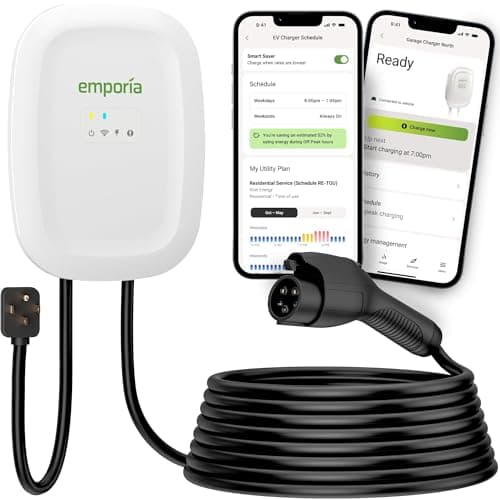
Most people who want the smart features too
Emporia Level 2 (48A)
The smart charger that does not charge a smart-charger premium — 48-amp capability and real energy monitoring for the price of a dumb one.
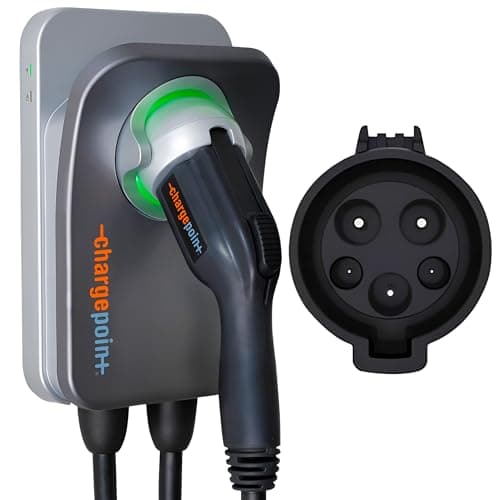
Buyers who want the established brand and app
ChargePoint Home Flex
The polished, well-supported option — adjustable up to 50 amps and tied into the largest public charging app in North America.
#ad · As an Amazon Associate we earn from qualifying purchases.
Questions
Frequently asked
Can I charge my EV with solar panels?
Do I need a special solar EV charger?
Is it cheaper to charge an EV on solar or the grid?
How do I make sure my EV charges from solar and not the grid?
Keep reading
Related
Receipts
Sources
- US DOE Alternative Fuels Data Center — charging at home
- US DOE / fueleconomy.gov — EV charging basics
We do not run a testing lab, and we do not pretend to. Where a measured number came from someone else's lab, we name them and link them. Where we could not verify something, we say so on the page rather than quietly leaving it out. Read our full method.