HUB 05 · Guides & Buying Advice
Charging a Hyundai Ioniq 5 at Home
The Ioniq 5 changed connectors mid-life — earlier cars use J1772, newer ones use NACS. Here's the right home charger and adapter for yours.
We earn a commission when you buy through our Amazon links, at no extra cost to you. It never affects our rankings, and we say so when the cheaper product is the better buy. How this works.
Which home-charging gear an Ioniq 5 needs depends on its model year. Earlier cars (roughly 2022–2024) charge over a J1772 plug, so any good J1772 Level 2 charger works. From the 2025 refresh, the Ioniq 5 has a native NACSport — so a NACS charger plugs straight in, and a cheap J1772-to-NACS adapterlets it use the huge existing base of J1772 chargers. Check your car's port before you buy.
The Ioniq 5 sits right on the connector transition, which is the one thing that confuses buyers. The good news: whichever port your car has, home charging is a solved problem and does not require Hyundai-branded hardware. Here is how to tell which setup you have and what to buy.
First, identify your port
Look at the charge port on the driver's-side rear. A rounder five-pin J1772AC inlet (with the CCS DC pins below it) means an earlier car. A slimmer, flatter NACS (Tesla-style) inlet means a 2025-onward car. Our NACS vs J1772 explainerhas pictures of both if you are unsure. The Ioniq 5's 800-volt architecture makes it a very fast DC charger on the road, but at home you are doing AC Level 2 either way.
If your Ioniq 5 has a J1772 port
Buy a standard J1772 Level 2 charger — the most competitive category on the market. The Ioniq 5 accepts up to about 48 amps (~11 kW) of AC on most trims, so a 48-amp charger makes the most of it, though a 40-amp unit like the Emporia Level 2 still fills it overnight. No adapter needed. If you later add Tesla AC chargers to the mix, a NACS-to-J1772 adapter opens those up.
If your Ioniq 5 has a NACS port (2025+)
You have two good routes. Buy a native NACS home chargerand the plug goes straight in with nothing dangling off the handle. Or — often cheaper — buy any J1772 charger plus a certified J1772-to-NACS adapter so the far larger J1772 charger market is open to you. Look for a named UL 2251 listing on the adapter, as our LENZ adapter review covers. Both charge the car at the same Level 2 speed.
The outlet and the circuit
A plug-in charger caps at 40 amps on a NEMA 14-50 outlet; hardwiring unlocks 48. The receptacle is the safety part under a continuous load, so buy the industrial-grade, listed version and have a licensed electrician wire the circuit — the wire size and breaker guideexplains what that circuit must be.
Renting or traveling?
If you cannot install a wall unit, a portable does the same job and comes with you. A NACS portable suits a 2025+ car; a J1772 portable plus the adapter suits either. See the portable roundup and, for the full renter picture, charging in an apartment.
The gear
Recommended gear for this guide
The products this guide refers to, with prices pulled live from Amazon and dated on each card.
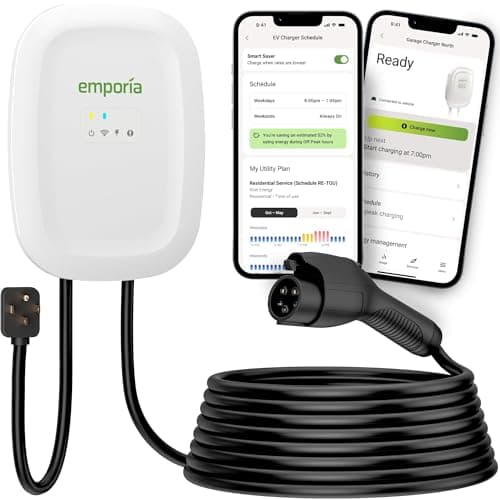
Most people who want the smart features too
Emporia Level 2 (48A)
The smart charger that does not charge a smart-charger premium — 48-amp capability and real energy monitoring for the price of a dumb one.
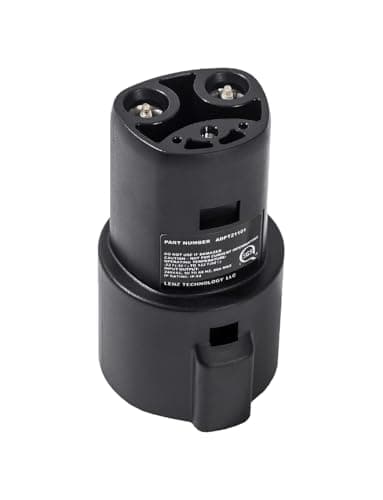
A Tesla / NACS car using J1772 chargers
LENZ J1772 → NACS Adapter
A UL-2251-certified J1772-to-NACS adapter — the one a Tesla or a 2026+ NACS-port EV needs to use the huge installed base of J1772 chargers.
#ad · As an Amazon Associate we earn from qualifying purchases.
Questions
Frequently asked
Does the Hyundai Ioniq 5 use J1772 or NACS?
What charger do I need for a 2025 Ioniq 5 with a NACS port?
How fast can an Ioniq 5 charge at home?
Do I need an adapter to charge an Ioniq 5 at home?
Keep reading
Related
- NACS vs J1772 ExplainedTell which connector your car has.
- Best NACS Home ChargersNative-plug chargers for a 2025+ car.
- LENZ J1772-to-NACS AdapterLet a NACS-port car use J1772 chargers.
- Best 48-Amp EV ChargersMake the most of the Ioniq 5's onboard charger.
- How to Charge a Tesla at HomeThe same adapter logic, from the Tesla side.
- Charging a Kia EV6 at HomeAnother Hyundai-group 800V car, same home-charging logic.
- Charging an Ioniq 6 at HomeThe 800V sedan sibling, same AC setup.
Receipts
Sources
- US DOE / fueleconomy.gov — EV charging basics
- Consumer Reports — Tesla Superchargers and NACS adoption
We do not run a testing lab, and we do not pretend to. Where a measured number came from someone else's lab, we name them and link them. Where we could not verify something, we say so on the page rather than quietly leaving it out. Read our full method.