HUB 02 · Portable & Travel Chargers
120V vs 240V EV Charging
The single biggest lever on home charging speed is the outlet's voltage — here is the real difference and why a dual-voltage portable covers both.
We earn a commission when you buy through our Amazon links, at no extra cost to you. It never affects our rankings, and we say so when the cheaper product is the better buy. How this works.
A 240-volt outlet charges an EV roughly five times faster than a standard 120-volt household outlet. That is the difference between Level 2 (about 25–40 miles of range per hour) and Level 1(about 3–5 miles per hour). It is the single biggest lever on how fast you charge at home.
This is why the voltage of the outlet, not the brand of the charger, decides your speed — and why so many good portables ship with both plugs, so one unit does the fast job at home and the slow-but-anywhere job on the road.
The real numbers
- 120V (Level 1).A normal wall outlet. Adds roughly 3–5 miles of range per hour — about 40–50 miles overnight. Fine as a backup or for low daily mileage; slow as a daily driver's only charger. See charging on a regular outlet.
- 240V (Level 2).The dryer/RV-style circuit. Adds roughly 25–40 miles per hour depending on amperage, filling most cars overnight with room to spare. This is what a NEMA 14-50 portable is built for.
Why dual-voltage portables exist
A dual-voltage portable like the WOLFBOX Portable includes a 240-volt plug and a 120-volt adapter, so it charges fast at home and still works at any standard outlet when you travel. It is the most flexible single purchase for most drivers. A pure Level 1 unitis smaller and cheaper but locked to the slow 120-volt speed — a good emergency backup, not a daily charger. The types of EV chargers guide puts both in context.
Which one you need
If you drive average miles and can add a 240-volt outlet, go Level 2 — the speed is worth it. If you drive very little, or only need an occasional top-up, Level 1 off the outlet you already have may be enough, as our Level 1-only guideexplains. Either way, running cost per mile is the same — voltage changes speed, not price, as the cost to charge guide shows.
The gear
Recommended gear for this guide
The products this guide refers to, with prices pulled live from Amazon and dated on each card.
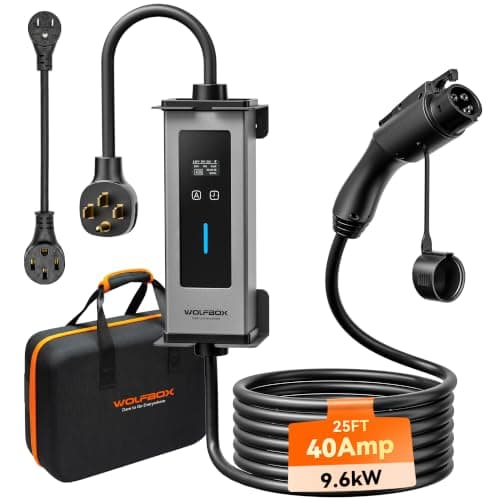
One charger for home and travel
WOLFBOX Portable (Level 1/2)
A dual-level portable that charges on both 120V and 240V, ships with both plug adapters, and adds a delay timer for off-peak charging — a genuine take-anywhere charger.
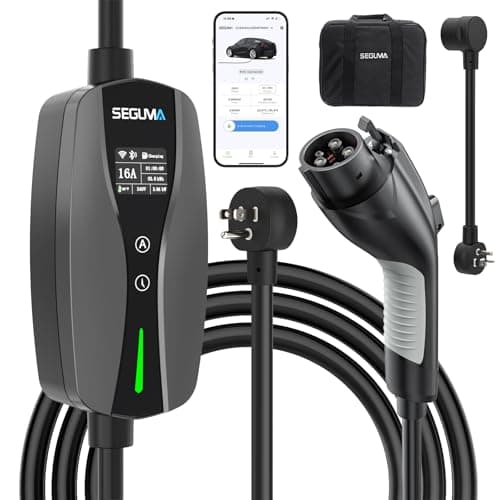
A 120V backup that is not dumb
SEGUMA Wi-Fi Level 1/2 (12A/16A)
A 120-volt cord that plugs into any household outlet and lives in the trunk — with app scheduling, a live display, and 16 amps on 240 volts if you have the outlet.
#ad · As an Amazon Associate we earn from qualifying purchases.
Questions
Frequently asked
How much faster is 240V than 120V EV charging?
Can one portable charger do both 120V and 240V?
Does 120V charging cost more than 240V?
Keep reading
Related
- Best 110V EV ChargersIf 120V is your only option, these are the cords worth buying.
- WOLFBOX Portable ReviewA dual-voltage unit that does both levels.
- Types of EV ChargersLevel 1 vs 2 vs 3 in full context.
- Charging on a Regular OutletWhat 120V charging really delivers.
- Living With Only Level 1 ChargingWhen the slow option is genuinely enough.
- SEGUMA Level 1 ReviewA compact 120V backup charger.
Receipts
Sources
We do not run a testing lab, and we do not pretend to. Where a measured number came from someone else's lab, we name them and link them. Where we could not verify something, we say so on the page rather than quietly leaving it out. Read our full method.