Skip to content
Volt & Cable

HUB 01 · Level 2 Home Chargers

The Best 48-Amp EV Chargers

The fastest tier of home charging — 11.5 kW when hardwired on a 60-amp circuit. Worth it only for some panels and some drivers; here are the units that earn the upgrade.

By Stephen V.Updated How we research
#ad

We earn a commission when you buy through our Amazon links, at no extra cost to you. It never affects our rankings, and we say so when the cheaper product is the better buy. How this works.

The short answer

Quick picks

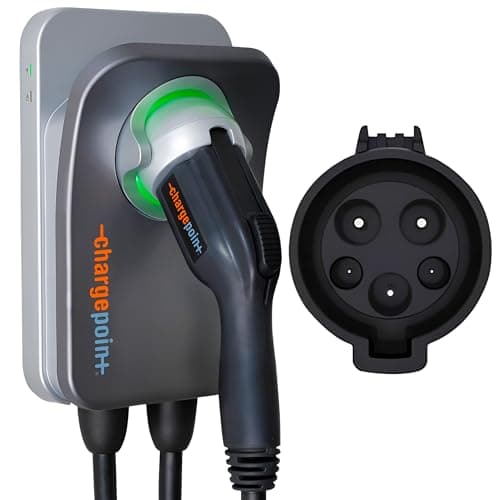
  • ChargePoint ChargePoint Home Flex
    01 ChargePoint Home Flex
    8.2

    The polished, well-supported option — adjustable up to 50 amps and tied into the largest public charging app in North America.

    Best for: Buyers who want the established brand and app

    $539.00Amazon
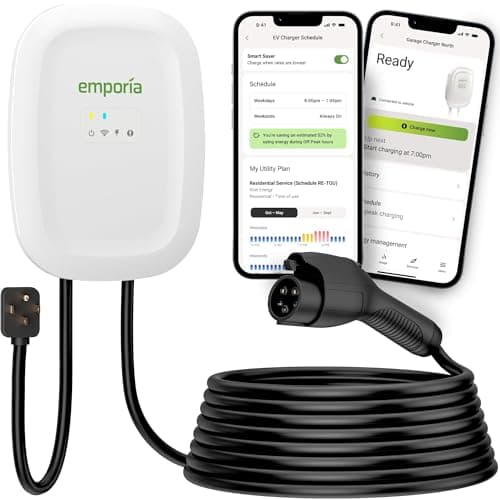
  • Emporia Emporia Level 2 (48A)
    02 Emporia Level 2 (48A)
    9.0

    The smart charger that does not charge a smart-charger premium — 48-amp capability and real energy monitoring for the price of a dumb one.

    Best for: Most people who want the smart features too

    $449.00Amazon
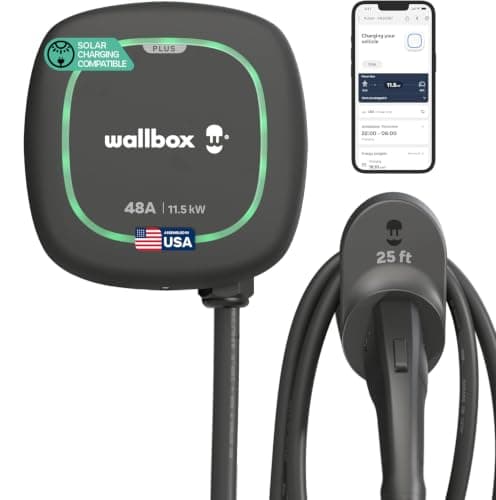
  • Wallbox Wallbox Pulsar Plus (48A)
    03 Wallbox Pulsar Plus (48A)
    8.4

    One of the smallest 48-amp units you can buy — a genuinely compact hardwired charger for a tidy wall.

    Best for: A compact, fast, hardwired install

    $699.99Amazon
  • Tesla Tesla Universal Wall Connector
    04 Tesla Universal Wall Connector
    8.8

    The only wall unit with both a built-in NACS plug and a J1772 adapter — future-proof if your household mixes a Tesla and a non-Tesla EV.

    Best for: Mixed Tesla + non-Tesla households

    Check priceAmazon

#ad · Live prices from the Amazon Product API, as of Jul 26, 2026. Where we have no verified live price, we show none — we would rather leave a gap than print a number that has gone stale.

Forty-eight amps is the fastest a home Level 2 charger goes — about 11.5 kW, or roughly 35 to 40 miles of range per hour — but you only get it by hardwiring the unit to a 60-amp circuit, which not every panel can spare. If you can, our top pick is the ChargePoint Home Flex, which is adjustable all the way to 50 amps and tied into the largest public-charging app in North America. The Emporia matches its speed for less if you do not need the network.

First, an honest gate: most people do not need 48 amps. A 40-amp charger adds range overnight faster than almost anyone drives in a day, runs on a 50-amp breaker many panels already have, and can be plugged in rather than hardwired. Stepping up to 48 amps means a 60-amp circuit(48 × 1.25 = 60 under the continuous-load rule), a hardwired install by a licensed electrician, and sometimes a panel upgrade. This roundup is for the specific buyer who has the panel capacity, is hardwiring anyway, and genuinely wants the extra daytime speed — not for everyone. If that is not you, our 40-amp roundup is the more honest page.

As always, we have not bench-tested these chargers. What follows is compiled from published manufacturer specifications, verified safety listings, the NEC wiring math, and aggregated owner reviews, scored against our published rubric. Every spec traces to the live retail listing, and no dollar figure is written here — prices render live and date-stamped.

The short version

  • ChargePoint Home Flex — best 48-amp charger overall. Adjustable from 16 to 50 amps, hardwired at up to 50, with the most mature app and network. Full ChargePoint Home Flex review.
  • Emporia Level 2 — best value at 48 amps. The same 48-amp hardwired speed and genuine energy monitoring for meaningfully less. Full Emporia review.
  • Wallbox Pulsar Plus — smallest 48-amp box. Full speed from one of the most compact enclosures made. Full Wallbox Pulsar Plus review.
  • Tesla Universal Wall Connector — best for mixed connectors. A 48-amp-class unit with both a native NACS plug and a J1772 adapter, for a household running both.

Do you actually have the circuit for 48 amps?

The number on the box is a ceiling, not a promise, and 48 amps has real prerequisites. Because EV charging is a continuous load, code sizes the circuit to 125% of the charger's current:

  • A 48-amp charger needs a 60-amp breaker and typically 6 AWG copper (heavier on a long run), on a hardwiredcircuit — a plug-in NEMA 14-50 tops out at 40 amps and cannot deliver 48.
  • That circuit needs spare capacity in your panel. An older 100-amp service with little headroom may need a panel upgrade first — the line item that turns an affordable install expensive.

The full breaker-and-wire breakdown is in our wire size and breaker guide, and what the whole job costs — including a possible panel upgrade — is in the installation cost guide. Confirm the specifics with a licensed electrician before you buy the charger, not after.

The honest speed math.At 48 amps you add roughly 35–40 miles of range per hour versus about 30 at 40 amps — real, but only useful if you routinely drain a big battery and need to refill it fast during the day. Overnight, both fill the car by morning. And your car's onboard charger may cap the rate below 48 amps regardless of the unit.

The picks, in order

1. ChargePoint Home Flex — the one to hardwire

The Home Flex is the most complete 48-amp-class unit here. Its amperage is set in the app anywhere from 16 to 50 amps, so one charger adapts to whatever breaker your panel can spare — and hardwired at up to 50 amps it is the fastest configuration in this roundup. It is NEMA 3R outdoor-rated, backed by a long track record and responsive support, and one ChargePoint account covers both your home unit and the largest public network in North America. The honest cons are price — it costs more than equally capable newer-brand units — and that the experience leans hard on the ChargePoint account. Full ChargePoint Home Flex review.

2. Emporia Level 2 — the value way to 48 amps

The Emporia is the charger we rate best for most homes precisely because it delivers 48-amp capability and real energy monitoring at a price that undercuts the established brands. Hardwired on a 60-amp circuit it hits the full 48 amps; its app does genuine scheduling and energy tracking; the cable is a useful 25 feet. The trade-offs are that the full 48 amps needs hardwiring (the plug-in version caps at 40) and that the app and Wi-Fi are central to setup. If you want the fastest home charging without paying the brand premium, this is the value pick. Full Emporia review, and the two are compared directly in our Emporia vs ChargePoint head-to-head.

3. Wallbox Pulsar Plus — 48 amps in the smallest box

The Wallbox trades on size. It delivers the full 48 amps hardwired from one of the most compact enclosures you can buy — the pick when wall space is tight and every other fast unit looks like a small microwave on the drywall. It is Energy Star and UL certified with a 25-foot cable. The honest weak point is the app, which has drawn more owner complaints than the hardware, and it sits in the upper price bracket for the speed. But for a crowded wall, nothing else here is this small. Full Wallbox Pulsar Plus review.

4. Tesla Universal Wall Connector — the mixed-connector pick

If your household runs both a Tesla (or NACS-port car) and a J1772 car, the Universal Wall Connector is the 48-amp-class unit built for it: a native NACS plug plus an included J1772 adapter, so one box serves both connectors with no juggling. It is well-built and weather-rated. Its advantage is real only if you actually mix connector types — a single-standard household is paying for capability it will not use, and a plain J1772 unit like the Emporia does the job for less. See our J1772 charger vs Tesla Wall Connector comparison for the full case.

48 amps vs 40 amps — the real decision

The choice is not about which is "better" but which fits your house and driving. Choose 48 amps when your panel can comfortably carry a 60-amp circuit, you are hardwiring anyway, and you regularly need to refill a large battery quickly during the day. Choose 40 amps — the honest default — when you want a plug-in option, your panel is tight, or overnight charging is all you actually need. The full case for the lower tier is in our 40-amp roundup, and the flagship home charger roundup ranks both tiers together.

In detail

The picks, in full

01
ChargePoint ChargePoint Home Flex

Buyers who want the established brand and app

ChargePoint Home Flex

Adjustable to 50AJ1772NEMA 14-50 plugEnergy Star
8.2/10

The polished, well-supported option — adjustable up to 50 amps and tied into the largest public charging app in North America.

Charge speed
9
Build & weather
8
Smart features
9
Cable & connector
8
Value
7

Pros

  • Amperage is adjustable in the app to match whatever breaker you install, up to 50A
  • Integrates with ChargePoint's large public-network app — one app for home and away
  • Long track record and responsive support, which budget brands cannot match

Cons

  • Costs more than equally capable chargers from newer brands
  • The experience leans hard on the ChargePoint account and app

Don't buy this if…

price is your first priority. The Emporia matches most of what this does for meaningfully less — you are paying here for brand maturity and the unified app, which are real but not free.

$539.00View on Amazon

$657.9918% off

Price as of Jul 26, 2026. Prices change — Amazon's is the one that counts.

#ad · we may earn a commission from this link to ChargePoint Home Flex

02
Emporia Emporia Level 2 (48A)

Most people who want the smart features too

Emporia Level 2 (48A)

Up to 48A / 11.5kWJ177225ft cableWi-Fi + app
9.0/10

The smart charger that does not charge a smart-charger premium — 48-amp capability and real energy monitoring for the price of a dumb one.

Charge speed
10
Build & weather
8
Smart features
9
Cable & connector
8
Value
10

Pros

  • 48-amp capable when hardwired, which is faster than the 40-amp plug-in default
  • Genuine energy monitoring and scheduling in the app, at a price that undercuts most smart rivals
  • 25-foot cable is long enough to reach across a two-car garage

Cons

  • 48-amp operation requires hardwiring on a 60-amp circuit — the NEMA 14-50 plug version is capped at 40A
  • App and Wi-Fi are central to the experience, so setup is more involved than a plug-and-go unit

Don't buy this if…

you never want to open an app. Much of what you pay for here is the software, and if you would rather have a sealed box that just works, the Grizzl-E Classic is the honest pick.

$449.00View on Amazon

Price as of Jul 26, 2026. Prices change — Amazon's is the one that counts.

#ad · we may earn a commission from this link to Emporia Level 2 (48A)

03
Wallbox Wallbox Pulsar Plus (48A)

A compact, fast, hardwired install

Wallbox Pulsar Plus (48A)

Hardwired 48A / 11.5kWJ177225ft cableEnergy Star + UL
8.4/10

One of the smallest 48-amp units you can buy — a genuinely compact hardwired charger for a tidy wall.

Charge speed
10
Build & weather
8
Smart features
8
Cable & connector
8
Value
8

Pros

  • Physically tiny for a 48-amp charger — the least obtrusive box in this roundup
  • Full 48-amp hardwired speed, matching the fastest home units
  • Energy Star and UL certified

Cons

  • Hardwired only at 48A — no plug-in convenience if you might move it
  • App has historically drawn more owner complaints than the hardware

Don't buy this if…

you want to unplug and take the charger with you, or you rent. This is a hardwired fixture — a portable EVSE or a plug-in unit is the right call for anyone who might move.

$699.99View on Amazon

Price as of Jul 26, 2026. Prices change — Amazon's is the one that counts.

#ad · we may earn a commission from this link to Wallbox Pulsar Plus (48A)

04
Tesla Tesla Universal Wall Connector

Mixed Tesla + non-Tesla households

Tesla Universal Wall Connector

Up to 48ANACS + J177224ft cableDual connector
8.8/10

The only wall unit with both a built-in NACS plug and a J1772 adapter — future-proof if your household mixes a Tesla and a non-Tesla EV.

Charge speed
9
Build & weather
9
Smart features
8
Cable & connector
10
Value
8

Pros

  • Charges both NACS (Tesla) and J1772 cars from one unit — no adapter juggling
  • Deep integration with the Tesla app for Tesla owners
  • Well-built, weather-rated enclosure

Cons

  • Its advantage only pays off if you actually own both connector types
  • Hardwired install; the ecosystem leans toward Tesla vehicles

Don't buy this if…

your household only has J1772 cars. You are paying for a dual-connector capability you will not use — a straightforward J1772 charger like the Emporia does the same job for less.

Check price on Amazon →

No buyable offer at the last price check (Jul 26, 2026). We show nothing rather than a stale number.

#ad · we may earn a commission from this link to Tesla Universal Wall Connector

How to choose a 48-amp charger

Once your electrician has confirmed the panel can carry a 60-amp circuit, the picks separate on three things.

App and network, or just speed

The ChargePoint bundles the most mature app and a unified public-charging network; the Emporia gives you solid energy monitoring for less; the Wallbox's app is the weakest of the three. If you charge on the public network too, the ChargePoint account is genuinely useful. If you just want a fast, well-tracked home charge, the Emporia is the value route.

Footprint and mounting

All four are hardwired fixtures, so the box is on the wall for good. If space is tight, the Wallbox is by far the smallest. If you have room, the others' larger enclosures are no drawback.

Connectors

A J1772-only household is well served by the ChargePoint, Emporia or Wallbox. Only a mixed Tesla / non-Tesla driveway needs the dual-connector Tesla unit — and even then, an adapter can bridge the occasional cross-standard charge for far less. If your cars are NACS-native, start instead with the best NACS home chargers.

So, which one? The ChargePoint Home Flex for the fastest, most polished, network-connected install; the Emporia for the same speed at a lower price; the Wallbox for a tight wall; the Tesla Universal Wall Connector only for a genuinely mixed-connector household.
How we picked

We do not run a testing lab

We compiled published specifications from manufacturer manuals and spec sheets, verified the safety listings (UL / ETL), computed the real running and installation costs, checked the wiring math against the NEC continuous-load rule, and read aggregated owner reviews — then scored each product against a published rubric. The scores are judgments from documented research — they are not bench measurements, because we do not have a test lab and we are not going to pretend we do. Every spec and cost figure is cited in Sources.

Questions

Frequently asked

Is a 48-amp EV charger worth it over 40 amps?

Only for some homes. 48 amps adds roughly 35–40 miles of range per hour versus about 30 at 40 amps, but it requires a hardwired 60-amp circuit and sometimes a panel upgrade. It is worth it if you have the capacity, are hardwiring anyway, and regularly need fast daytime top-ups. For overnight charging, a 40-amp unit already fills the car by morning.

What breaker does a 48-amp charger need?

A 60-amp breaker. EV charging is a continuous load, so the circuit is sized to 125% of the charger's current (48 × 1.25 = 60), typically on 6 AWG copper for a short run. It must be hardwired — a plug-in NEMA 14-50 circuit is 50 amps and caps the charger at 40. See our wire and breaker guide.

Can I plug in a 48-amp charger instead of hardwiring it?

No. A plug-in NEMA 14-50 outlet sits on a 50-amp circuit, which the continuous-load rule caps at 40 amps. The full 48 amps is only available by hardwiring the unit to a 60-amp circuit. If you need a plug-in charger, buy a 40-amp unit — you lose nothing you could have used.

Will my car actually charge at 48 amps?

Only if your car's onboard charger accepts it. Many EVs cap AC charging at 32 or 40 amps regardless of the wall unit, so a 48-amp charger adds nothing for those cars. Check your vehicle's onboard charger rating before paying for 48-amp headroom — the real speed is the lowest of the charger, the car and the circuit.

Which 48-amp charger is the fastest?

The ChargePoint Home Flex, which is adjustable up to 50 amps when hardwired — a touch above the straight 48 of the Emporia and Wallbox. In practice the difference is small, and your car's onboard charger usually matters more than the last two amps.

Keep reading

Receipts

Sources

We do not run a testing lab, and we do not pretend to. Where a measured number came from someone else's lab, we name them and link them. Where we could not verify something, we say so on the page rather than quietly leaving it out. Read our full method.