HUB 05 · Guides & Buying Advice
Charging a Lucid Air at Home
The Lucid Air has one of the most powerful onboard chargers of any EV — here is what that does and does not mean for your home setup.
We earn a commission when you buy through our Amazon links, at no extra cost to you. It never affects our rankings, and we say so when the cheaper product is the better buy. How this works.
The Lucid Air charges at home on any J1772 Level 2 charger with no adapter, and it has an unusually powerful onboard AC charger — capable of accepting far more than a normal home circuit can deliver. In practice that means a standard 48-ampunit is the realistic setup, and only a rare high-amperage service unlocks the car's full AC speed.
Lucid designed the Air's charging system to accept a lot of AC power, which is genuinely useful if you have the electrical service for it — but most homes do not, and that is fine.
What connector it uses
AC home charging is J1772; DC fast charging is CCS1. No adapter is needed for a home charger. Lucid has moved to offer NACS DC access, so check current adapter availability for Supercharger use — see the CCS vs NACS guide.
How fast it charges at home
The Air's onboard charger can accept well above the 11.5 kW ceiling most EVs stop at — up to roughly 19.2 kW on the right service. But that requires an 80-amp circuit few homes have. On a normal 48-amp (60-amp circuit) setup it charges like any other quick EV, around 30 miles of range per hour. Do not pay for high-amperage service on the assumption it is needed; the wire size and breaker guide explains what your panel can realistically give.
The best home setup
A 48-amp unit like the Emporia or ChargePoint Home Flex is the sensible default; see the 48-amp roundup. Plug-in installs need a real NEMA 14-50 outlet.
On the road
The Air fast-charges very quickly on CCS thanks to its high-voltage architecture; our DC fast charging guide covers how to get the best sessions.
The gear
Recommended gear for this guide
The products this guide refers to, with prices pulled live from Amazon and dated on each card.
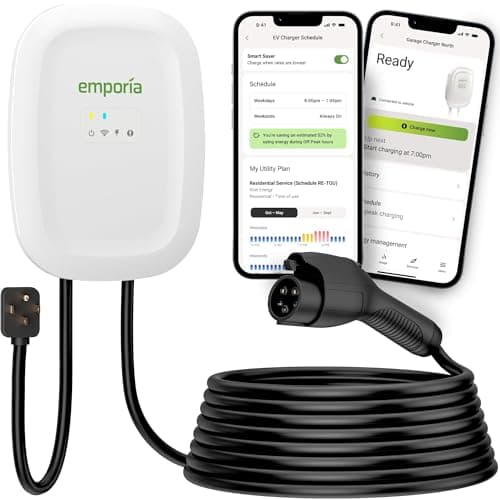
Most people who want the smart features too
Emporia Level 2 (48A)
The smart charger that does not charge a smart-charger premium — 48-amp capability and real energy monitoring for the price of a dumb one.
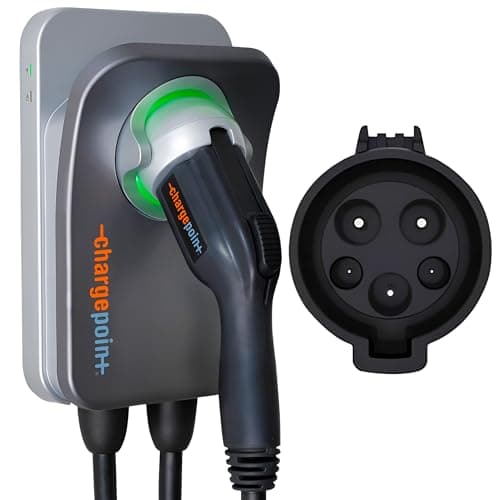
Buyers who want the established brand and app
ChargePoint Home Flex
The polished, well-supported option — adjustable up to 50 amps and tied into the largest public charging app in North America.
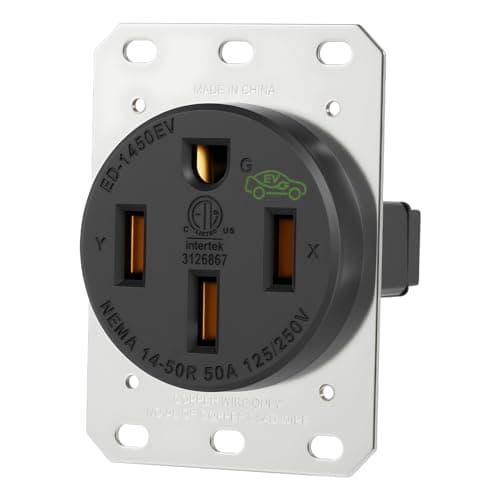
The outlet a plug-in charger needs
Industrial NEMA 14-50 Outlet
The receptacle a plug-in charger actually plugs into — buy the industrial-grade, listed version, because the cheap ones are the part that fails.
#ad · As an Amazon Associate we earn from qualifying purchases.
Questions
Frequently asked
Is the Lucid Air's fast onboard charger worth wiring for?
Does the Lucid Air need an adapter to charge at home?
How fast does the Lucid Air charge on a normal home charger?
Keep reading
Related
Receipts
Sources
We do not run a testing lab, and we do not pretend to. Where a measured number came from someone else's lab, we name them and link them. Where we could not verify something, we say so on the page rather than quietly leaving it out. Read our full method.