HUB 02 · Portable & Travel Chargers
16A vs 32A vs 40A Portable EV Charger
Amperage sets how fast a portable charges — and which outlets it can safely use. Here's how to pick, and why adjustable is the traveler's answer.
We earn a commission when you buy through our Amazon links, at no extra cost to you. It never affects our rankings, and we say so when the cheaper product is the better buy. How this works.
A portable's amperage sets both its speed and which outlets it can use. Roughly: 16 amps ~3.8 kW (about 11 miles/hour), 32 amps ~7.7 kW (about 22 miles/hour), 40 amps~9.6 kW (about 25 miles/hour). Higher is faster but needs a beefier circuit — which is why the best travel answer is an adjustable portable you can dial down for a weaker outlet.
Every one of those figures assumes a 240-volt Level 2 outlet; the amperage is just how much current the portable pulls. Here is how to choose, and the outlet each level demands.
What each amperage means in practice
- 16 amps (~3.8 kW).The slowest true Level 2 rate, roughly 11 miles of range per hour. Useful on a smaller 240-volt circuit, or dialed down for an outlet you are not sure about. Still far faster than Level 1's ~3–5 miles per hour.
- 32 amps (~7.7 kW).The sweet spot for many cars and homes — about 22 miles per hour, enough to fully refill most EVs overnight, on a 40-amp circuit. Plenty for a smaller-battery car and easier on older wiring than 40 amps.
- 40 amps (~9.6 kW). The top rate for a plug-in portable on a NEMA 14-50, about 25 miles per hour. Best for big batteries and anyone who wants the fastest overnight fill. Needs a properly rated 50-amp circuit and a good 14-50 outlet.
Why the outlet caps you, not the charger
A 40-amp portable is only a 40-amp portable if the outlet and circuit behind it can supply 40 amps continuously. Plug a 40-amp unit into a marginal outlet and you invite heat and tripped breakers. This is why matching amperage to the circuit — under the 125% continuous-load rule — matters more than buying the biggest number. Our what amp charger do I need guide covers the pairing, and outlet types explained shows what each receptacle supplies.
The traveler's answer: adjustable current
The single best feature on a travel portable is adjustable amperage. A unit like the WOLFBOX Portable or the EVDANCE 40Alets you run 40 amps on your own known-good 14-50 at home and dial down to 16 or 24 amps at an unfamiliar outlet on the road — instead of hoping a strange circuit can take the full draw. Fixed-amperage portables like the MUSTART 40A are cheaper and fine for a single known outlet, but adjustability is what makes a portable genuinely travel-friendly.
Which should you buy?
For a big-battery car and a good 14-50 at home, buy a 40-amp adjustable portable — you get the fastest fill and the flexibility to travel. For a smaller battery, or an older home where 40 amps is a stretch, a 32-amp-capable adjustable unit run at a sensible current is plenty. Avoid buying purely on the headline amp number: the right choice is the one that matches your car's appetite and the circuits you will actually plug into. See the full ranking in the best portable EV chargers roundup.
The gear
Recommended gear for this guide
The products this guide refers to, with prices pulled live from Amazon and dated on each card.
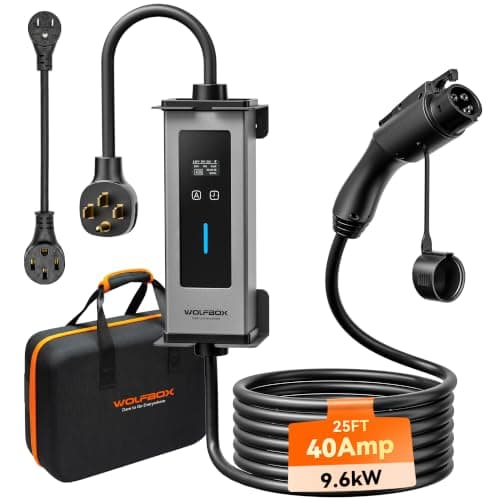
One charger for home and travel
WOLFBOX Portable (Level 1/2)
A dual-level portable that charges on both 120V and 240V, ships with both plug adapters, and adds a delay timer for off-peak charging — a genuine take-anywhere charger.
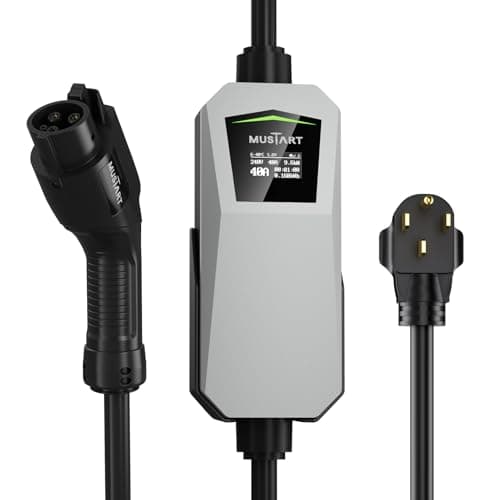
The cheapest capable portable
MUSTART 40A Portable
A budget 40-amp portable with an LCD readout — the value pick when you just need 240V charging that moves.
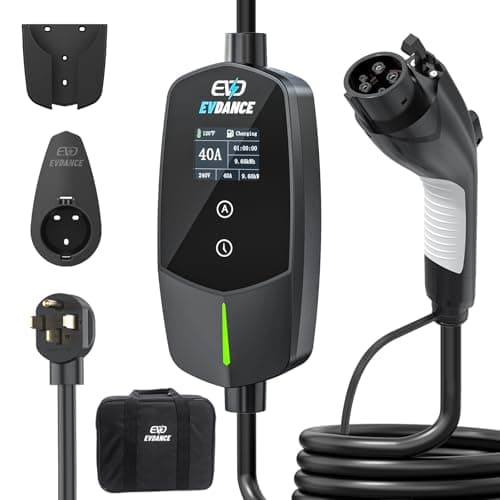
Off-peak charging without an app
EVDANCE 40A Portable
A 40-amp portable with adjustable current and a charge-delay timer, on a long 25-foot cable — flexible for off-peak charging.
#ad · As an Amazon Associate we earn from qualifying purchases.
Questions
Frequently asked
Is a 40-amp portable EV charger worth it over a 32-amp one?
What does amperage mean for portable charging speed?
Why choose an adjustable-amperage portable?
Can I run a 40-amp portable on any 240-volt outlet?
Keep reading
Related
- Best Portable EV ChargersThe ranked shortlist across amperages.
- What Amp Charger Do I Need?Matching amperage to your car and panel.
- EV Outlet Types ExplainedWhat each outlet can safely supply.
- WOLFBOX Portable ReviewAn adjustable dual-level travel pick.
- NEMA 14-50 OutletsThe outlet a 40-amp portable needs.
Receipts
Sources
We do not run a testing lab, and we do not pretend to. Where a measured number came from someone else's lab, we name them and link them. Where we could not verify something, we say so on the page rather than quietly leaving it out. Read our full method.