HUB 05 · Guides & Buying Advice
Do I Need a Permit for an EV Charger?
For a hardwired Level 2 charger the answer is yes in virtually every US jurisdiction. Here is what the permit actually involves, and why skipping it costs more than getting it.
We earn a commission when you buy through our Amazon links, at no extra cost to you. It never affects our rankings, and we say so when the cheaper product is the better buy. How this works.
Yes — if you are installing a Level 2 charger, you almost certainly need an electrical permit. A Level 2 install is new work on a dedicated 240-volt branch circuit, which falls under NEC Article 625 and your local building code, and it requires a permit in virtually every US jurisdiction. The single exception is the one that needs no new wiring at all: plugging a portable charger into a 240-volt outlet that already exists and is already up to code.
This is the step people most want to skip, and it is the one with the worst downside. A permit is not a tax on your project; it is the mechanism that gets a second qualified person to look at a circuit that will carry 32 or 40 amps continuously, for hours, every night, for the next decade. It is also cheap relative to the install and almost always handled by the electrician rather than by you.
What triggers a permit
Permits attach to electrical work, not to the charger. What matters is whether you are creating or modifying a circuit:
- Hardwiring a charger — permit. New breaker, new conductors, new equipment connection. This is unambiguous new work.
- Adding a 240-volt outlet for a plug-in charger — permit. Installing a NEMA 14-50 receptacle means a new breaker and a new circuit. The charger plugs in afterwards, but the outlet is the permitted work.
- Upgrading the panel or service — permit, and usually utility involvement. A service upgrade brings the utility into the job alongside the building department.
- Plugging a portable into an existing, code-compliant outlet — no permit. No new wiring, no permit. This is the entire appeal of the portable route for renters and anyone avoiding a project.
- Using the 120-volt cord that came with the car — no permit. It is an appliance in a standard socket. Whether that is enough for you is a different question, and we work it through here.
Note what is not on that list: your own skill level. A permit is required because of the work, not because of who does it. Some jurisdictions let a homeowner pull their own permit and do the work; others require a licensed electrician. Our can I install an EV charger myself guide covers that side of it.
What the permit process actually involves
It is more mundane than people expect. Typically:
- An application, usually filed by your electrician. Most EV charger permits are over-the-counter or online, and in many jurisdictions issued same day.
- A load calculation. This is the part that matters. You are demonstrating that your existing service can carry the new continuous load — which is exactly the calculation that tells you whether you can run 48 amps or need to settle for 32. Some jurisdictions also want a single-line diagram.
- A fee. Commonly a modest flat residential electrical permit fee. It is a small fraction of a typical Level 2 install cost.
- An inspection when the work is done. An inspector verifies the breaker size against the charger's continuous rating, the conductor size and type, the grounding, the GFCI protection where required, the working clearances, and that the equipment is listed and installed per its instructions.
Why skipping it is the expensive choice. Unpermitted electrical work follows the house. It surfaces during a sale inspection, where a buyer can demand it be torn out and redone. It gives an insurer a clean reason to contest a claim if anything electrical ever goes wrong, whether or not the charger caused it. Some utility and state rebates require a permit number, so skipping the permit forfeits money that frequently exceeds the fee. And a jurisdiction that finds it can require exposure of concealed work. The permit is the cheapest part of the entire project.
The code your inspector is reading
You do not need to know Article 625, but knowing the two rules that drive most corrections helps you sanity-check a quote before the inspector does:
- NEC 625.40 — dedicated circuit. EV charging equipment gets its own individual branch circuit. You cannot share it with the garage lights or the freezer. The detail is in do I need a dedicated circuit.
- NEC 625.42 — continuous load. The circuit must be rated at 125% of the charger's continuous output, which is the familiar 80% rule in reverse: 32 amps on a 40-amp breaker, 40 on a 50, 48 on a 60. The full table is in the wire size and breaker guide.
Local amendments sit on top of this. California jurisdictions, for instance, publish EV-specific residential handouts referencing the California Electrical Code's version of Article 625. Your building department's website is the authority for your address — and the one place worth checking before you buy hardware.
The three routes, and what each one needs from you
Published specifications from the live listings, with live prices. The permit question maps almost exactly onto which of these you buy:
| What you are installing | Best for | Published specs | Price |
|---|---|---|---|
| Emporia Level 2 (48A) | Most people who want the smart features too | Up to 48A / 11.5kW · J1772 · 25ft cable · Wi-Fi + app | Not verified today |
| Industrial NEMA 14-50 Outlet | The outlet a plug-in charger needs | NEMA 14-50R · 50A · 125/250V · 3-pole 4-wire · ETL listed | $17.99 |
| WOLFBOX Portable (Level 1/2) | One charger for home and travel | 6–40A · 9.6kW · J1772 · Level 1/2 · NEMA 14-50 + 5-15 · ETL · IP66 · 25ft | $299.99 |
#ad Prices read live from the Amazon Product API as of October 16, 2026, and they move. Specs are the manufacturer's published claims from the live listing — we have not bench-measured them. Where we have no verified price we print none rather than a number that has gone stale.
The Emporia is the hardwired or plug-in charger case — permit and inspection. The NEMA 14-50 receptacle is the outlet case — also a permit, because the outlet is new circuit work even though the charger just plugs in afterwards. The WOLFBOX portable on an outlet that already exists is the one route that needs neither.
What to settle before you file — and what to buy
Confirm the circuit you are allowed before you pick the charger. The load calculation decides your amperage, and the amperage decides which charger makes sense. Choosing a 48-amp charger and then discovering the panel supports 32 is the common and avoidable mistake. If the panel is tight, an adjustable charger — or one with load management like the Emporia Pro — may be what gets the project approved at all. See best chargers for a 100-amp panel.
Buy equipment with a real listing, because the inspector will look. UL or ETL, named on the listing. Unlisted equipment is a straightforward inspection failure, and no amount of correct wiring compensates for it.
Decide plug-in versus hardwired, since it changes the permit scope. A plug-in install still needs the outlet permitted, but it keeps the charger itself a replaceable appliance. Hardwiring is required for 48 amps and is tidier. Our portable vs hardwired comparison lays out the trade.
If you want to avoid the permit entirely, the portable route is legitimate. An existing 240-volt outlet plus an adjustable portable is a real answer, not a loophole — no new wiring, no permit, and it moves with you. It is the standard recommendation for renters.
The gear
Recommended gear for this guide
The products this guide refers to, with prices pulled live from Amazon and dated on each card.
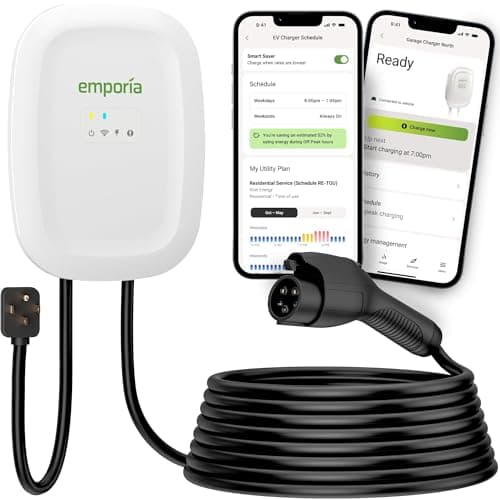
Most people who want the smart features too
Emporia Level 2 (48A)
The smart charger that does not charge a smart-charger premium — 48-amp capability and real energy monitoring for the price of a dumb one.
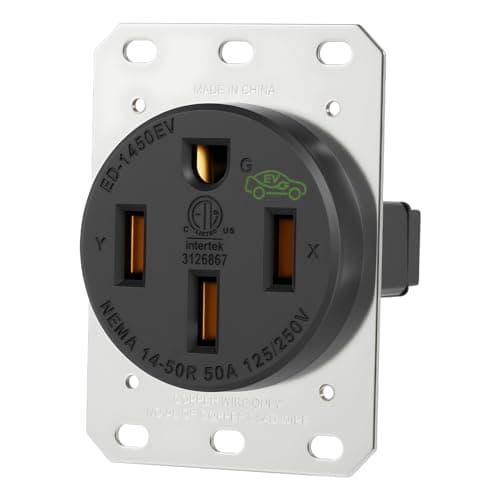
The outlet a plug-in charger needs
Industrial NEMA 14-50 Outlet
The receptacle a plug-in charger actually plugs into — buy the industrial-grade, listed version, because the cheap ones are the part that fails.
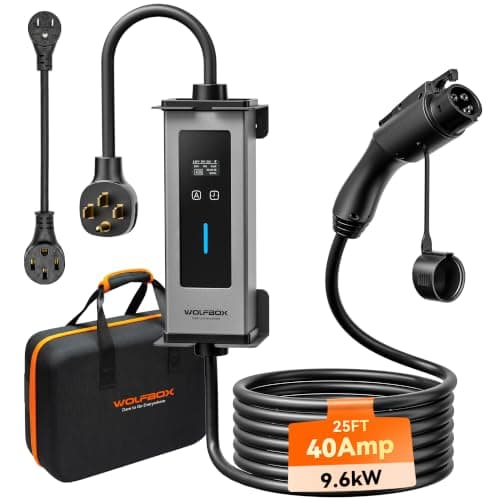
One charger for home and travel
WOLFBOX Portable (Level 1/2)
A dual-level portable that charges on both 120V and 240V, ships with both plug adapters, and adds a delay timer for off-peak charging — a genuine take-anywhere charger.
#ad · As an Amazon Associate we earn from qualifying purchases.
Questions
Frequently asked
Can I install an EV charger without a permit?
Who pulls the permit, me or the electrician?
How long does an EV charger permit take?
Does a portable charger on an existing outlet need an inspection?
Keep reading
Related
- Can I Install It Myself?Who is allowed to do the work, separately from the permit.
- Level 2 Installation CostWhere the permit fee sits in the total bill.
- Wire Size & Breaker GuideThe two code rules an inspector checks first.
- Do I Need a Dedicated Circuit?NEC 625.40, in plain terms.
- Charger in a Detached GarageThe install that most often needs a sub-panel, and a bigger permit.
- Best Charger for RentersThe no-permit, no-wiring route in full.
Receipts
Sources
- EC&M — NEC Article 625, Electric Vehicle Charging Systems
- City of Dublin, CA — Residential Electric Vehicle Charger permit handout
- US DOE AFDC — EV charging infrastructure basics
We do not run a testing lab, and we do not pretend to. Where a measured number came from someone else's lab, we name them and link them. Where we could not verify something, we say so on the page rather than quietly leaving it out. Read our full method.