HUB 05 · Guides & Buying Advice
Charging a Volkswagen ID.4 at Home
The ID.4 accepts up to 11 kW of AC, so a 48-amp charger earns its keep — here's how to match the hardware to the car.
We earn a commission when you buy through our Amazon links, at no extra cost to you. It never affects our rankings, and we say so when the cheaper product is the better buy. How this works.
The Volkswagen ID.4 charges at home over a standard J1772plug — its CCS1 port accepts a J1772 connector natively, no adapter needed — and its onboard charger is rated at 11 kW across US trims. That means a 40-to-48 amp Level 2 charger is the sweet spot; 48 amps lets the car pull its full AC rate.
The ID.4 is a straightforward car to set up at home: a normal J1772 charger, a normal 240-volt circuit, and an onboard charger generous enough that a good 48-amp unit is worth buying. The one thing that confuses ID.4 owners is the Tesla-Supercharger adapter — so let's clear that up first.
The connector: J1772 at home, and the NACS adapter myth
At home the ID.4 uses J1772 (its CCS1 inlet takes the J1772 plug directly). VW supplies a NACS-to-CCS DC adapterso the car can use Tesla Superchargers — but that adapter is for DC fast charging only. It cannot be used on a Tesla Destination Charger or any NACS Level 2 AC unit, and you do not need it at home at all. For home AC charging, a plain J1772 charger is the whole story. Our NACS vs J1772 explainer covers why AC and DC adapters are different animals.
What amperage to buy
Because the ID.4's onboard charger accepts 11 kW, a 48-amp chargerlets it pull its full AC speed — roughly 30+ miles of range per hour. A 48-amp unit needs a 60-amp circuit, so check your panel; the wire size and breaker guide shows what that requires. If your panel cannot spare a 60-amp circuit, a 40-amp charger like the Emporia Level 2 still refills the ID.4 overnight for any normal driving.
Hardwire or plug in?
A plug-in charger on a NEMA 14-50 outlet is capped at 40 amps; hardwiring is what unlocks the full 48. For an ID.4 kept long-term, hardwiring a 48-amp unit is the way to use all 11 kW. If you prefer the flexibility of a plug, a 40-amp portable on a 14-50 is only modestly slower and moves with you.
The gear
Recommended gear for this guide
The products this guide refers to, with prices pulled live from Amazon and dated on each card.
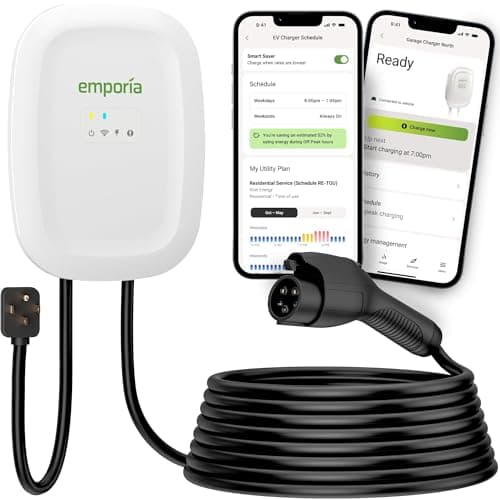
Most people who want the smart features too
Emporia Level 2 (48A)
The smart charger that does not charge a smart-charger premium — 48-amp capability and real energy monitoring for the price of a dumb one.
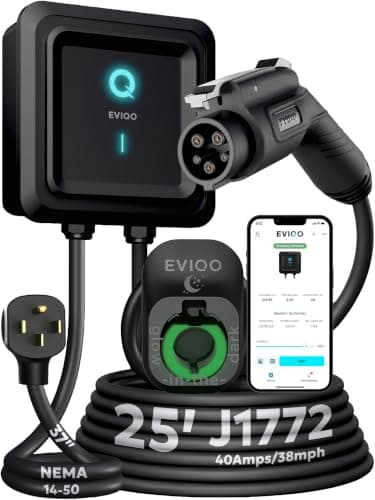
Budget-conscious buyers who still want smart features
EVIQO Level 2 (40A)
A weatherproof, UL-and-ETL-listed smart charger that regularly sits at the bottom of the price band — a lot of charger for the money.
#ad · As an Amazon Associate we earn from qualifying purchases.
Questions
Frequently asked
Do I need an adapter to charge an ID.4 at home?
What amp charger is best for a Volkswagen ID.4?
Can an ID.4 use a Tesla Supercharger?
How long does an ID.4 take to charge at home?
Keep reading
Related
- Best 48-Amp EV ChargersThe faster chargers the ID.4's 11 kW rewards.
- Wire Size & BreakerThe 60-amp circuit a 48-amp charger needs.
- NACS vs J1772Why the DC adapter is not an AC adapter.
- Emporia Level 2 ReviewA 40-amp unit if your panel can't do 60 amps.
- Best Portable EV ChargersA plug-in alternative to a wall unit.
Receipts
Sources
We do not run a testing lab, and we do not pretend to. Where a measured number came from someone else's lab, we name them and link them. Where we could not verify something, we say so on the page rather than quietly leaving it out. Read our full method.